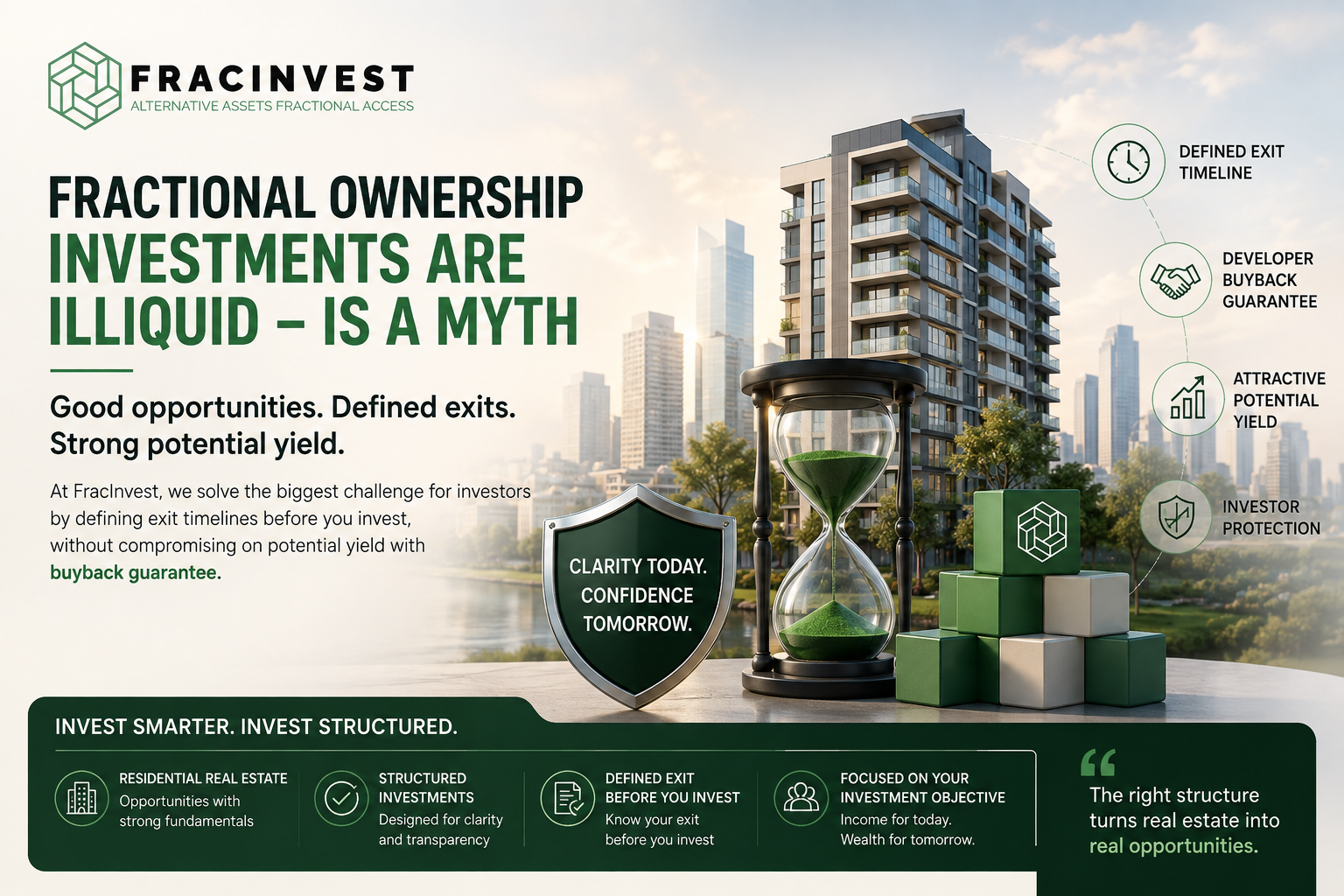
Fractional ownership investments are often perceived as illiquid investments. But is that really the case?
The answer depends largely on what you invest in and how the investment is structured.
When investors evaluate fractional real estate opportunities, the focus should not only be on the potential return. The investment structure, underlying asset, holding period, exit mechanism and clarity around the exit should be equally important.
With the right opportunity, fractional ownership can offer investors a defined exit timeline without necessarily compromising on the potential yield.
The Biggest Concern: Liquidity
One of the biggest questions investors ask before investing in real estate is:
"How and when will I get my money back?"
Unlike listed equities or mutual funds, real estate is not an asset that can typically be sold instantly. Traditional real estate investments can involve lengthy selling processes, negotiations, documentation and market dependencies.
This is where structured fractional ownership can create a meaningful difference.
At FracInvest, we believe that the exit strategy should be considered before the investment decision is made, not after.
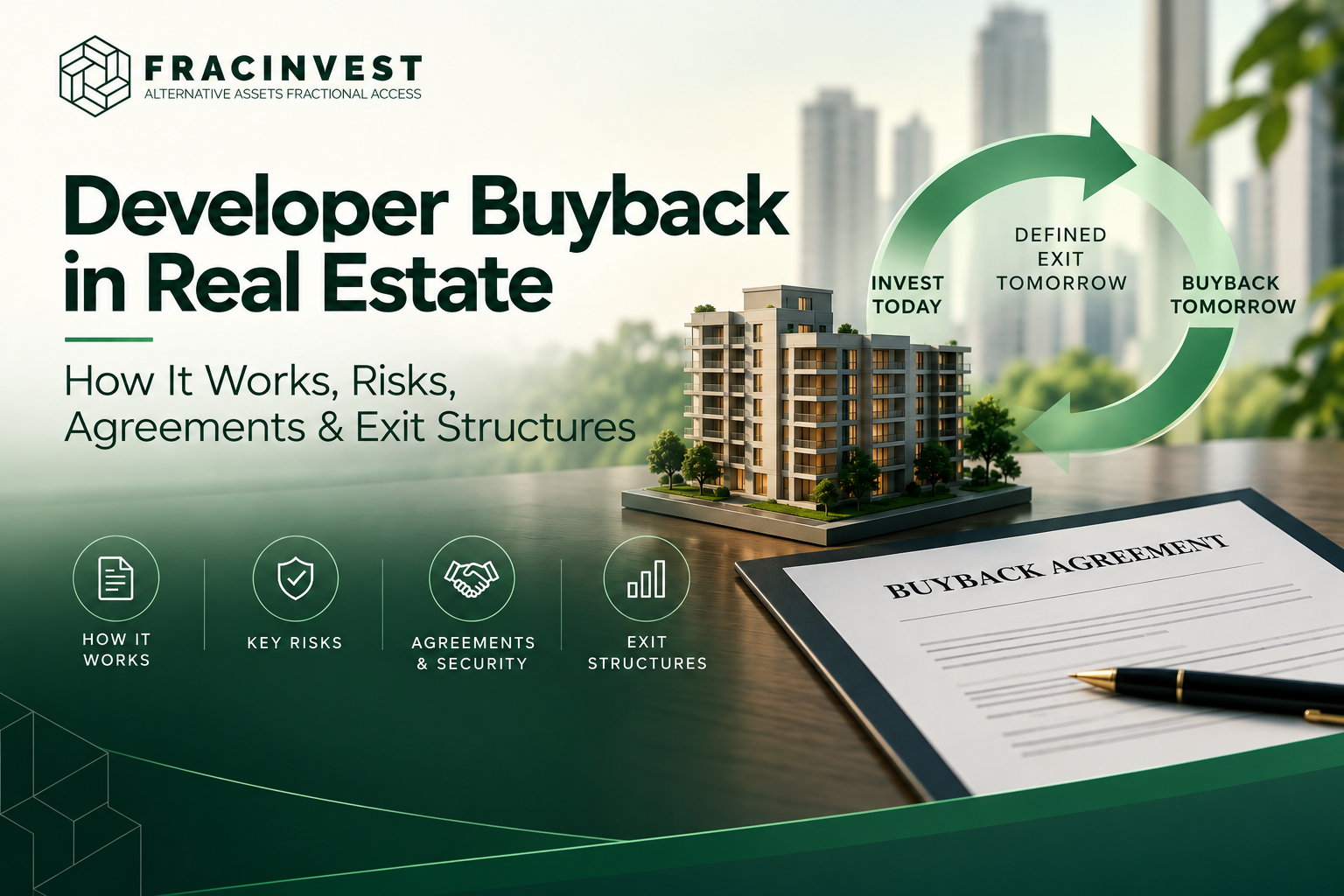
Our approach is to identify real estate opportunities where the investment structure has a defined investment horizon and a planned exit mechanism, including developer buyback arrangements where applicable.
The objective is simple:
Give investors greater clarity on their potential exit timeline while retaining the opportunity to participate in the potential returns from real estate.
Defined Exit Does Not Mean Compromising on Yield
Investors often assume that having a clearly defined exit means accepting lower returns.
That does not necessarily have to be the case.
The potential return from a real estate investment depends on several factors, including the stage at which the asset is acquired, acquisition pricing, project fundamentals, location, demand, development cycle and the eventual exit value.
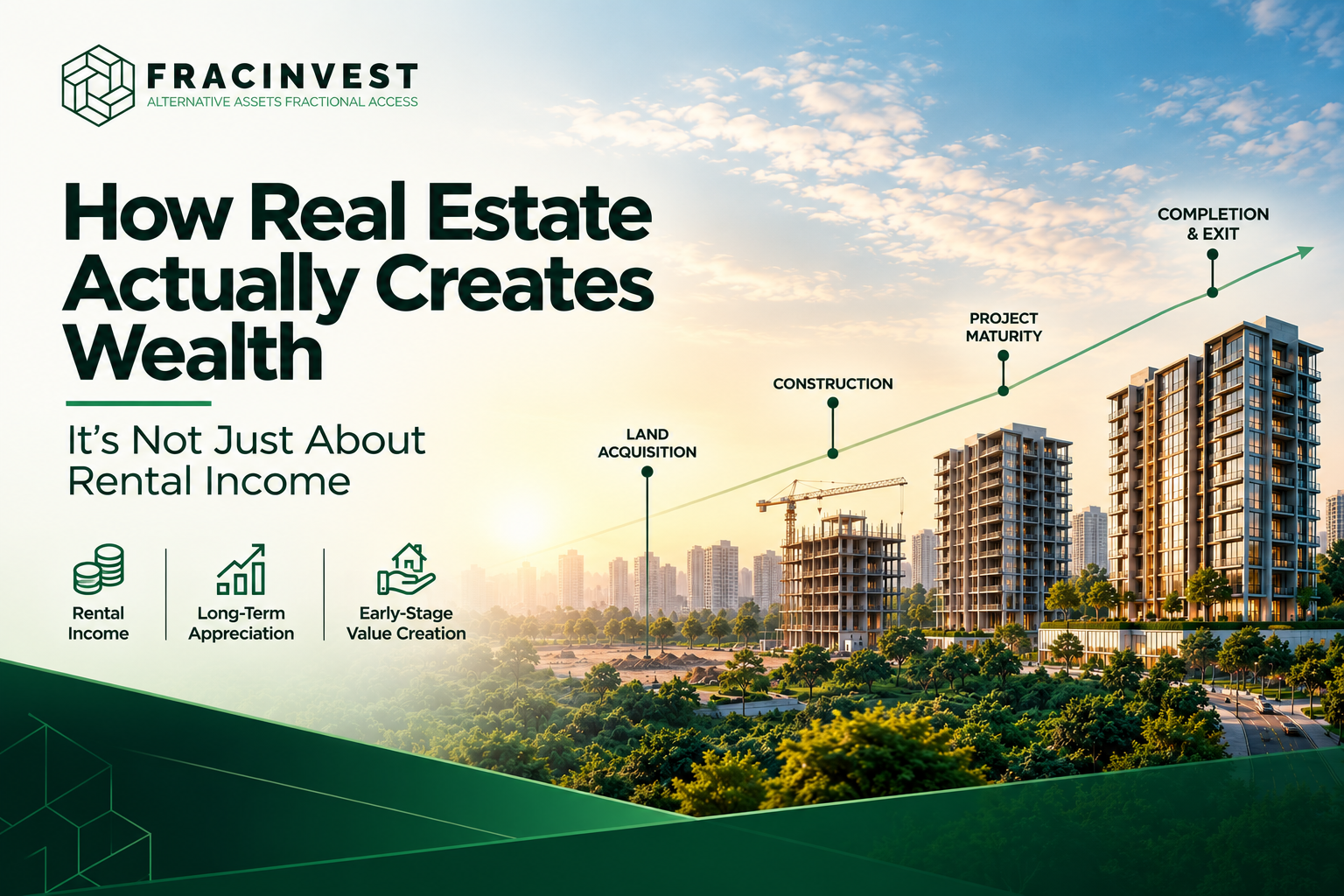
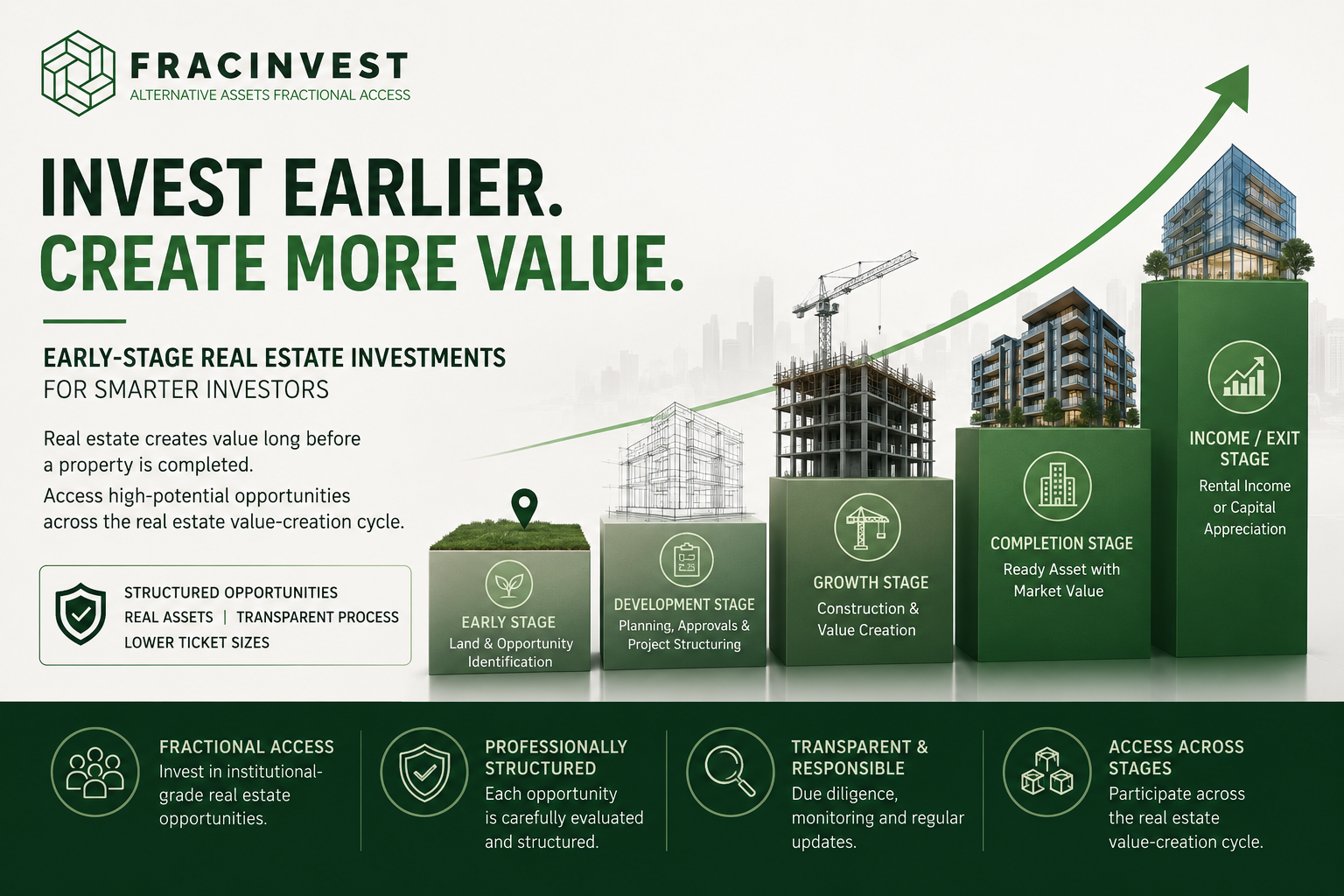
A well-structured fractional investment can provide investors access to opportunities at an earlier stage of the real estate cycle, potentially creating an opportunity for capital appreciation over a defined investment period.
This is where the structure becomes important.
Instead of simply asking:
"What return will I get?"
Investors should also ask:
- What exactly am I investing in?
- What is the underlying asset?
- What is the investment tenure?
- What is the expected exit mechanism?
- Who is responsible for the exit?
- Is there a contractual buyback or other defined exit arrangement?
- What are the risks associated with the investment?
- How realistic are the projected returns?
The quality of the opportunity and the structure behind it matter as much as the headline return.
Why Commercial Real Estate Is Not the Only Option
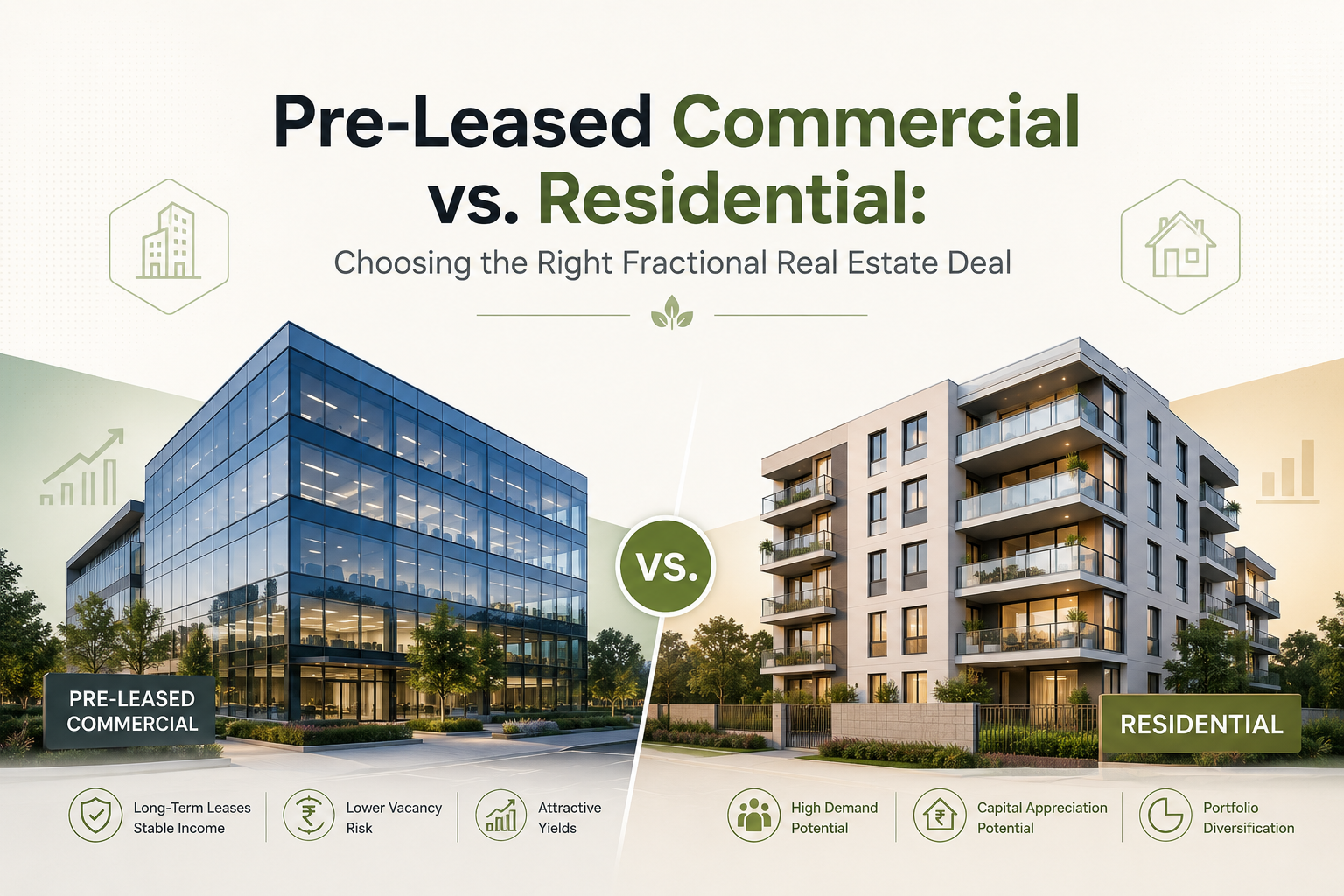
Commercial real estate has traditionally attracted investors looking for rental income and relatively higher rental yields compared with residential property.
However, commercial real estate also comes with its own challenges.
Ticket sizes can be significantly higher, tenant concentration can impact cash flows, vacancy can affect rental income, and the exit market may not always be accessible to every investor.
Despite its attractive rental yield potential, commercial real estate is still not a universally preferred investment option among Indian investors.
This creates an interesting question:
Can residential real estate deliver investment returns comparable to commercial real estate? In certain structured opportunities, the answer can be yes.
##Fractional Ownership in Residential Real Estate
Residential real estate is one of the most familiar asset classes for Indian investors.
However, traditional residential investment is usually associated with a long holding period and dependence on capital appreciation.
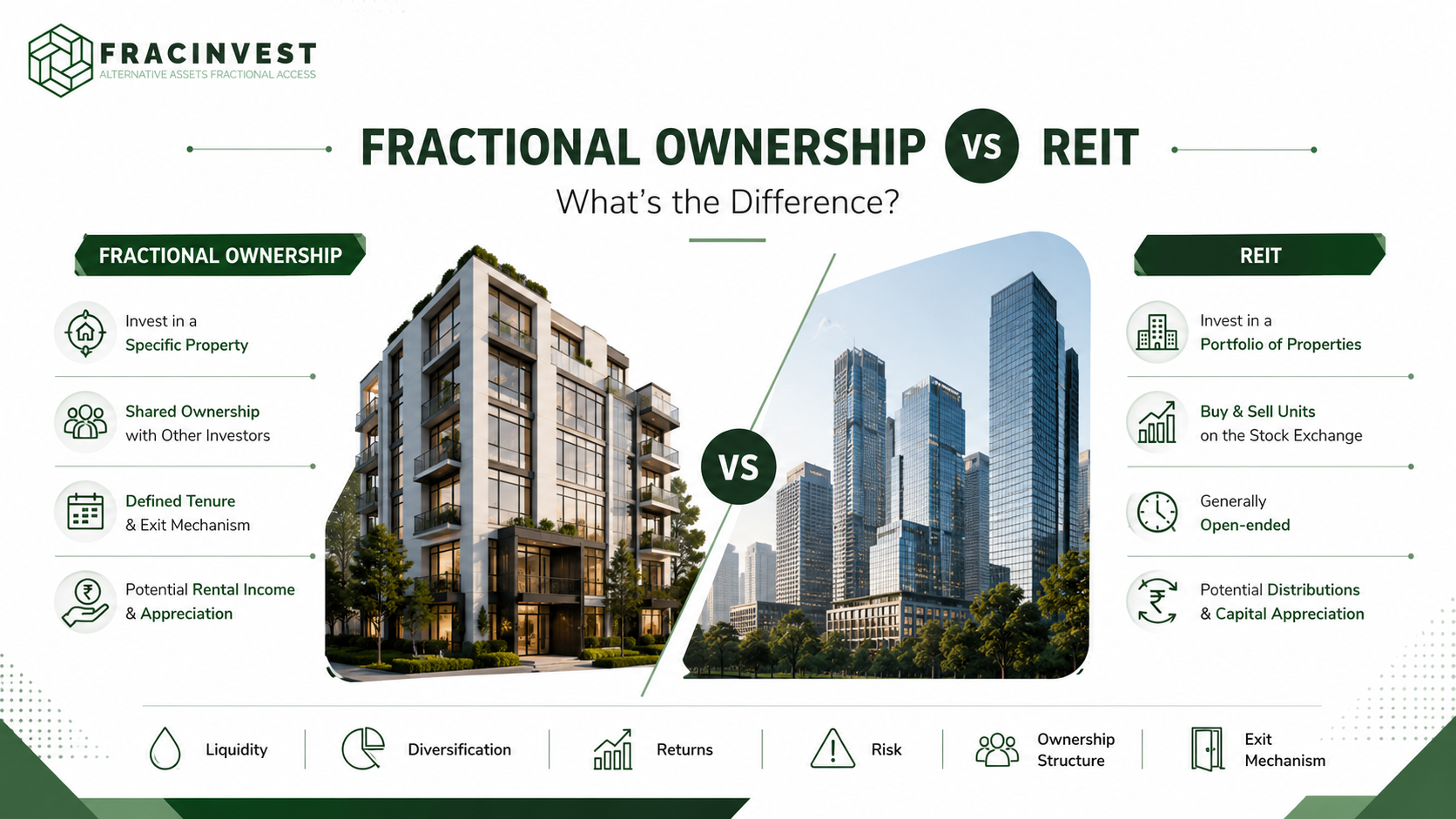
Fractional ownership changes the equation by allowing investors to participate in selected residential real estate opportunities with a smaller investment ticket and a defined investment strategy.
When residential properties are acquired at the right stage, at the right price and with a clearly planned exit, the potential returns can come from more than just long-term property appreciation.
The combination of acquisition pricing, project development, market appreciation and a structured exit can potentially create an attractive return profile.
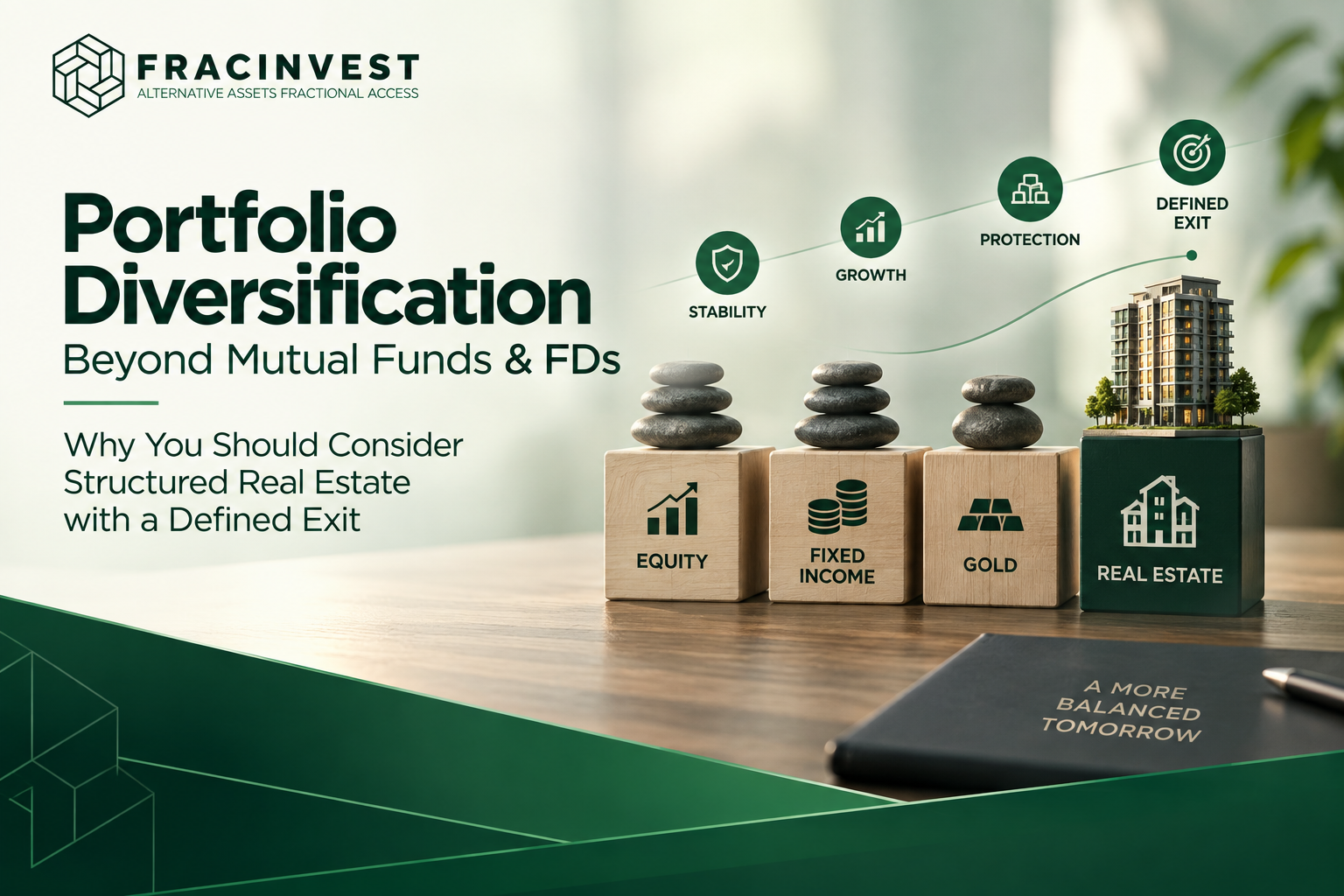
This can make fractional residential real estate an interesting alternative for investors who want exposure to real estate but do not necessarily want to commit to owning an entire property for an indefinite period.
The Real Question Investors Should Ask
The question should not simply be:
"Is fractional ownership liquid?"
A better question is:
"Does this particular fractional investment have a clearly defined exit strategy?"
There is a significant difference.
Every fractional investment is not the same. The underlying asset, legal structure, investment tenure, exit mechanism and counterparties can vary significantly from one opportunity to another.
Therefore, investors should evaluate each opportunity independently rather than considering fractional ownership as a single investment category.
At FracInvest, our philosophy is built around this principle.
We aim to identify real estate opportunities where investors can understand the investment thesis, expected tenure and exit strategy before making an investment decision.
Where applicable, structured opportunities may also incorporate a developer buyback mechanism, providing an additional layer of clarity around the intended exit.
Income or Wealth Creation? Define Your Objective First
Before choosing any real estate investment, investors should first understand what they are trying to achieve.
Are you looking for:
Monthly passive income?
Or are you looking for:
Long-term wealth creation through capital appreciation?
These are two very different investment objectives.
Commercial real estate can be attractive for investors seeking rental income and regular cash flow.
Residential real estate, particularly when accessed through carefully structured opportunities, may be more suitable for investors looking to participate in capital appreciation and potentially target higher returns over a defined investment period.
Neither approach is universally better.
The right investment depends on the investor's objective, risk appetite, investment horizon and liquidity requirements.
Fractional Ownership Is About Access, Not Just Smaller Tickets
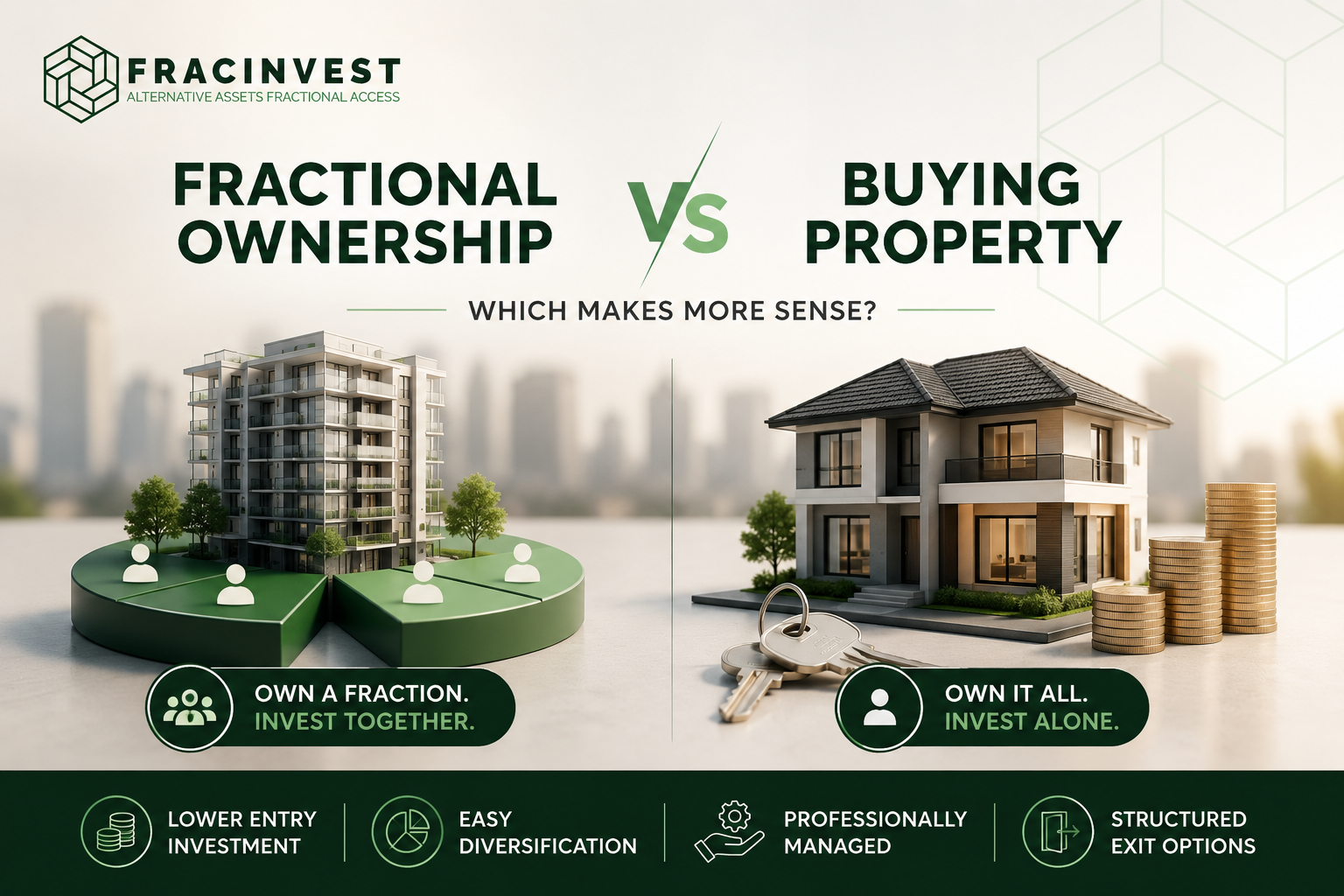
The real value of fractional ownership is not simply that it reduces the amount of money required to participate in real estate.
It can provide investors with access to opportunities that may otherwise require significantly larger capital commitments.
More importantly, structured fractional ownership can bring greater clarity around:
Asset + Structure + Investment Horizon + Exit Strategy When these elements are evaluated together, fractional ownership can become a more structured way of accessing real estate investments.
The Future of Real Estate Investing
Indian investors have traditionally viewed real estate as a long-term asset that is bought, held and eventually sold.
The investment landscape is evolving.
Investors are increasingly looking for alternatives that offer a combination of asset backing, defined investment horizons, transparency and attractive return potential.
Fractional ownership is emerging as one such approach.
However, investors should not invest solely because a product promises a high return or a defined exit. Due diligence remains critical.
Review the underlying property, legal structure, documentation, counterparties, risks, fees, projected returns and exit mechanism before investing.
At FracInvest, We Believe the Exit Should Be Part of the Investment Decision
The biggest challenge in real estate is not always finding an attractive property.
It is knowing how and when you can potentially exit your investment.
That is the problem we are trying to solve at FracInvest.
Our objective is to bring structured real estate investment opportunities where the investment horizon and potential exit strategy are defined upfront, while seeking to preserve the potential for attractive real estate returns.
Because investing in real estate should not always mean asking:
"When will I be able to sell?"
It should begin with a better question:
"What is my investment objective, what am I investing in, and what is the planned exit?" Once investors start evaluating real estate through this lens, fractional ownership may no longer look like an inherently illiquid investment.
It may simply look like a more structured way of accessing real estate.
Disclaimer: This article is for informational and educational purposes only and should not be considered investment, financial, legal or tax advice. Real estate investments, including fractional ownership investments, involve risks and may not be suitable for every investor. Past performance or projected returns are not indicative of future results. Investors should independently evaluate the opportunity, underlying asset, legal structure, risks and documentation and seek appropriate professional advice before making any investment decision.