
Investment Strategy

How Exit Works in Fractional Real Estate: Buyback, Resale, and Liquidity Explained

FracInvest Research Desk 2 Jul 2026 7 min read
How Exit Works in Fractional Real Estate: Buyback, Resale, and Liquidity Explained

The first question most people ask about fractional real estate is what the return looks like. The second, and the one that actually determines whether that return means anything, is how they get their money back out. Real estate has never been a liquid asset. Splitting ownership into smaller tickets changes who can afford to invest in it; it doesn't, by itself, change how quickly the underlying property can be turned into cash.

The three ways a fractional investment actually ends

Almost every fractional real estate deal resolves through one of three routes, and knowing which one applies to a given deal, before you invest, not after, is the single most useful thing you can check.

  • Developer buyback. The developer contractually commits to repurchasing investor stakes at a defined price on or after a defined date. This is the most common exit structure for deals built around a fixed tenure, and it's only as reliable as the guarantee behind it, ideally backed by an escrow arrangement with a bank, not just a clause in a document.
  • Asset sale or refinancing. The underlying property itself gets sold to a third party, or refinanced, at the end of the investment tenure, with proceeds distributed to investors in proportion to their stake. This route depends on market conditions at the time, a soft micro-market can push the timeline out.
  • Secondary transfer. An investor sells their stake to another investor before the deal's natural maturity. Where a platform offers a matching facility for this, it can shorten your holding period, but the market for a partial stake in a single private asset is thin, and you may need to accept a discount to find a buyer quickly.

What actually decides whether you can exit early

Three things, in practice: whether the deal has a lock-in period before any exit is even permitted, whether the platform runs an active secondary market or simply leaves you to find your own buyer, and how liquid the underlying asset class and micro-market genuinely are, a pre-leased commercial tower in a business district with active buyer interest behaves very differently from a residential unit in a market with thin transaction volumes.

What to check before you invest, not after

  • What exactly triggers the buyback, a fixed date, a completion milestone, or something else, and who is contractually obligated to honor it.
  • Whether that obligation is backed by an escrow account or bank guarantee, or is simply a promise in the agreement.
  • Whether there's a penalty, haircut, or minimum holding period attached to exiting earlier than the defined date.
  • The developer's actual track record of honoring buyback commitments on past projects, not just this one.
  • Whether the platform offers any secondary transfer facility at all, and how a stake is actually priced when it does get resold.

Exit routes at a glance

Exit routeHow it worksTypical timelineWhat can go wrong
Developer buybackDeveloper repurchases your stake at a pre-agreed price/dateFixed, defined in the deal termsWeak or unsecured guarantee; developer delay
Asset sale / refinanceThe property itself is sold or refinanced at tenure endTied to market conditions at that timeSoft market pushes the timeline out
Secondary transferYou sell your stake to another investorWhenever a buyer is foundThin market; may require a price discount

None of this makes fractional real estate a bad investment, it makes it exactly what real estate has always been, with a lower entry point. The protection isn't pretending it's liquid. It's knowing precisely which exit route applies to your money, and confirming the guarantee behind it before you invest, not after. Every deal on FracInvest states its exit mechanism explicitly on the deal page, alongside the RERA and escrow details, so that answer is never something you have to go dig for later.
Sources and further reading

Ready to review an opportunity?

Compare current opportunities, documents, risks, projected returns, and exit terms.

View Opportunities

More from the blog

Regulatory & Legal

Developer Buyback in Real Estate: How It Works, Risks, Agreements & Exit Structures

A developer buyback is an arrangement under which a developer, promoter or another identified entity agrees to repurchase a property or investment interest from the buyer after a specified period, subject to agreed contractual terms.

Saandip S Prabhudesai 8 Sep 2026 10 min read
Investment Strategy

Under-Construction vs Ready-to-Move Property: Which Is Better for Investment in India?

Should you buy a property that is already completed, or enter while the project is still under construction? Both can be good real estate strategies. But they are designed to achieve different things.

Saandip S Prabhudesai 6 Sep 2026 8 min read
Investment Strategy

Senior Secured Bonds vs Structured Fractional Real Estate

Compare senior secured bonds with structured fractional real estate across returns, asset backing, risks, liquidity and defined exit terms.

Saandip S Prabhudesai 4 Sep 2026 10 min read
Regulatory & Legal

Is Fractional Ownership of Real Estate Legal in India?

Is fractional ownership legal in India? Explore how REITs, SM REITs and traditional SPV-based fractional real estate models are structured for investors.

Saandip S Prabhudesai 27 Aug 2026 8 min read
Regulatory & Legal

Fractional Real Estate Ownership Investments Legal for NRIs in India?

The short answer is that NRIs can invest in Indian real estate, but whether they can participate in a particular fractional ownership opportunity depends on how that investment is legally structured

FracInvest Research Desk 27 Aug 2026 10 min read
Investment Strategy

What Is Forward Purchase in Real Estate? Benefits for Investors

Learn how forward purchase in real estate allows investors to enter promising projects early, benefit from launch-stage pricing, and pursue an exit before completion through FracInvest's fractional ownership model.

Saandip S Prabhudesai 25 Aug 2026 8 min read
Investment Strategy

Fractional Ownership vs Buying Property: Which Makes More Sense?

What if you found a ₹2 crore property that looked like a good investment, but you didn't want to put ₹2 crore into a single asset or take on a large home loan? That's where fractional ownership becomes interesting.

Saandip S Prabhudesai 19 Aug 2026 6 min read
Regulatory & Legal

How to Own Real Estate Without Buying the Entire Property

Fractional ownership and structured real estate investments offer one such approach. Instead of one investor funding the entire property, multiple investors can participate in a carefully structured opportunity, subject to the legal and commercial structure of the investment.

FracInvest Research Desk 17 Aug 2026 6 min read
Investment Strategy

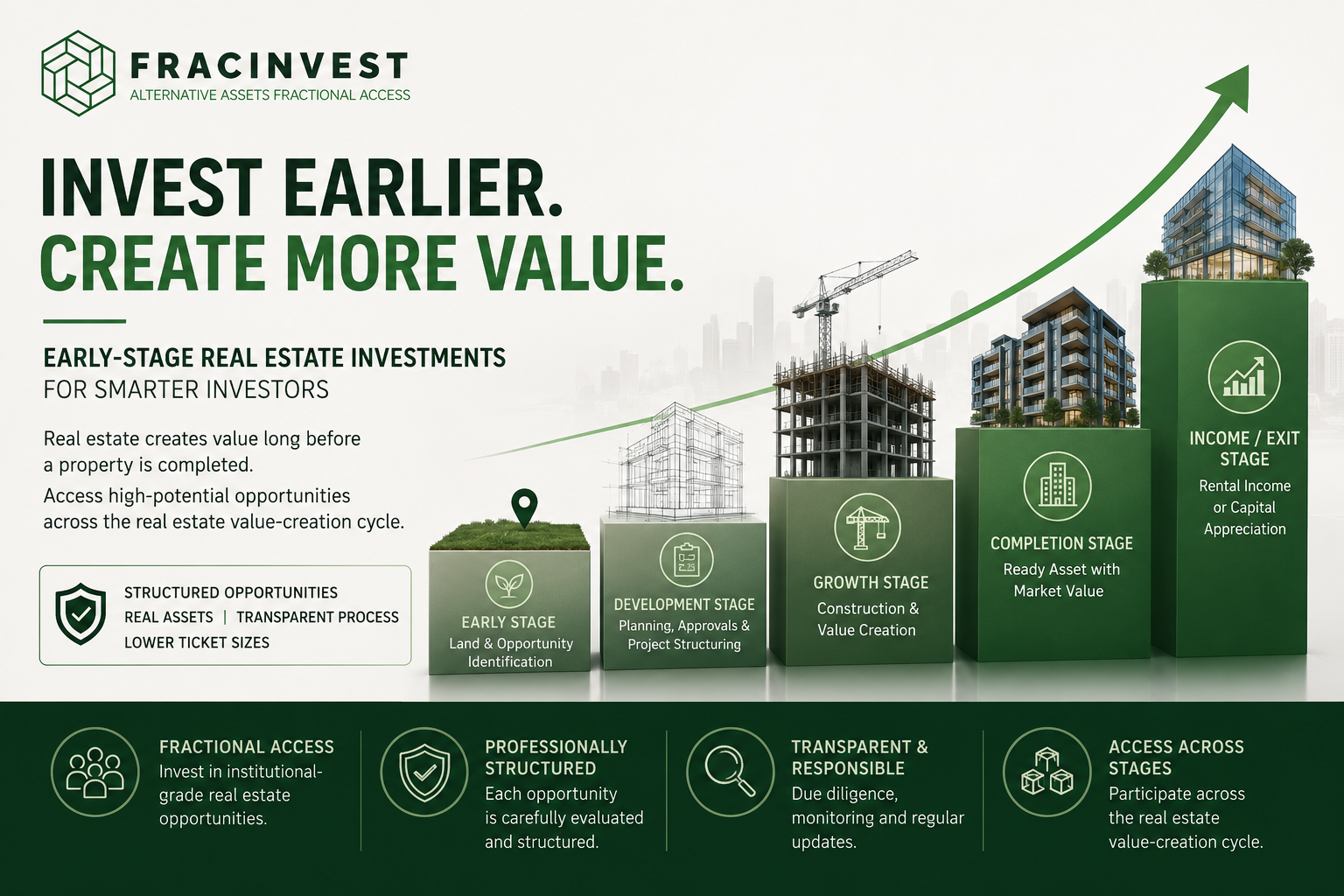
Early-Stage Real Estate Investment: How Investors Can Access Real Estate Before Project Completion

Real estate creates value long before a property is completed. Explore how early-stage real estate investment and structured fractional access can help investors participate in the real estate value-creation cycle with lower capital requirements than direct property ownership.

FracInvest Research Desk 12 Aug 2026 6 min read
Investment Strategy

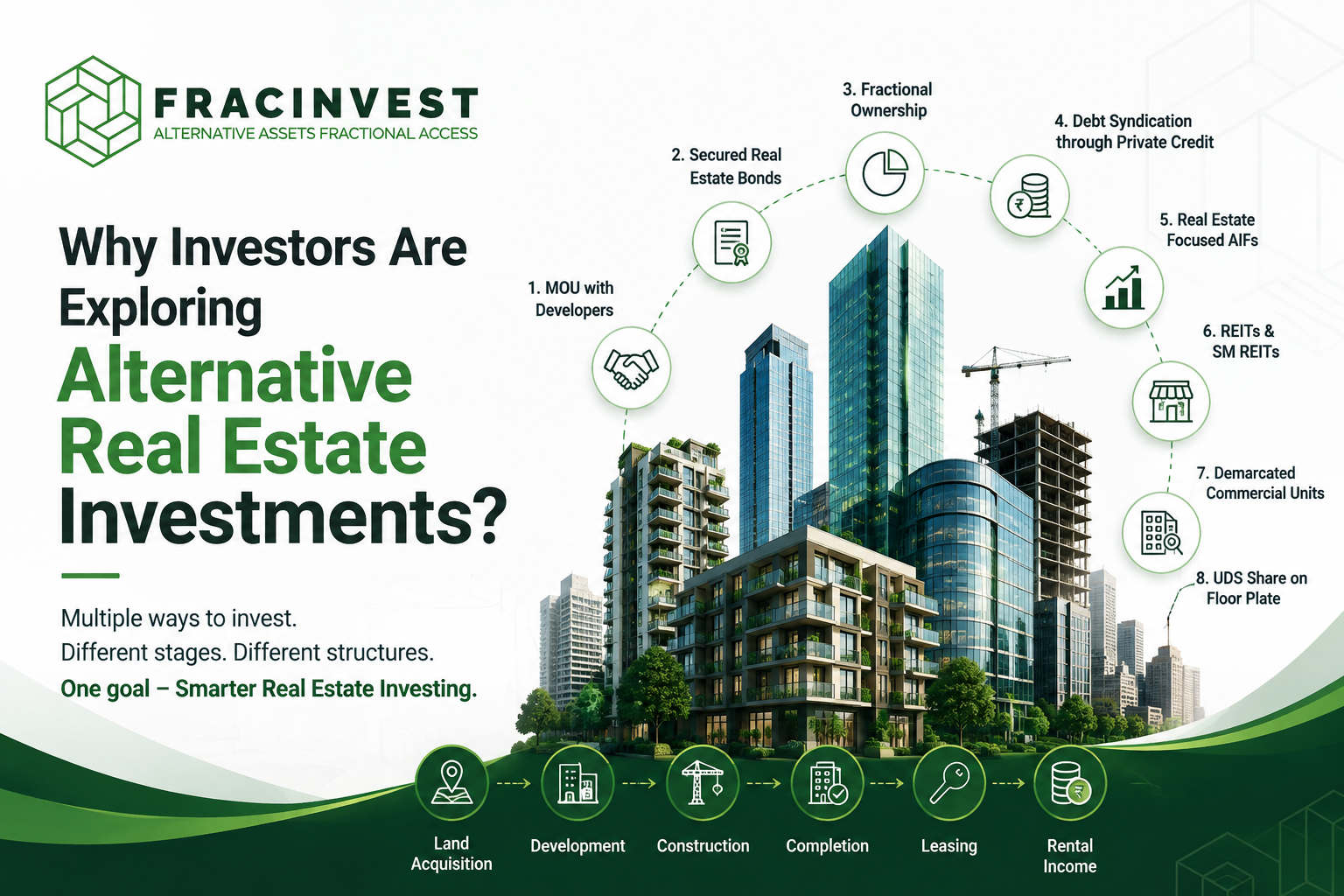
Alternative Real Estate Investments: 8 Ways to Invest in Real Estate

Explore 8 alternative real estate investment options in India, including developer MOUs, secured real estate bonds, fractional ownership, private credit, AIFs, REITs, SM REITs and commercial real estate.

FracInvest Research Desk 11 Aug 2026 8 min read
Investment Strategy

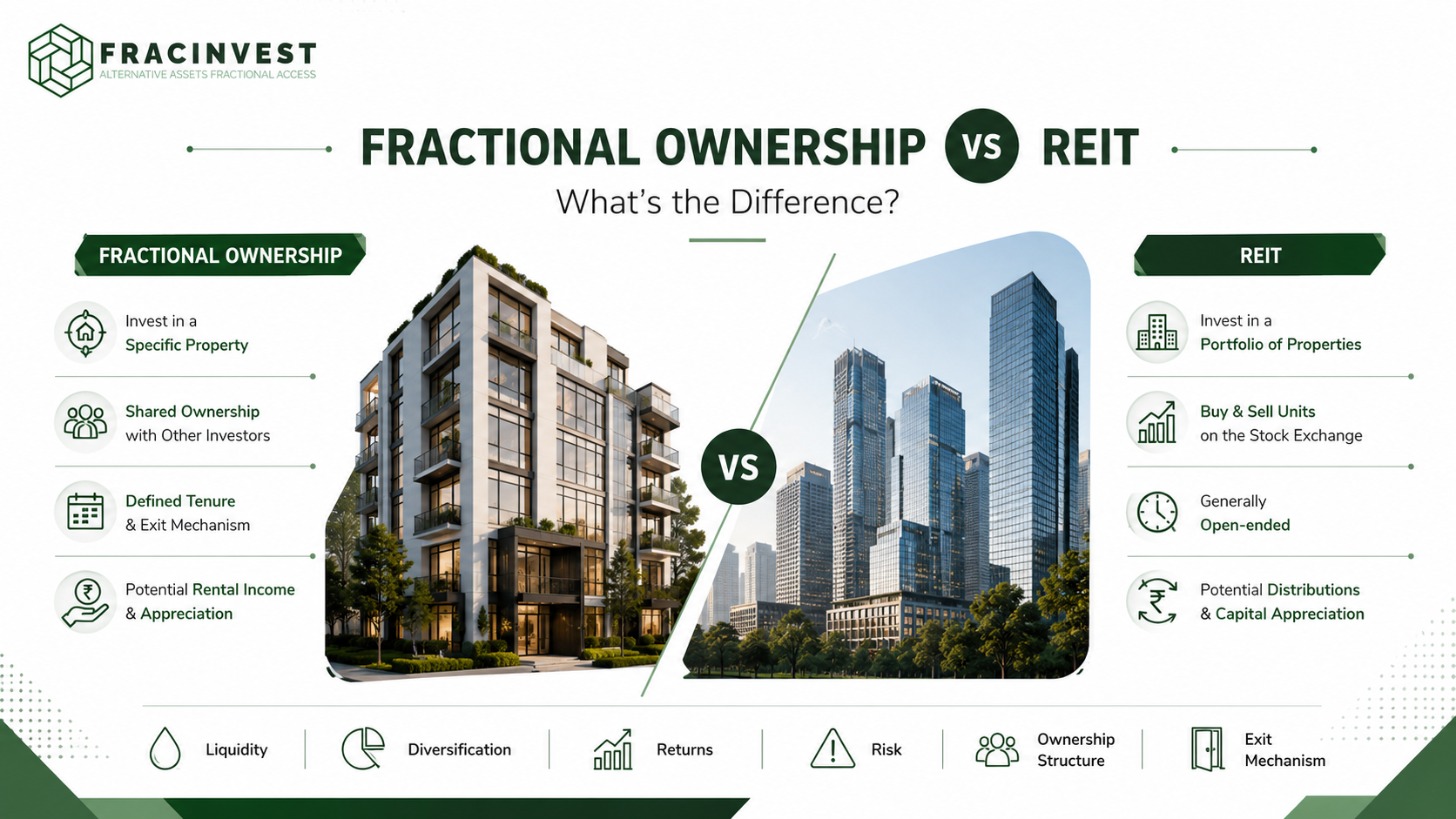
Fractional Ownership vs REIT: What's the Difference?

Understand the difference between fractional ownership and REITs, including liquidity, diversification, returns, risk, ownership structure and exit mechanisms.

FracInvest Research Desk 11 Aug 2026 10 min read
Investment Strategy

Is Fractional Ownership Really Illiquid? The Myth Investors Need to Reconsider

When investors evaluate fractional real estate opportunities, the focus should not only be on the potential return. The investment structure, underlying asset, holding period, exit mechanism and clarity around the exit should be equally important.

FracInvest Research Desk 9 Aug 2026 10 min read
Investment Strategy

Exploring Pre-RERA Land Investments: High Risk, High Reward Opportunities in Real Estate

Real estate investing has evolved significantly over the past decade. While most investors are familiar with ready-to-move properties, under-construction apartments, and commercial assets, one of the most lucrative yet least understood segments remains pre-RERA land investments.

FracInvest Research Desk 7 Aug 2026 8 min read
Investment Strategy

Rising Property Prices in Bengaluru: Why Smart Investors Are Choosing Fractional Ownership

A Smarter Alternative: Fractional Ownership allows investors to participate in premium real estate opportunities without committing to the entire value of a residential property.

FracInvest Research Desk 6 Aug 2026 6 min read
Investment Strategy

A 10-Point Due Diligence Checklist Before You Invest in a Fractional Real Estate Deal

Most red flags in a fractional real estate deal are visible before you invest a rupee, if you know exactly where to look. Here's the checklist worth running through.

FracInvest Research Desk 17 Jul 2026 6 min read
Investment Strategy

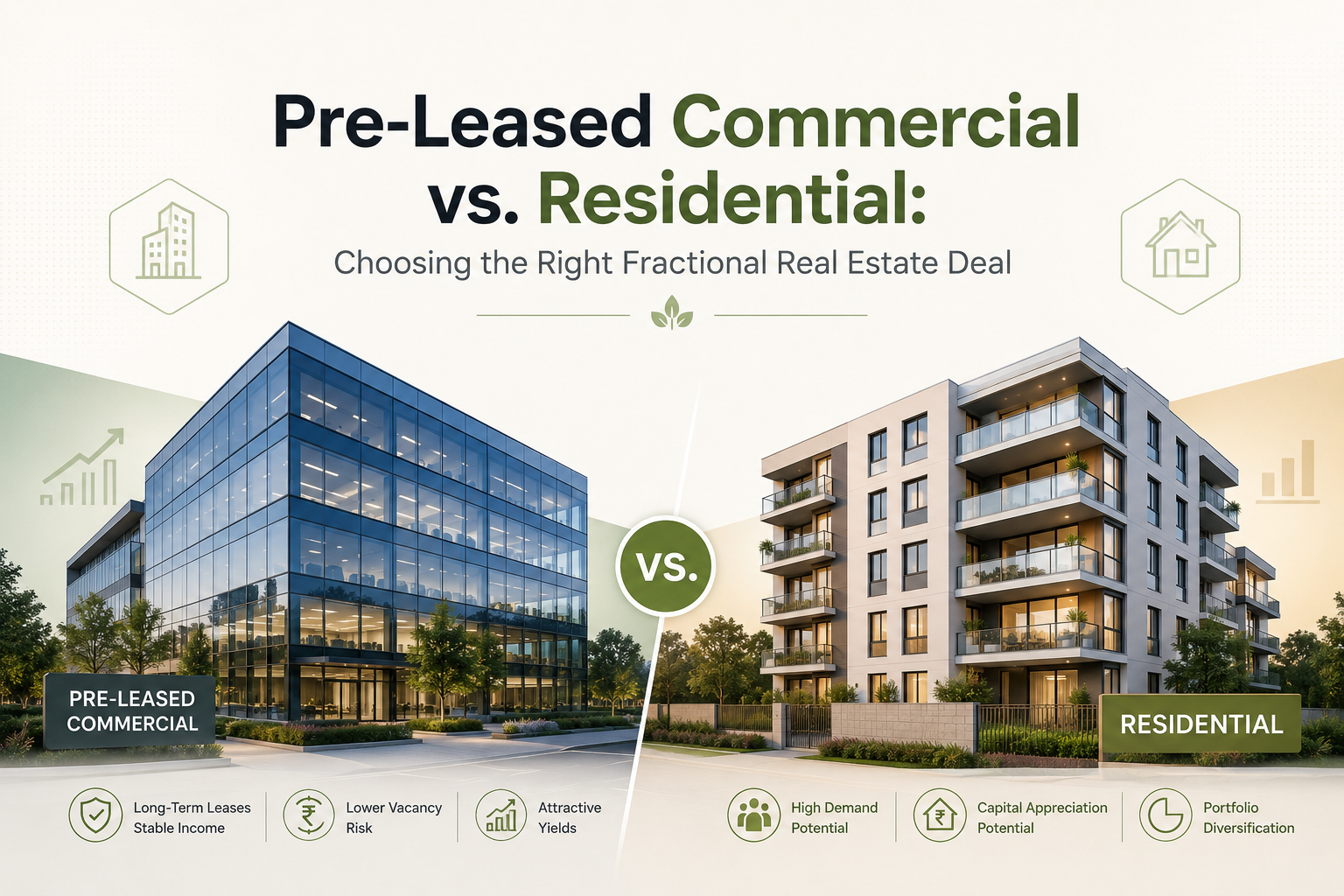
Pre-Leased Commercial vs. Residential: Choosing the Right Fractional Real Estate Deal

Same fractional ownership model, two very different assets underneath. Commercial and residential real estate behave differently on yield, risk, and how your capital actually grows.

FracInvest Research Desk 13 Jul 2026 7 min read
Regulatory & Legal

Taxation of Fractional Real Estate Investments in India: What You Actually Owe

Rental income, capital gains, and TDS all work a little differently once your real estate holding is fractional. A practical walk-through, not tax advice.

FracInvest Research Desk 8 Jul 2026 8 min read
Investment Strategy

How Fractional Ownership Is Giving Retail Investors the Same Real Estate Access as UHNIs

Premium real estate has always delivered strong, stable returns. The entry ticket just kept most people out. Fractional ownership is changing that.

FracInvest Research Desk 16 Jun 2026 6 min read
Regulatory & Legal

RERA-Registered Deals vs. Pre-RERA MOU Agreements: Why the Difference Matters for Your Capital

Not every real estate deal carries the same legal protection. Here's what actually changes for your money when a project is RERA-registered versus sold on a pre-RERA Memorandum of Understanding.

FracInvest Research Desk 2 Jun 2026 7 min read