When evaluating a real estate opportunity, most buyers spend considerable time asking one question: "At what price am I entering?"
For an investment-focused purchase, there is another question that deserves equal attention: "How am I expected to exit?"
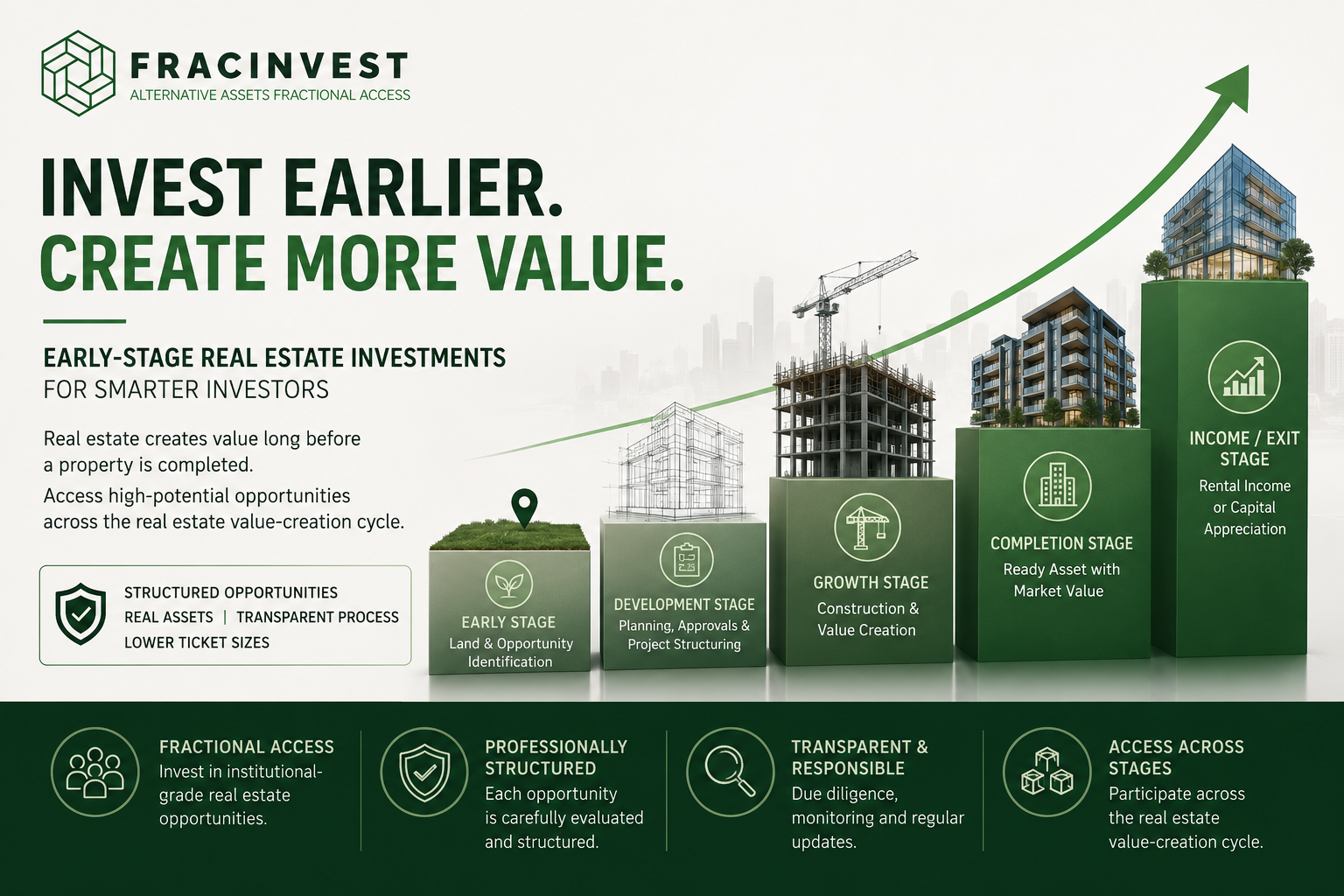
This becomes particularly important in early-stage and under-construction real estate. An investor may enter a project at an attractive stage and benefit from potential price appreciation as construction progresses, but that appreciation becomes a realised return only when there is a successful exit.
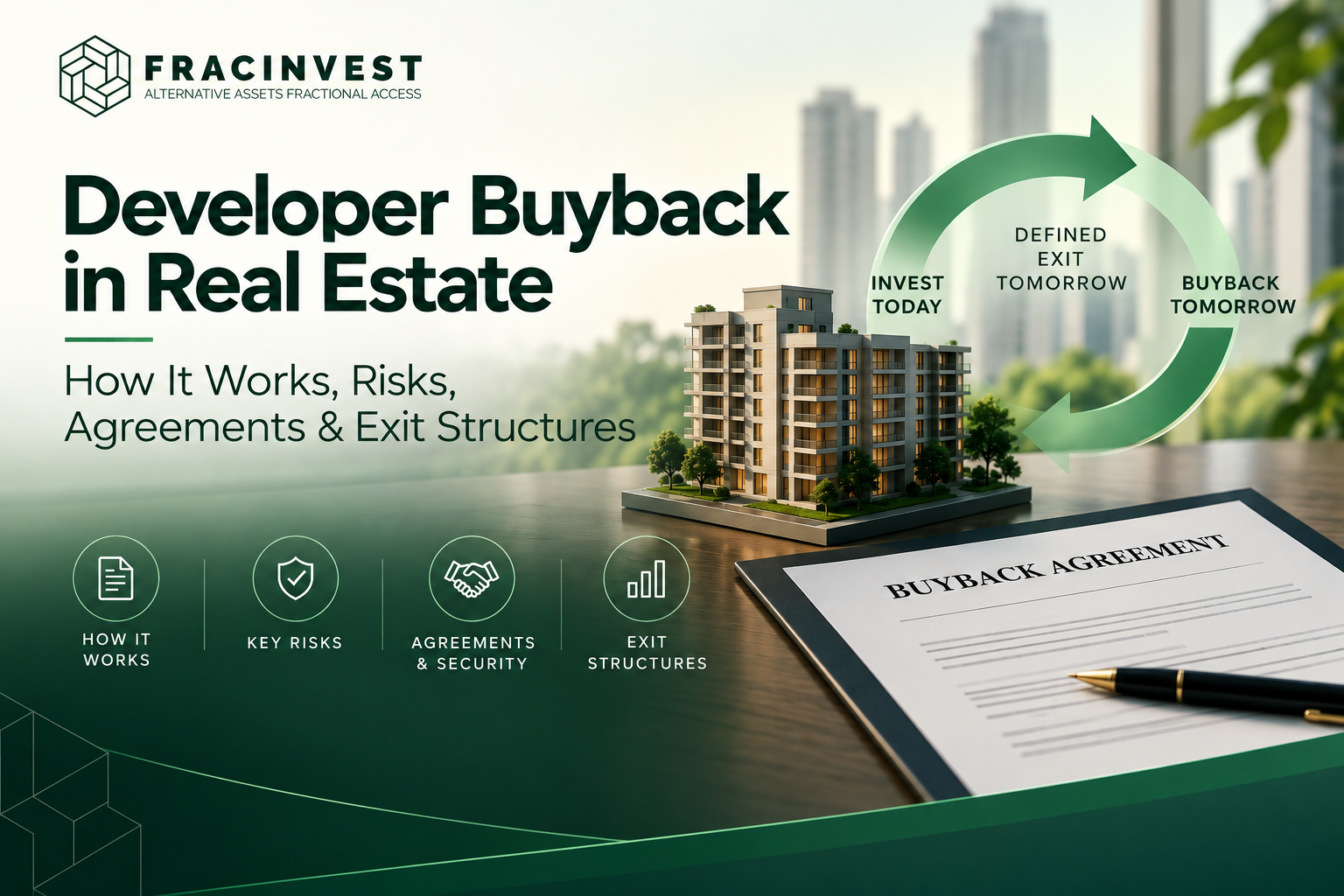
One mechanism seen in structured real estate transactions is a developer buyback arrangement, where the terms of a potential future exit are defined at the beginning of the transaction.
But what exactly does a developer buyback mean? How strong is such an agreement? And more importantly, what happens if the developer is unable to honour it?
Let's understand the structure.
What Is a Developer Buyback in Real Estate?
A developer buyback is an arrangement under which a developer, promoter or another identified entity agrees to repurchase a property or investment interest from the buyer after a specified period, subject to agreed contractual terms.
A simplified transaction may look like this:
Investor enters the property -> Holds for a defined period -> Project progresses -> Developer repurchases at the agreed exit stage
For an investor, the attraction is straightforward.
In a traditional property investment, you usually need to find your own buyer when you want to exit. With a developer buyback arrangement, a potential exit route is identified upfront.
However, this distinction is important:
A predefined buyback mechanism is not the same as a guaranteed return.
A buyback ultimately depends on the contractual arrangement, the financial ability of the developer or obligated entity to complete the purchase, the security available and the legal remedies if the commitment is not honoured.
How Does a Developer Buyback Agreement Work?
The exact structure differs from transaction to transaction, but a well-defined arrangement should clearly answer five basic questions:
| Question | What should be defined? |
|---|---|
| Who buys back? | The developer, promoter, group entity or another identified entity |
| When? | A specific date, period or project milestone |
| At what value? | Fixed value, predefined formula or another agreed mechanism |
| How is it executed? | Documentation, transfer process and payment mechanism |
| What if it doesn't happen? | Security, remedies and enforcement provisions |
For example, an investor may participate in an early-stage residential opportunity with a defined holding period. The contractual documents may provide an exit mechanism under which the developer agrees to purchase the underlying interest at the end of that period.
This gives the transaction an identified exit route from the beginning, rather than relying entirely on finding an unknown buyer later.
That distinction can be valuable, but the quality of the arrangement depends heavily on what sits behind the promise.
Developer Buyback vs Open-Market Resale
Suppose you purchase an apartment today and want to sell it two years later.
Under a conventional investment, your exit generally depends on the secondary property market.
You may need to find a buyer, negotiate the selling price, complete due diligence and documentation, and wait for the buyer's financing or funds.
Open-Market Exit
Purchase -> Hold -> Find Buyer -> Negotiate Price -> Complete Sale -> Receive Funds
A developer buyback creates a different pathway.
Predefined Buyback Exit
Purchase -> Hold -> Defined Exit Date/Milestone -> Developer Buyback -> Receive Funds
The key difference is not necessarily the property's appreciation.
It is how the investor expects to convert that value into liquidity.
| Open-Market Resale | Developer Buyback |
|---|---|
| Buyer needs to be found | Buyer is identified upfront |
| Exit timing can be uncertain | Exit period can be predefined |
| Selling price depends on the prevailing market | Price or mechanism may be agreed contractually |
| Depends heavily on secondary-market demand | Depends heavily on the developer's ability to perform |
| Investor manages the resale process | Exit process can be structured in advance |
This also introduces a different type of risk.
Instead of depending primarily on an unknown future buyer, the investor becomes dependent on the developer or obligated entity honouring its commitment.
The Real Question: Can the Developer Actually Buy It Back?
A buyback agreement may look attractive on paper, but the strength of the arrangement ultimately depends on the entity responsible for fulfilling it.
A practical way to think about this is developer repayment and execution risk:
Will the developer or obligated entity have the financial capacity and operational ability to complete the buyback when it becomes due?
Imagine a developer agreeing today to repurchase properties two years later.
By that time, property sales may be slower than expected, construction costs may have increased, the developer may have taken on additional debt, another project may be consuming cash, the real estate market may have weakened, or sufficient liquidity may simply not be available.
This is why investors should evaluate the ability to honour the buyback, not merely the existence of a signed agreement.
Developer Financial Capacity Matters
A developer's brand name alone does not necessarily tell you whether a future buyback obligation can be fulfilled.
Due diligence should look deeper.
- Project cash flows: How much money is expected to come from project sales?
- Existing debt: What borrowings and repayment obligations already exist?
- Inventory: How much unsold inventory does the developer hold?
- Sales velocity: How quickly are units actually being sold?
- Previous projects: Has the developer completed and delivered comparable projects successfully?
- Other obligations: Are there other projects or liabilities competing for the same cash?
- Buyback exposure: How large is the total buyback commitment relative to the developer's expected financial capacity?
The last point is particularly important.
A ₹5 crore buyback obligation and a ₹100 crore buyback obligation present very different financial requirements, even if both are issued by the same developer.
Is the Buyback Agreement Legally Enforceable?
A statement in a brochure or sales presentation is very different from a properly documented contractual obligation.
Investors should understand exactly where the buyback commitment is recorded and who has signed it.
Depending on the transaction structure, documentation may cover the identity of the obligated entity, underlying property or investment interest, buyback period, agreed purchase consideration or pricing formula, conditions, payment timeline, events of default, dispute-resolution mechanism, investor remedies and security supporting the obligation.
Legal enforceability should be assessed by an independent legal professional based on the actual documents and applicable laws.
The principle is simple:
The clearer the exit obligation is documented at entry, the less room there is for ambiguity later.
What Security Supports the Buyback?
An unsecured promise to pay and an obligation supported by identifiable assets are not economically equivalent.
Depending on how a transaction is structured, the investor's interest may be supported by underlying real estate assets, contractual rights or other forms of security.
A few things become particularly important:
What asset supports my capital? Who legally owns it? What rights exist over it? Is it already charged to someone else? What happens to that asset if the developer fails to complete the buyback?
This is where the structure of the transaction can become as important as the property itself.
What Happens if the Developer Doesn't Buy Back?
This scenario should be considered before investing, rather than when the exit date arrives.
A good investment analysis should therefore include a downside case.
Depending on the transaction documents and structure, possible outcomes could include enforcement of contractual rights, invocation of available security, continued ownership of the underlying asset, an open-market sale or legal proceedings against the obligated entity.
There is no universal answer because the outcome depends on the specific transaction.
A predefined exit should therefore be evaluated through two separate questions:
What is the planned exit? What is the fallback exit if the planned exit doesn't happen?
The second question often tells you more about the strength of a transaction than the first.
Due Diligence: A Better Way to Review a Buyback Opportunity
Instead of going through a lengthy list of questions one after another, investors can evaluate a developer buyback through four simple layers:
| 1. PROPERTY | 2. DEVELOPER | 3. AGREEMENT | 4. SECURITY & FALLBACK |
|---|---|---|---|
| Project, approvals, RERA where applicable, title, construction status, location, demand and realistic valuation | Track record, financial position, debt, execution history, sales performance and total buyback exposure | Who is legally obligated, when the obligation is due, exit-value mechanism, conditions and events of default | Underlying assets, investor rights, remedies and alternative exit routes |
| Ask: Would I still be comfortable with the real estate if the predefined exit gets delayed? | Ask: Does the developer appear capable of meeting the obligation? | Ask: Is the exit clearly documented? | Ask: What do I own or have a claim over if the planned exit fails? |
Think of the due-diligence process as:
PROPERTY -> DEVELOPER -> AGREEMENT -> SECURITY
This framework makes it easier to separate an attractive marketing proposition from a properly structured transaction.
Where Structured Ownership Can Make a Difference
Traditionally, accessing an early-stage residential property may require an investor to purchase an entire unit.
That can create two challenges.
First is the capital requirement. Premium residential projects can require a substantial upfront commitment.
Second is concentration. A large portion of an investor's real estate allocation may end up tied to one apartment.
Structured fractional ownership can approach the transaction differently.
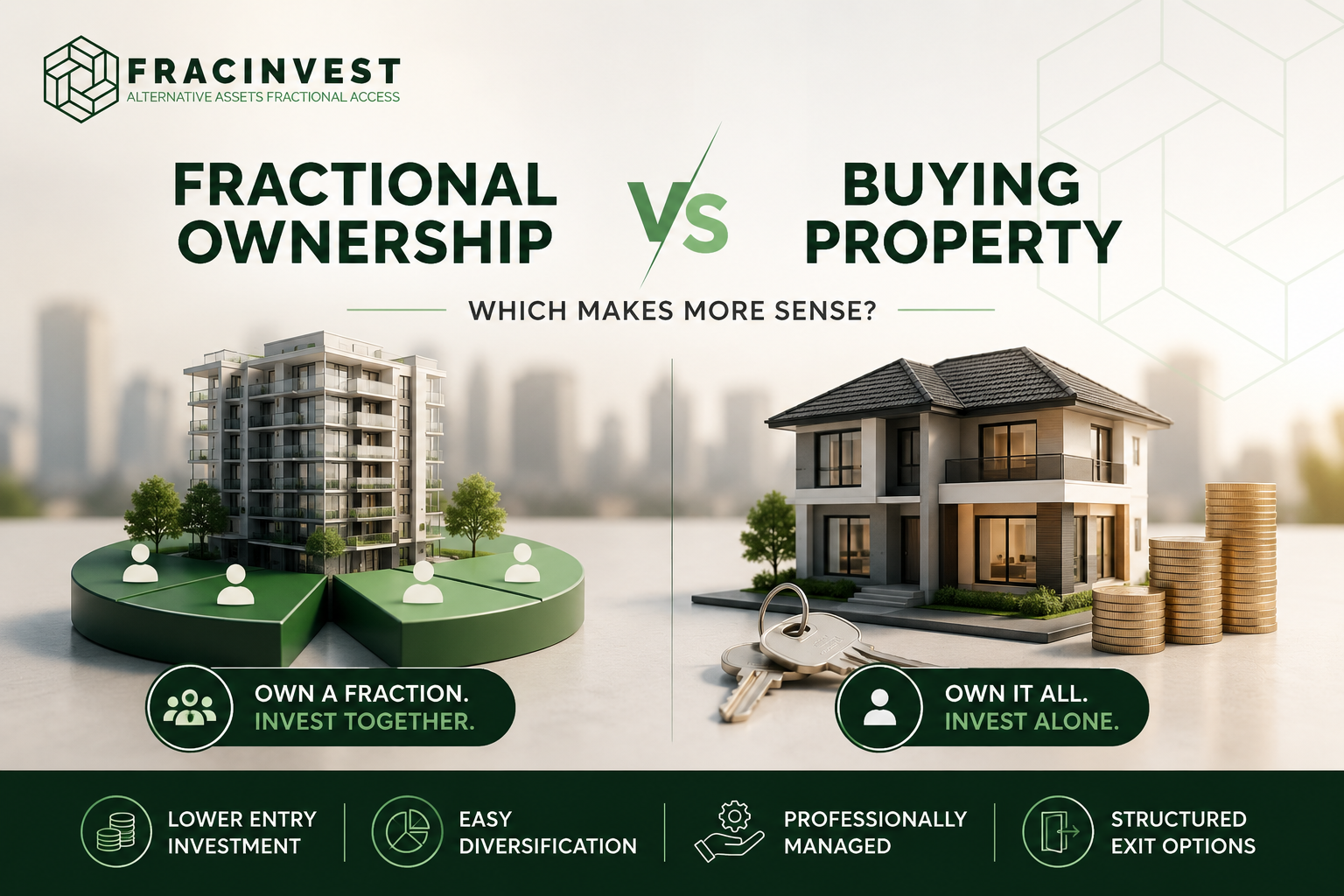
Multiple participants can collectively access an underlying real estate opportunity through an appropriate ownership structure, reducing the individual ticket size while maintaining exposure to the underlying transaction.
More importantly, the structure can potentially be designed around the entire investment lifecycle:
Entry -> Ownership -> Holding Period -> Security -> Exit
Rather than thinking about liquidity only after the investment has been made, the potential exit mechanism can be considered at the structuring stage itself.
For another example of entering real estate during an earlier stage of development, read our guide on Forward Purchase in Real Estate.
A Simple ₹20 Lakh Example: How Structured Participation Can Work
Consider an early-stage residential opportunity where purchasing an entire unit requires a significantly larger capital commitment.
Instead of one investor purchasing the complete property, a structured ownership model can allow multiple participants to collectively participate in the underlying real estate transaction.
For example, assume an individual participates with ₹20 lakh in a structured opportunity with a 24-month defined holding period.
The structure could look like this:
| At Entry | During the Holding Period | At the Defined Exit |
|---|---|---|
| ₹20 lakh participation | Exposure to the underlying residential real estate | Contractual exit mechanism becomes applicable |
| Capital deployed through the structured ownership vehicle | Project progresses through its development cycle | Developer buyback may provide the planned exit, where contractually agreed |
| Underlying residential units form part of the transaction | Property value may change as the project progresses | Capital and any realised gains are distributed according to the transaction structure |
The key difference is that the participant does not necessarily need the capital required to purchase an entire residential unit independently.
₹20 Lakh -> Fractional Participation -> Underlying Real Estate -> Defined Holding Period -> Predefined Exit Mechanism
For example, if a particular opportunity has a targeted total return of 36% over 24 months, a ₹20 lakh participation would correspond to a target exit value of ₹27.20 lakh before considering applicable taxes, charges and other transaction-specific costs.
₹20,00,000 + 36% (₹7,20,000) = ₹27,20,000
But the word target matters.
The ₹27.20 lakh should not be interpreted as an assured maturity value simply because a developer buyback forms part of the structure. The actual outcome continues to depend on the underlying agreements, developer's ability to honour the buyback, project execution, security structure and other risks described earlier in this article.
This illustrates why FracInvest looks at structured ownership as more than simply reducing the ticket size.
The objective is to bring together:
Accessible Participation + Underlying Real Estate + Due Diligence + Defined Tenure + Exit Structure
Investors can explore FracInvest's current opportunities to review the specific terms, risks and exit structure applicable to each opportunity.
Defined Exit Does Not Mean Risk-Free Exit
This distinction is worth repeating.
A defined exit mechanism can provide greater clarity around how an investment is intended to conclude.
It cannot remove every risk involved in getting there.
Construction delays, market conditions, developer financial stress, contractual disputes and liquidity constraints can all affect the eventual outcome.
The purpose of structuring is therefore not to pretend those risks don't exist.
It is to identify them upfront, evaluate them and build appropriate protections around the transaction wherever possible.
Final Thoughts
In traditional real estate investing, investors often spend considerable time identifying where and when to buy, but leave the exit decision for later.
Structured real estate turns that thinking around.
The exit is considered before the entry.
A developer buyback can be one mechanism for creating an identified path to liquidity, particularly in early-stage real estate opportunities. But the words "developer buyback" should never be treated as sufficient due diligence on their own.
The stronger questions are:
Who has committed to the exit? Can they realistically fund it? What security supports the obligation? What happens if they don't perform?
When those questions are evaluated alongside the quality and value of the underlying real estate, a developer buyback becomes easier to assess as part of a broader investment structure.
If you are exploring early-stage real estate with predefined exit mechanisms, you can explore FracInvest's current opportunities to understand how selected opportunities are structured in practice.
Disclaimer: This article is for educational purposes only and should not be considered investment, tax or legal advice. Developer buyback arrangements and predefined exit mechanisms are subject to contractual, developer, market, execution and liquidity risks. Investors should independently review all transaction and legal documents before participating.