
Regulatory & Legal

RERA-Registered Deals vs. Pre-RERA MOU Agreements: Why the Difference Matters for Your Capital

FracInvest Research Desk 2 Jun 2026 7 min read
RERA-Registered Deals vs. Pre-RERA MOU Agreements: Why the Difference Matters for Your Capital

Two investors put money into two residential towers in the same city, at a similar price per square foot, in the same year. One project is RERA-registered. The other is sold on a Memorandum of Understanding signed before the developer had even applied for RERA registration, not unusual in an early pre-launch phase. On paper, both look like the same kind of investment. In practice, the two investors are carrying very different risk, and if something goes wrong, they have very different options.

This distinction gets glossed over more than it should, and it matters most for exactly the investors who can least afford to ignore it, people putting a meaningful share of their savings into one deal, not an institution that can shrug off a bad year.

What RERA registration actually requires

The Real Estate (Regulation and Development) Act, 2016 exists because Indian real estate had a trust problem long before the Act came along: money collected upfront, timelines that slipped by years, and buyers with almost no real recourse when it happened. A project that crosses the Act's size threshold, the exact numbers vary a little by state, cannot legally be marketed or sold until it's registered with the state RERA authority. That registration isn't paperwork for its own sake. It locks the developer into a specific set of obligations.

  • A defined share of what's collected from buyers, commonly around 70%, as prescribed under the Act, has to sit in a separate escrow account, usable only for construction and land costs on that project. Not the developer's other sites, not working capital elsewhere.
  • The completion date filed at registration is not a suggestion. Missing it has real, statutory consequences, not just an apologetic phone call.
  • Under Section 18, a developer who misses that date owes buyers a refund with interest, or ongoing interest until possession, and it's enforceable through the RERA authority, not a decade-long civil suit.
  • Sanctioned layout plans, land title, government approvals, the promoter's track record: all of it gets filed and published on the state RERA website. You're not relying on a brochure.
  • Disputes go to the state Real Estate Regulatory Authority and its Appellate Tribunal, a forum built for exactly this, and generally faster than starting from zero in an already backed-up civil court.

What a pre-RERA MOU deal actually is

A pre-RERA MOU shows up when a developer wants to start collecting soft commitments, and sometimes real money, before a project has cleared what it needs for formal registration. It's a private contract between developer and buyer. It might be tightly drafted or it might not be, but either way, none of RERA's statutory protections come attached automatically. In practice:

  • Nothing requires the money to be escrowed. It can go wherever the developer decides, including a completely different project.
  • Any completion date in the MOU is a promise between two parties, not a legal obligation. What happens if it slips depends entirely on what got written down, and on whether you're willing and able to sue over it.
  • The project may still be missing approvals. That's often the whole reason it isn't registered yet, and that risk sits with the investor.
  • There's no requirement to disclose title documents or the promoter's litigation history the way a RERA filing forces.
  • If it goes wrong, you're in ordinary civil court, slower, costlier, and without RERA's faster enforcement powers.

Side by side

ProtectionRERA-registered projectPre-RERA MOU deal
Escrow-controlled fundsMandatory (~70% of collections)No legal requirement
Delivery timelineStatutory, filed with the authorityContractual promise only
Delay compensationInterest under Section 18, RERA-enforcedDepends entirely on MOU terms
Title & approval disclosurePublic filing on state RERA portalNot mandated
Grievance forumRERA Authority & Appellate TribunalCivil court only
Project approval statusFully approved before registrationMay still be pending

Why this matters more for fractional and retail investors

A large institutional investor negotiating directly with a developer has options an individual usually doesn't. They can run their own legal due diligence, push for custom escrow terms, and if a project slips two years, it barely dents a portfolio spread across dozens of assets. Put a meaningful share of your own savings into one pre-RERA commitment and you don't have that cushion, you're exposed to whatever the developer chooses to disclose, on whatever timeline they choose to honor.

That's the gap platforms built around fractional ownership are supposed to close: doing the verification work, registration status, escrow structure, title, before a deal is ever listed, instead of after your money has already moved.

How FracInvest screens for this

Every opportunity on FracInvest goes through legal review before it's listed, RERA registration number verified, title deed and encumbrance certificate checked, escrow account confirmed with the partner bank. The RERA number for every live deal sits right on its page, so you can check it yourself on the relevant state portal instead of taking our word for it. We don't list pre-RERA MOU-stage inventory.

None of this makes real estate risk-free. Markets move, and even registered projects can run late. What RERA registration does is take one entire category of avoidable risk off the table before your capital is anywhere near it.

Sources and further reading

Ready to review an opportunity?

Compare current opportunities, documents, risks, projected returns, and exit terms.

View Opportunities

More from the blog

Regulatory & Legal

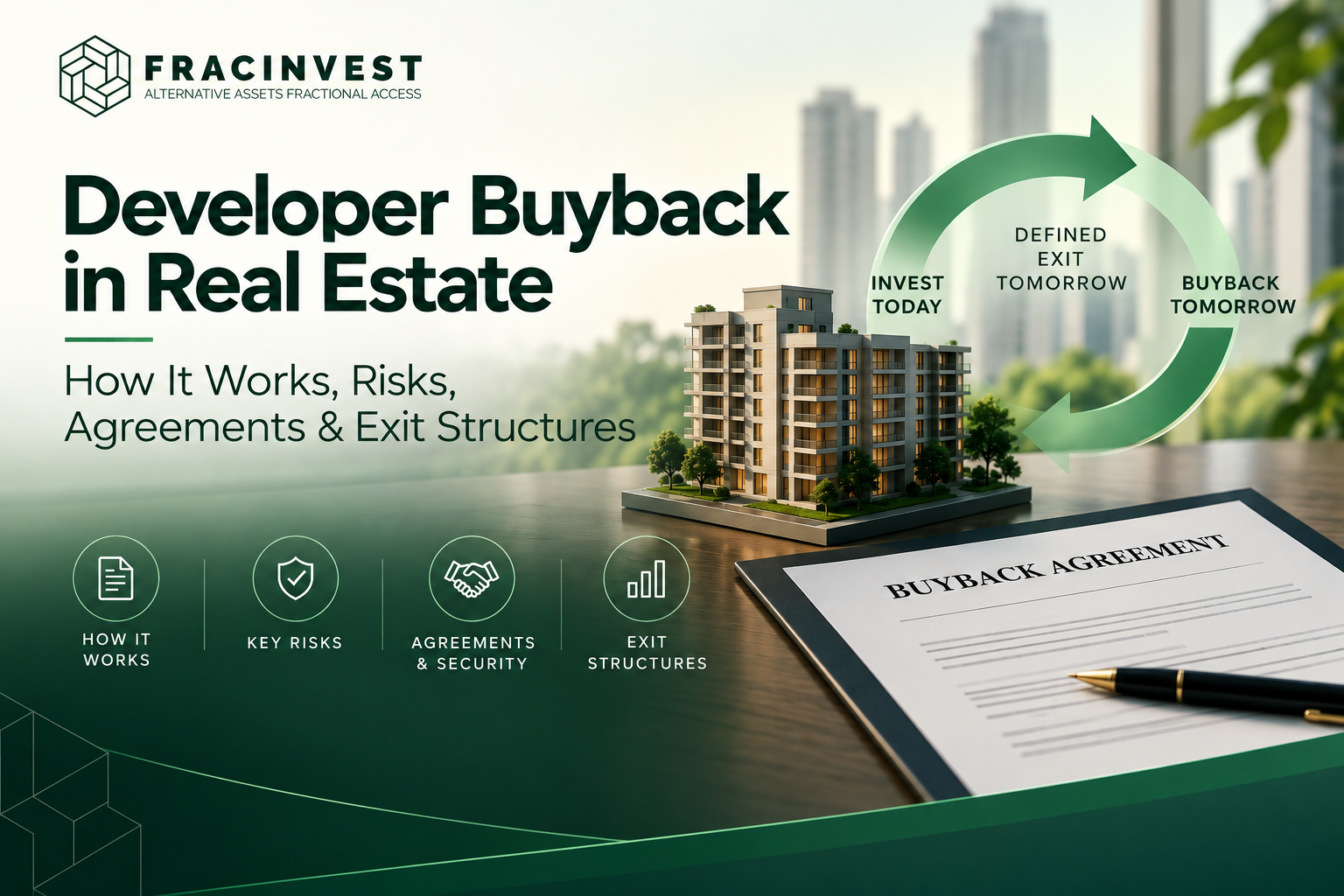
Developer Buyback in Real Estate: How It Works, Risks, Agreements & Exit Structures

A developer buyback is an arrangement under which a developer, promoter or another identified entity agrees to repurchase a property or investment interest from the buyer after a specified period, subject to agreed contractual terms.

Saandip S Prabhudesai 8 Sep 2026 10 min read
Investment Strategy

Under-Construction vs Ready-to-Move Property: Which Is Better for Investment in India?

Should you buy a property that is already completed, or enter while the project is still under construction? Both can be good real estate strategies. But they are designed to achieve different things.

Saandip S Prabhudesai 6 Sep 2026 8 min read
Investment Strategy

Senior Secured Bonds vs Structured Fractional Real Estate

Compare senior secured bonds with structured fractional real estate across returns, asset backing, risks, liquidity and defined exit terms.

Saandip S Prabhudesai 4 Sep 2026 10 min read
Regulatory & Legal

Is Fractional Ownership of Real Estate Legal in India?

Is fractional ownership legal in India? Explore how REITs, SM REITs and traditional SPV-based fractional real estate models are structured for investors.

Saandip S Prabhudesai 27 Aug 2026 8 min read
Regulatory & Legal

Fractional Real Estate Ownership Investments Legal for NRIs in India?

The short answer is that NRIs can invest in Indian real estate, but whether they can participate in a particular fractional ownership opportunity depends on how that investment is legally structured

FracInvest Research Desk 27 Aug 2026 10 min read
Investment Strategy

What Is Forward Purchase in Real Estate? Benefits for Investors

Learn how forward purchase in real estate allows investors to enter promising projects early, benefit from launch-stage pricing, and pursue an exit before completion through FracInvest's fractional ownership model.

Saandip S Prabhudesai 25 Aug 2026 8 min read
Investment Strategy

Fractional Ownership vs Buying Property: Which Makes More Sense?

What if you found a ₹2 crore property that looked like a good investment, but you didn't want to put ₹2 crore into a single asset or take on a large home loan? That's where fractional ownership becomes interesting.

Saandip S Prabhudesai 19 Aug 2026 6 min read
Regulatory & Legal

How to Own Real Estate Without Buying the Entire Property

Fractional ownership and structured real estate investments offer one such approach. Instead of one investor funding the entire property, multiple investors can participate in a carefully structured opportunity, subject to the legal and commercial structure of the investment.

FracInvest Research Desk 17 Aug 2026 6 min read
Investment Strategy

Early-Stage Real Estate Investment: How Investors Can Access Real Estate Before Project Completion

Real estate creates value long before a property is completed. Explore how early-stage real estate investment and structured fractional access can help investors participate in the real estate value-creation cycle with lower capital requirements than direct property ownership.

FracInvest Research Desk 12 Aug 2026 6 min read
Investment Strategy

Alternative Real Estate Investments: 8 Ways to Invest in Real Estate

Explore 8 alternative real estate investment options in India, including developer MOUs, secured real estate bonds, fractional ownership, private credit, AIFs, REITs, SM REITs and commercial real estate.

FracInvest Research Desk 11 Aug 2026 8 min read
Investment Strategy

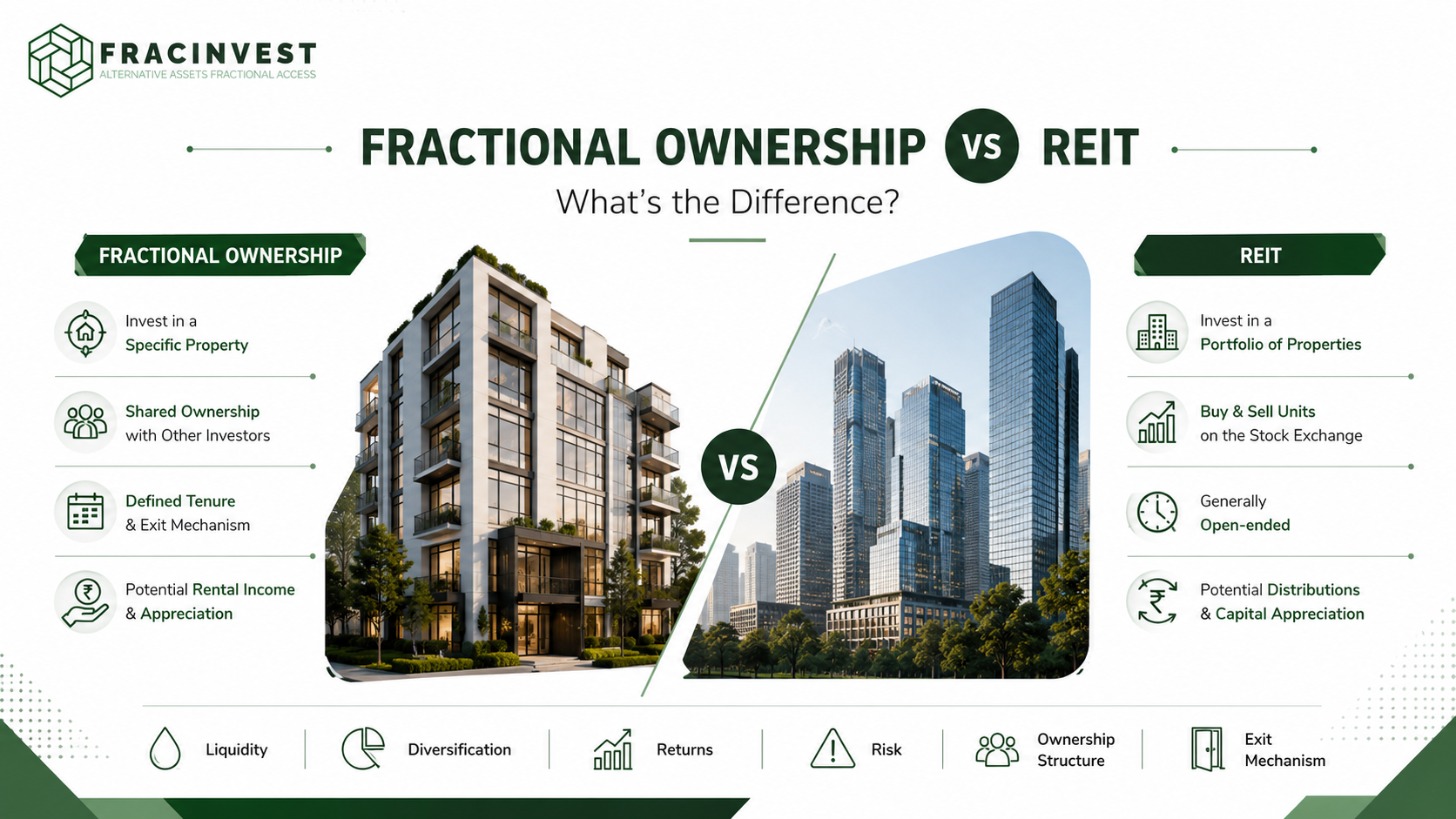
Fractional Ownership vs REIT: What's the Difference?

Understand the difference between fractional ownership and REITs, including liquidity, diversification, returns, risk, ownership structure and exit mechanisms.

FracInvest Research Desk 11 Aug 2026 10 min read
Investment Strategy

Is Fractional Ownership Really Illiquid? The Myth Investors Need to Reconsider

When investors evaluate fractional real estate opportunities, the focus should not only be on the potential return. The investment structure, underlying asset, holding period, exit mechanism and clarity around the exit should be equally important.

FracInvest Research Desk 9 Aug 2026 10 min read
Investment Strategy

Exploring Pre-RERA Land Investments: High Risk, High Reward Opportunities in Real Estate

Real estate investing has evolved significantly over the past decade. While most investors are familiar with ready-to-move properties, under-construction apartments, and commercial assets, one of the most lucrative yet least understood segments remains pre-RERA land investments.

FracInvest Research Desk 7 Aug 2026 8 min read
Investment Strategy

Rising Property Prices in Bengaluru: Why Smart Investors Are Choosing Fractional Ownership

A Smarter Alternative: Fractional Ownership allows investors to participate in premium real estate opportunities without committing to the entire value of a residential property.

FracInvest Research Desk 6 Aug 2026 6 min read
Investment Strategy

A 10-Point Due Diligence Checklist Before You Invest in a Fractional Real Estate Deal

Most red flags in a fractional real estate deal are visible before you invest a rupee, if you know exactly where to look. Here's the checklist worth running through.

FracInvest Research Desk 17 Jul 2026 6 min read
Investment Strategy

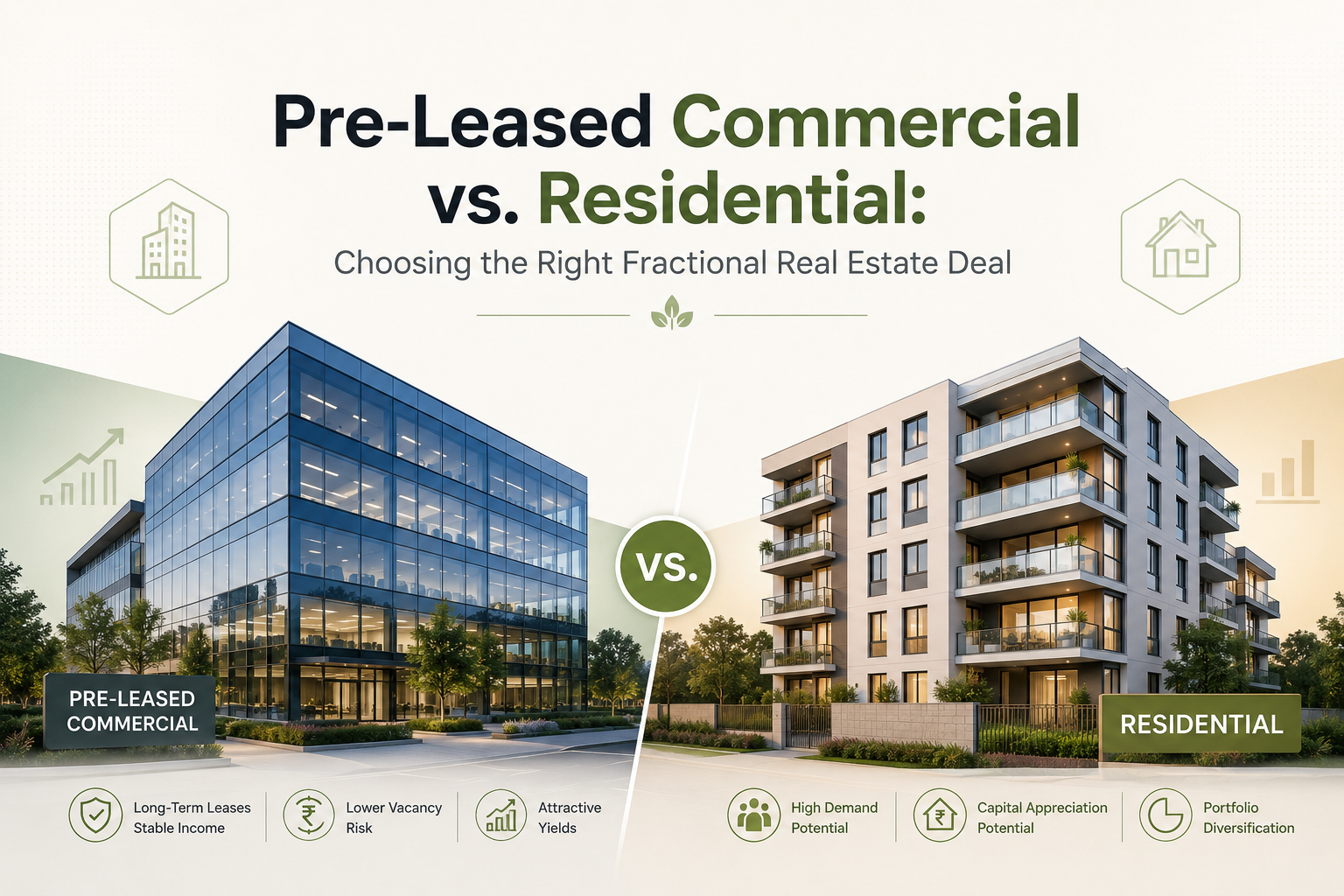
Pre-Leased Commercial vs. Residential: Choosing the Right Fractional Real Estate Deal

Same fractional ownership model, two very different assets underneath. Commercial and residential real estate behave differently on yield, risk, and how your capital actually grows.

FracInvest Research Desk 13 Jul 2026 7 min read
Regulatory & Legal

Taxation of Fractional Real Estate Investments in India: What You Actually Owe

Rental income, capital gains, and TDS all work a little differently once your real estate holding is fractional. A practical walk-through, not tax advice.

FracInvest Research Desk 8 Jul 2026 8 min read
Investment Strategy

How Exit Works in Fractional Real Estate: Buyback, Resale, and Liquidity Explained

Real estate has never been a liquid asset, and fractional ownership doesn't fully change that. Here's exactly how you get your money out - and when.

FracInvest Research Desk 2 Jul 2026 7 min read
Investment Strategy

How Fractional Ownership Is Giving Retail Investors the Same Real Estate Access as UHNIs

Premium real estate has always delivered strong, stable returns. The entry ticket just kept most people out. Fractional ownership is changing that.

FracInvest Research Desk 16 Jun 2026 6 min read