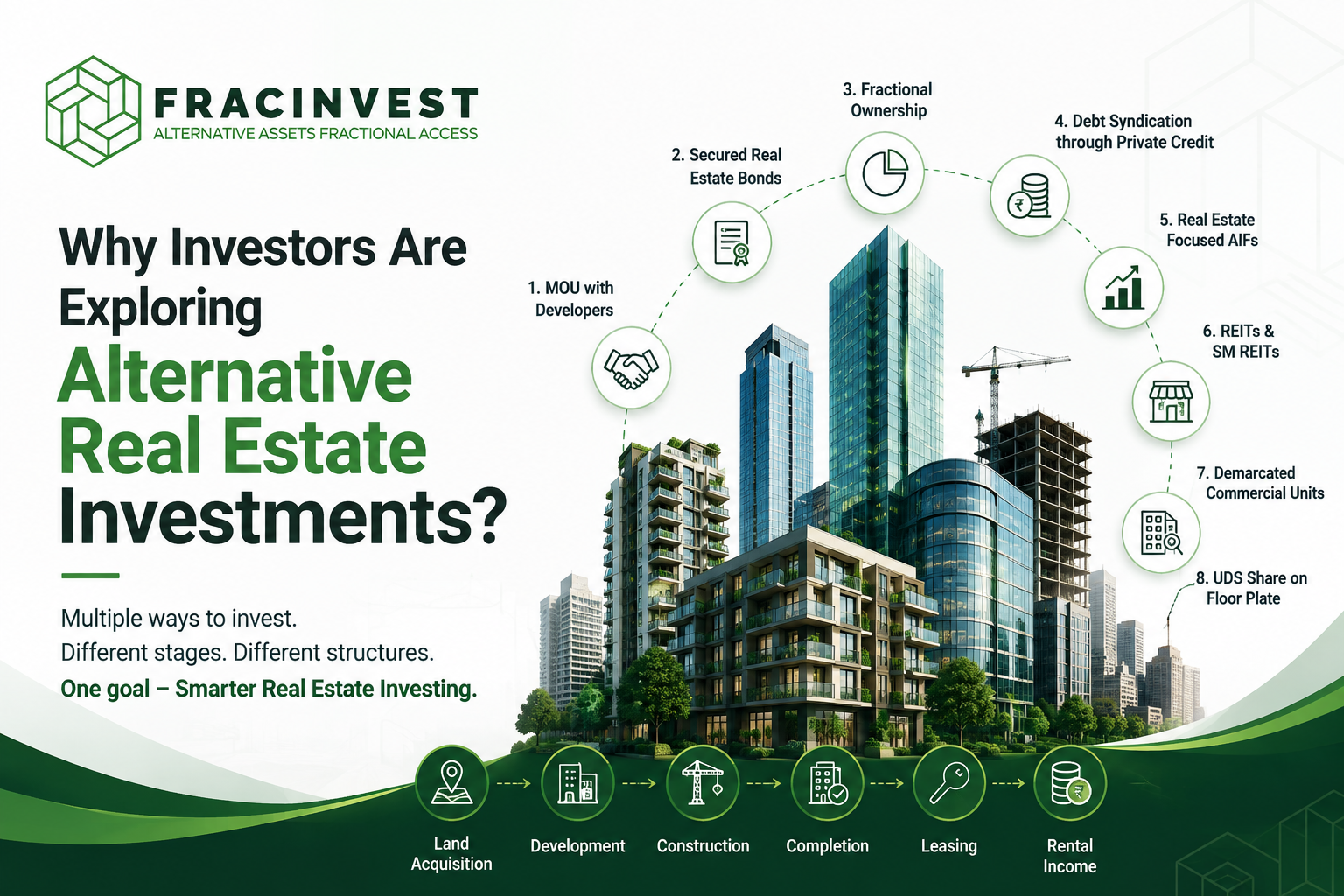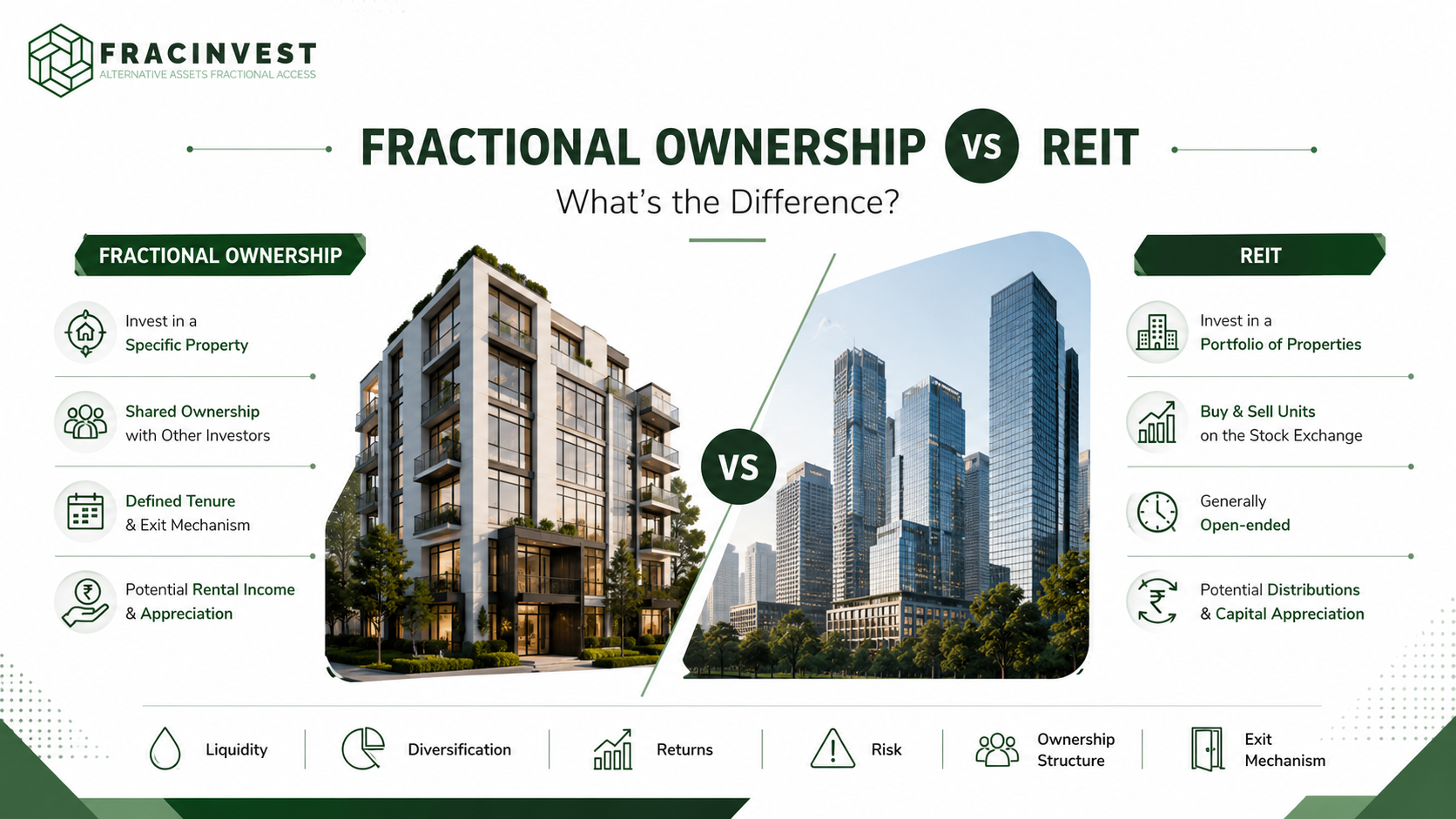
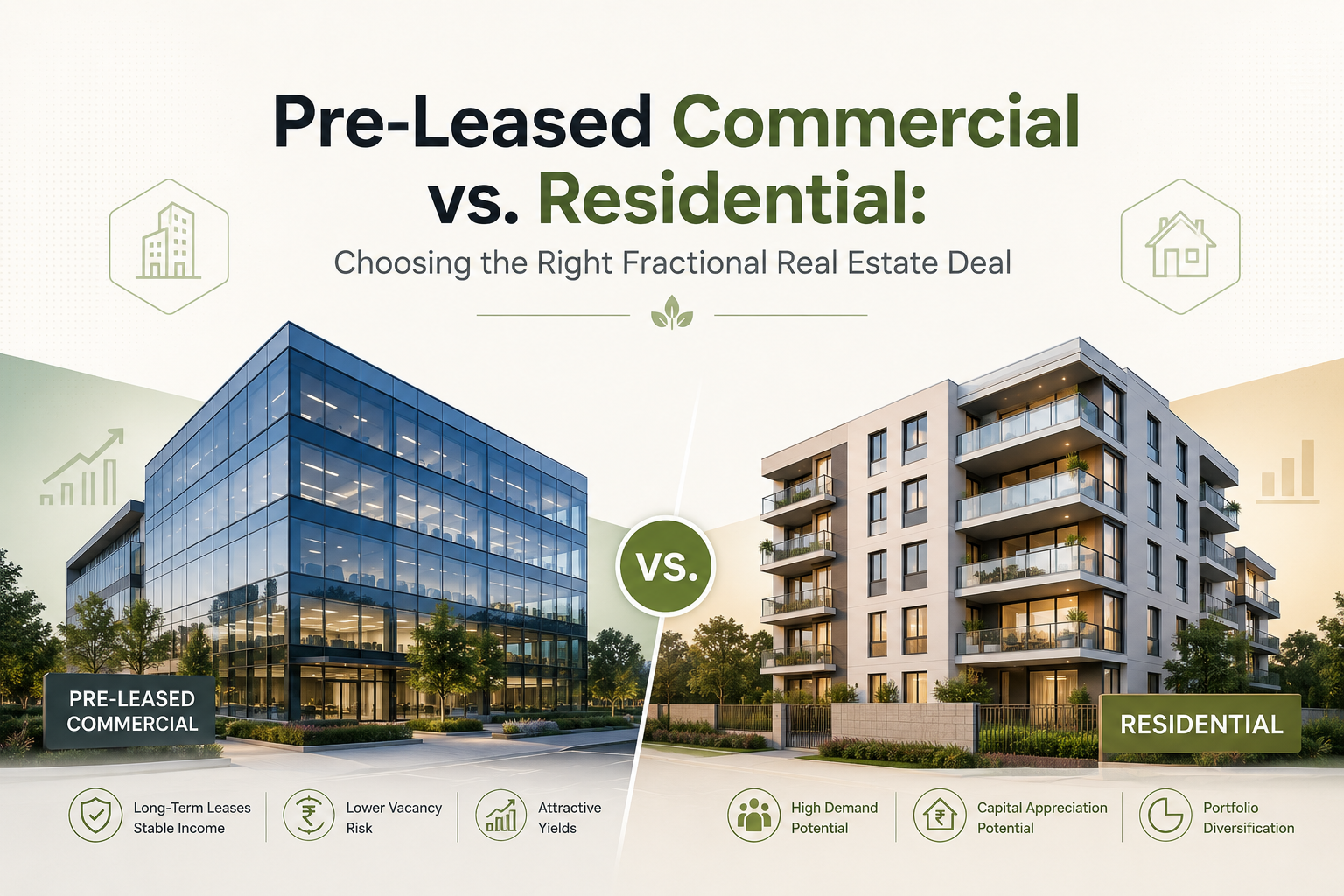
Scroll through any fractional real estate platform and the deals split naturally into two families: pre-leased commercial assets, IT parks, office towers, business-district floors with a corporate tenant already in place, and residential developments, from luxury towers to branded villas. The ownership mechanism is identical either way. What sits underneath it is not. Commercial and residential real estate generate returns through genuinely different mechanics, and picking between them should come down to which mechanic actually matches what you want your money to do.
How commercial assets generate returns
A pre-leased commercial asset already has a tenant, often a large corporate, paying rent under a lease signed before the deal was even listed. That means income starts from day one of your investment, distributed on a quarterly or similar schedule, rather than depending on a future leasing effort that might or might not go well. Appreciation on top of that income tends to track the strength of the business district, the quality and renewal likelihood of the anchor tenant, and how the asset's cap rate moves relative to comparable commercial properties nearby.
How residential assets generate returns
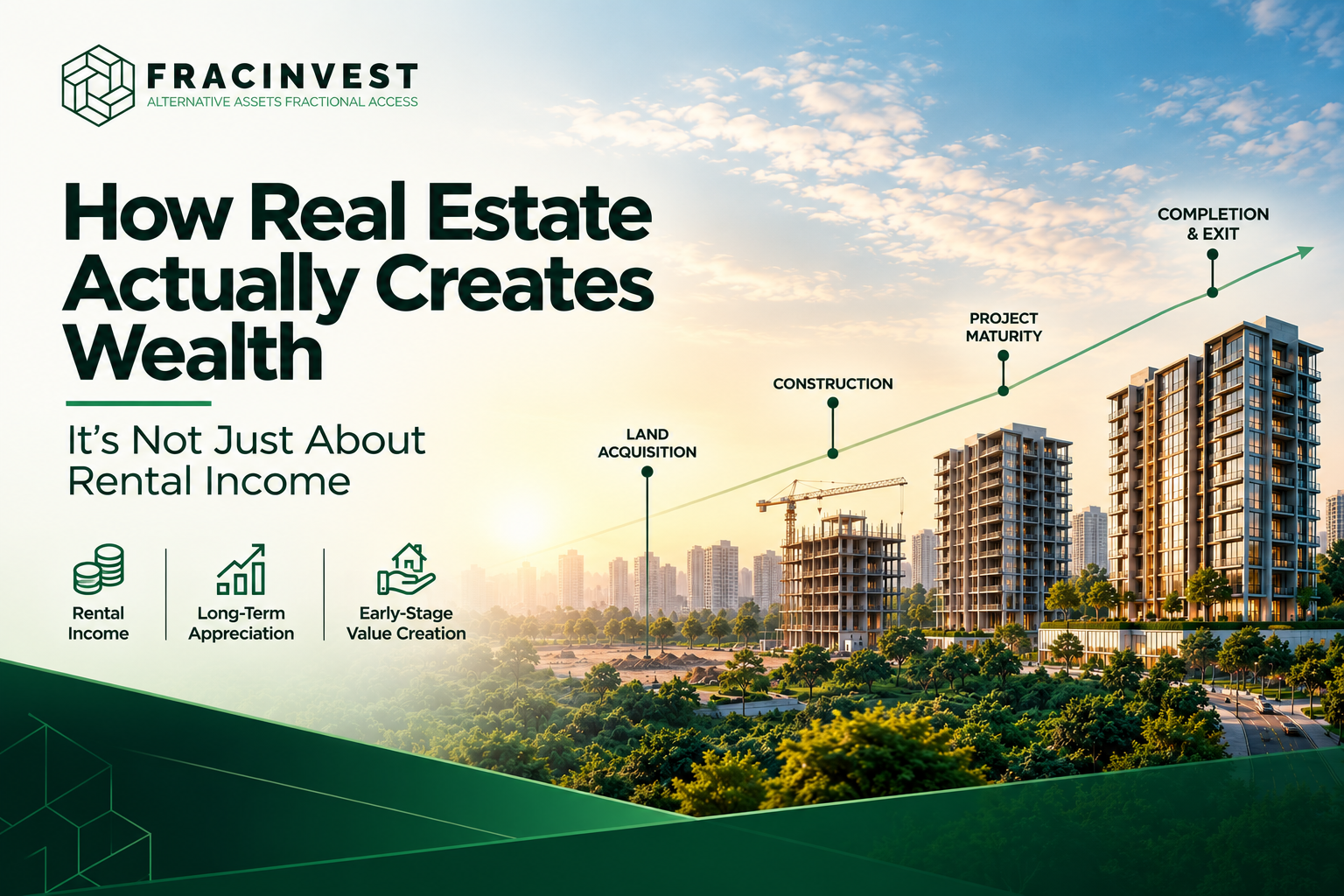
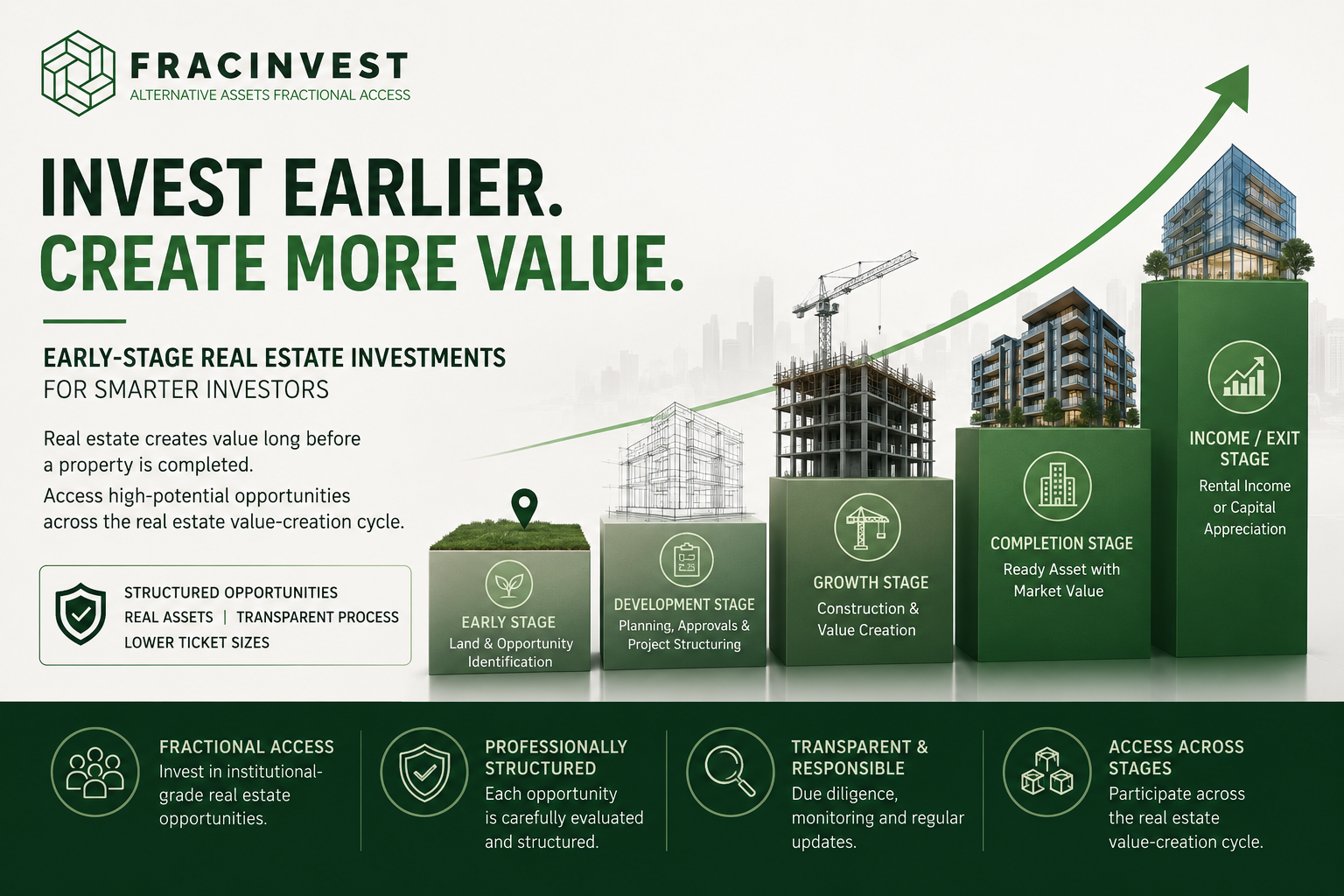
Residential fractional deals more often center on capital appreciation rather than running income, buying into a premium development at a pre-launch or early-construction price, with the return coming from the gap between that entry price and the value at completion or resale, plus whatever buyback or sale mechanism the deal specifies. Rental income is possible if the unit is leased out, but it's typically less predictable and lower-yielding than a pre-leased commercial asset with an anchor tenant already committed. Residential deals are also more directly exposed to construction and delivery timelines, the RERA-registered completion date matters more here than it does for an asset that's already built and tenanted.
The risk profile actually differs, not just the return
| Pre-leased commercial | Residential | |
|---|---|---|
| Income visibility | High, tenant and lease already in place | Low to moderate, depends on leasing after possession |
| Vacancy risk | Low during the lease term, real at renewal | Not applicable unless leased out post-possession |
| Construction/delay sensitivity | Low, asset is typically already built | Higher, tied to the developer's delivery timeline |
| Return driver | Rental yield, plus modest appreciation | Primarily capital appreciation |
| Typical exit route | Sale/refinance of the leased asset, or buyback | Developer buyback, or resale at/after completion |
How to actually decide
If what you want from this slice of your portfolio is predictable, quarterly cash flow with lower sensitivity to construction timelines, pre-leased commercial assets are built for exactly that. If you're comfortable holding through a construction or lease-up period in exchange for a shot at stronger capital appreciation, and you've checked the developer's delivery track record and the project's RERA status closely, residential can fit that role instead. Many investors reasonably hold both, using commercial exposure for income and residential exposure for growth, rather than treating it as an either-or choice.
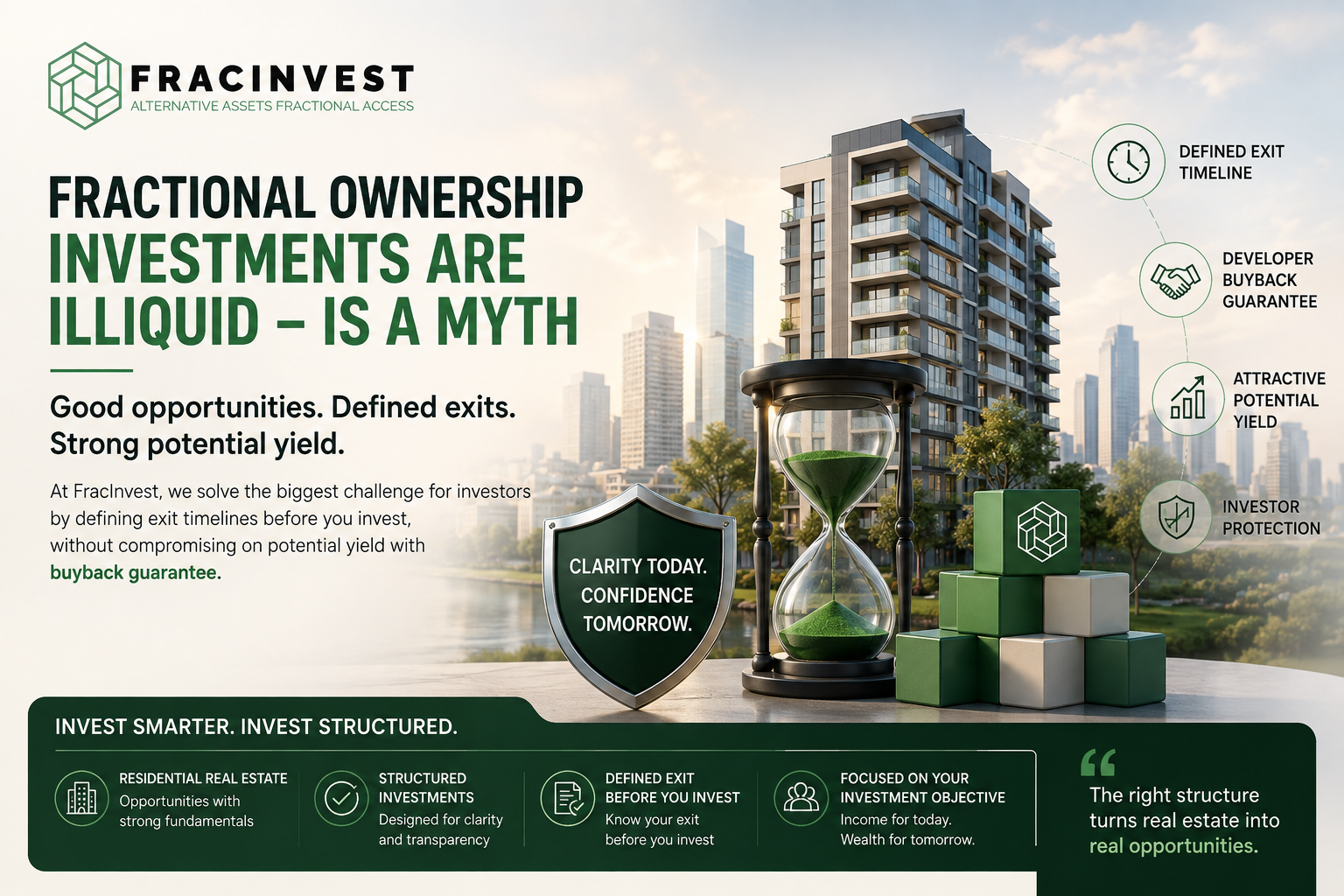
On FracInvest, this distinction is built directly into the tier labels, Select-tier deals are specifically pre-leased commercial assets with the vacancy risk already removed, while Prime and Secure deals lean toward premium residential development backed by top-tier developers and buyback guarantees. Knowing which family a deal belongs to before you read a single number on the page tells you most of what you need to know about how it's actually going to behave.