
Most of what goes wrong in a fractional real estate deal was visible before the money moved, it just wasn't checked. None of the items below require legal training. They require knowing exactly where to look, and being willing to ask a platform a direct question before you invest instead of after something's already gone sideways.
1. Is the project actually RERA-registered?
Every eligible project should carry a RERA registration number you can independently verify on the relevant state RERA portal, not just a claim on the listing page. If a deal is pre-RERA or MOU-stage, that's not automatically disqualifying, but it changes your legal protection substantially, and you should know that going in.
2. Where exactly does your money go?
Ask whether funds are held in an escrow account restricted to that specific project's construction and land costs, and whether a bank, not just the developer, is party to that arrangement. "Escrow" without a named bank and a defined release mechanism is a much weaker protection than it sounds.
3. Who is the developer, and what's their actual delivery record?
A well-known name isn't the same as a good delivery record on the specific type of project you're looking at. Ask for, or independently search for, the developer's track record on completion timelines for comparable projects, not just their flagship ones.
4. Does the risk tier actually match the deal's structure?
A platform's risk label, however it's named, should correspond to something concrete: is the asset pre-leased or pre-launch, is the return backed by a buyback guarantee or purely by appreciation, is the developer Tier-1 or emerging. If the label and the underlying structure don't line up once you read the fine print, ask why.
5. What is the exit mechanism, specifically?
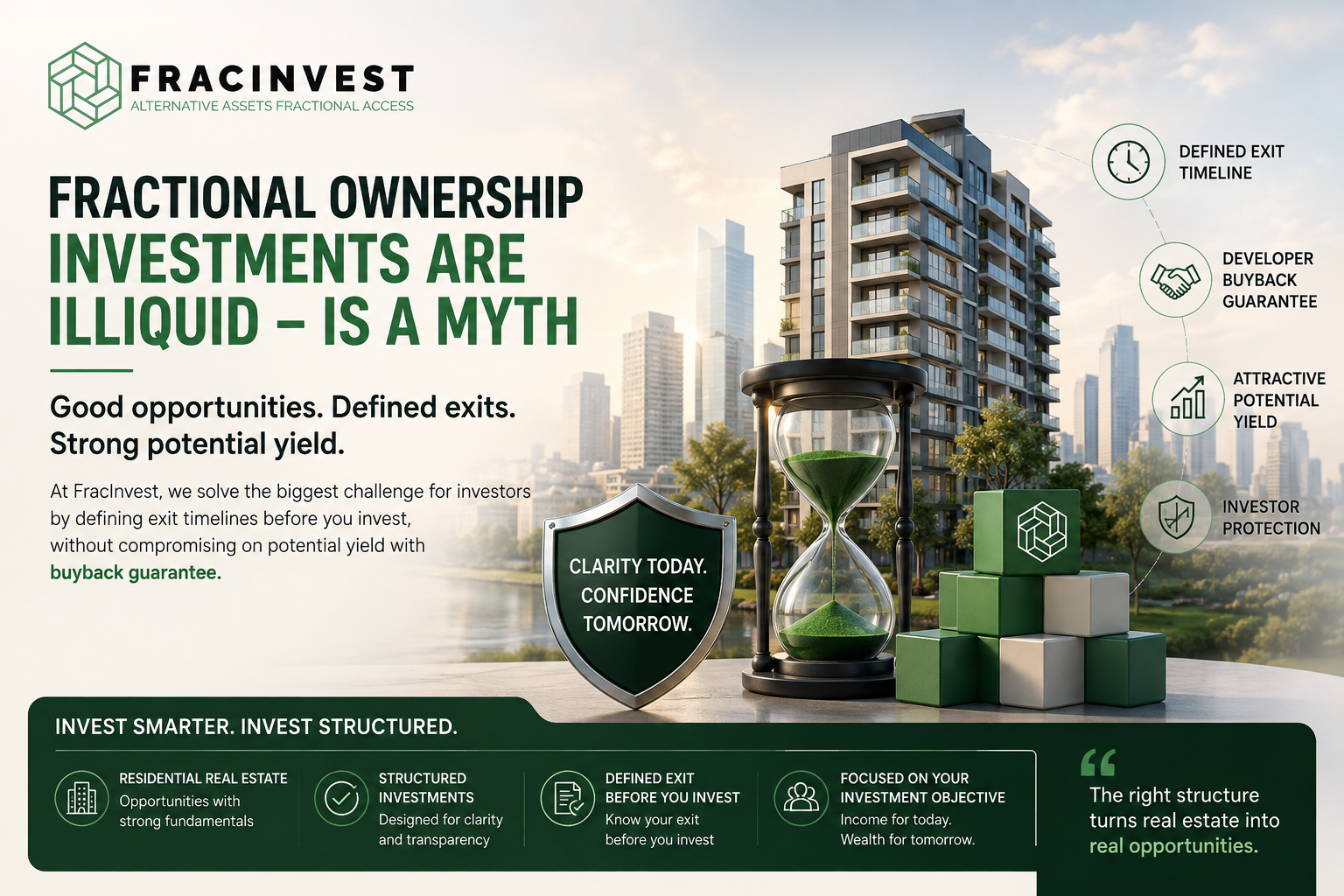
Buyback, resale, or asset sale, and who is contractually obligated to make it happen, and what backs that obligation. A return figure with no clear exit path attached to it is closer to a hope than a projection.
6. Is the return figure gross or net?
Platform fees, applicable taxes, and TDS can meaningfully change what actually lands in your account versus the headline number on the listing. Ask specifically what the quoted return figure includes and excludes.
7. What legal structure actually holds title to the asset?
Your capital should flow into a structure, an SPV, LLP, or similar, that holds legal title and documents your proportional share in an enforceable way, not into an informal pooling arrangement with no clear legal claim behind it.
8. What happens if the project is delayed?
For under-construction assets, ask what compensation or recourse is defined if the completion date slips, and whether that recourse is statutory, as it is under RERA, or purely contractual.
9. What does the platform actually charge, and when?
Entry fees, exit fees, and any ongoing management charges should be disclosed upfront and itemized, not folded silently into the return figure you're shown.
10. Can you verify any of this yourself?
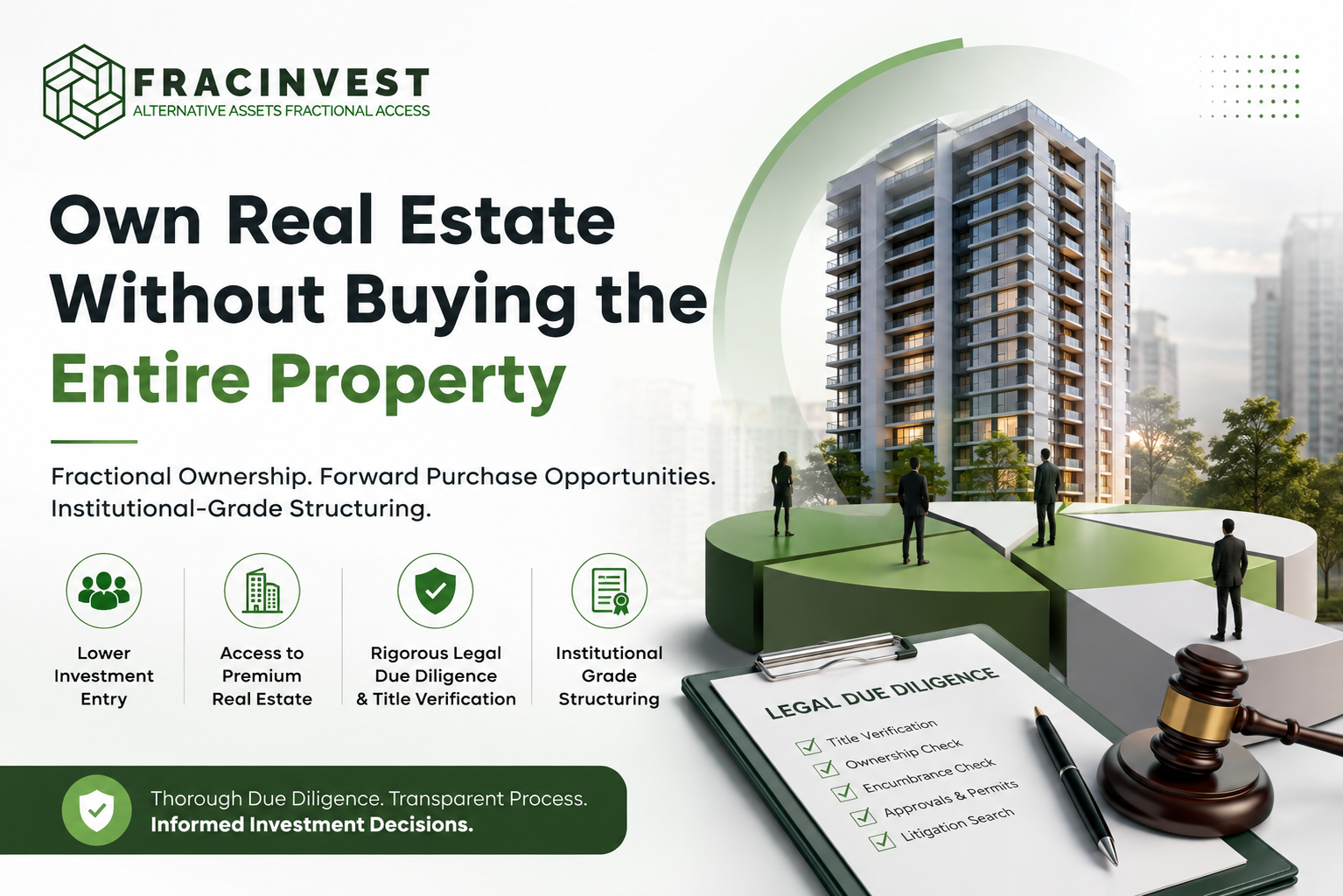
A platform that's done its diligence properly should have no issue with you independently checking the RERA registration, the title documents, and the developer's other projects. If a platform discourages that kind of verification, treat it as the loudest red flag on this list.
| Check | Where to verify it |
|---|---|
| RERA registration | State RERA portal, using the registration number |
| Escrow arrangement | Ask the platform to name the escrow bank |
| Developer track record | Public records, other project reviews, state RERA filings |
| Exit mechanism & guarantee | The deal's legal documents, not just the listing page |
| Legal structure / title | SPV/LLP formation documents disclosed by the platform |
This checklist isn't meant to make fractional real estate sound riskier than it is, it's meant to make the risk visible, because visible risk is manageable risk. Every item above is something FracInvest discloses on the deal page itself before you invest, the RERA number, the escrow bank, the exit mechanism, the tier classification, precisely so this checklist is something you can run through in minutes, not weeks.