
Real estate has always been a preferred investment option in India. But buying a property outright requires significant capital, and it also means taking responsibility for the entire asset.
So, is there a way to participate in real estate without purchasing an entire property?
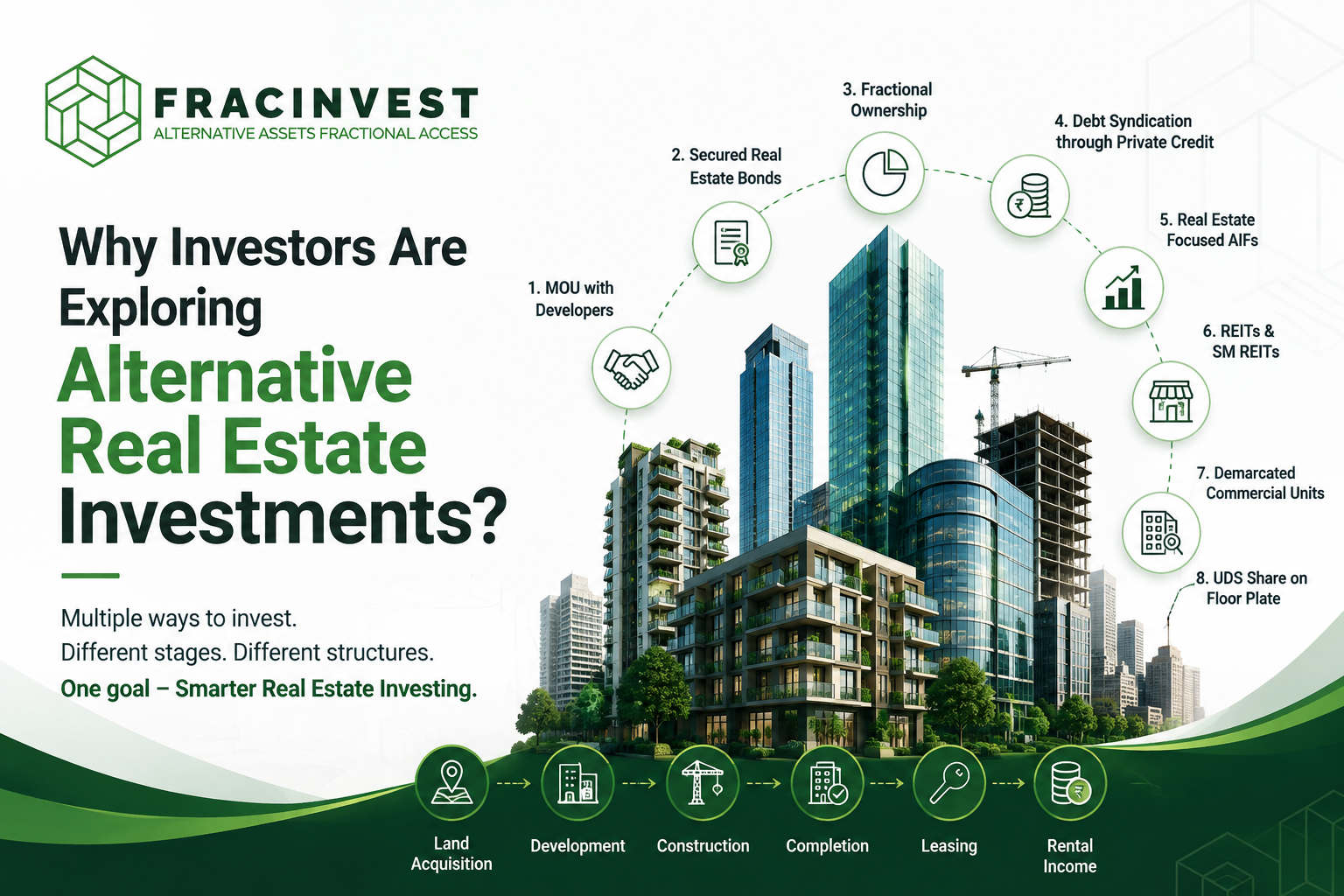
Fractional ownership and structured real estate investments offer one such approach.
Instead of one investor funding the entire property, multiple investors can participate in a carefully structured opportunity, subject to the legal and commercial structure of the investment.
For investors, the attraction is not simply a lower investment amount. It is about getting access to professionally selected and institutionally structured real estate opportunities.
What Is Fractional Real Estate Investment?
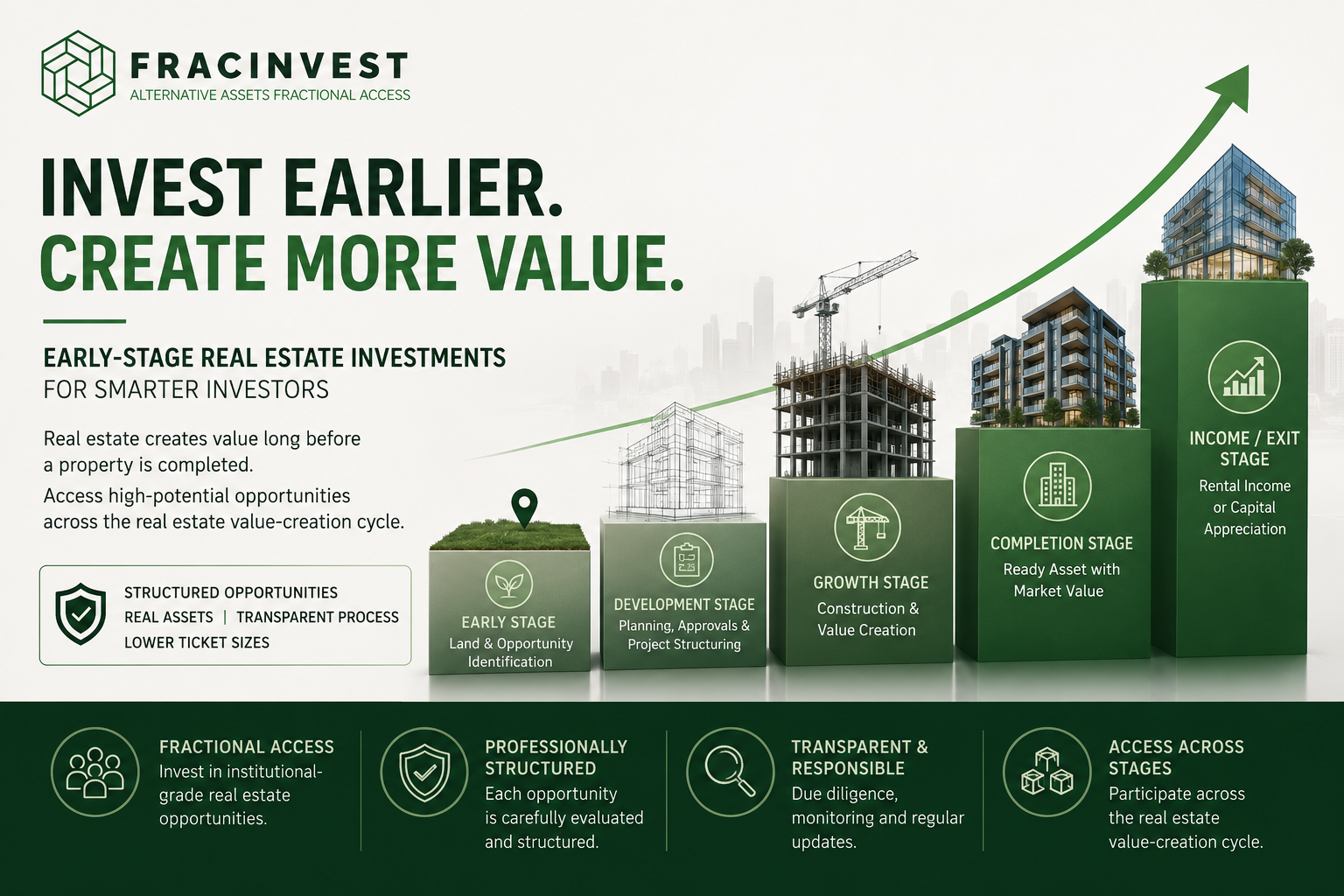
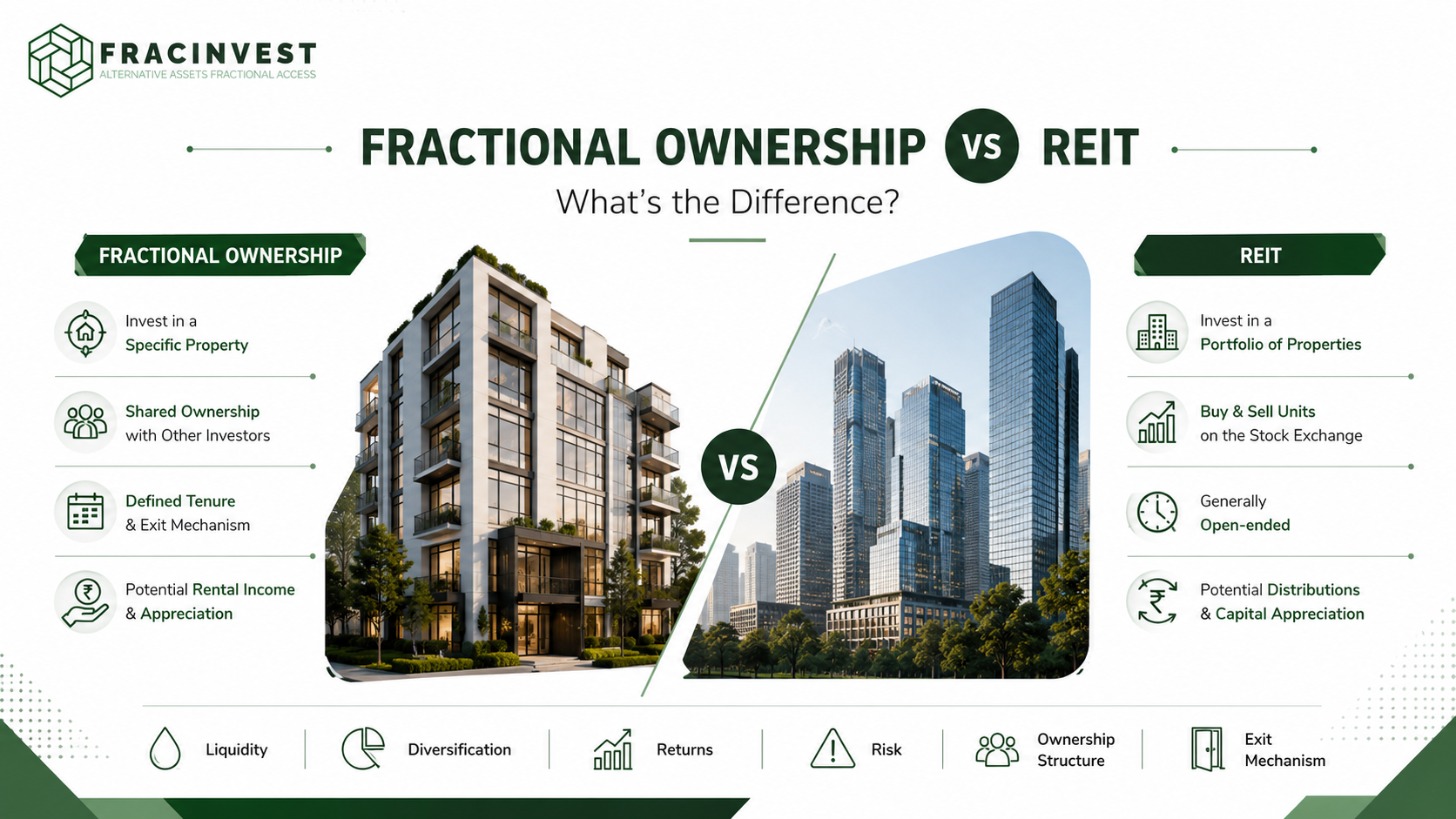
Fractional ownership allows multiple investors to participate economically in a real estate asset or opportunity.
Depending on the structure, investors may participate through an SPV or another legally defined investment arrangement.
This can potentially provide:
- Lower capital requirements compared with purchasing an entire property
- Access to selected real estate opportunities
- Portfolio diversification
- Professionally structured investment opportunities
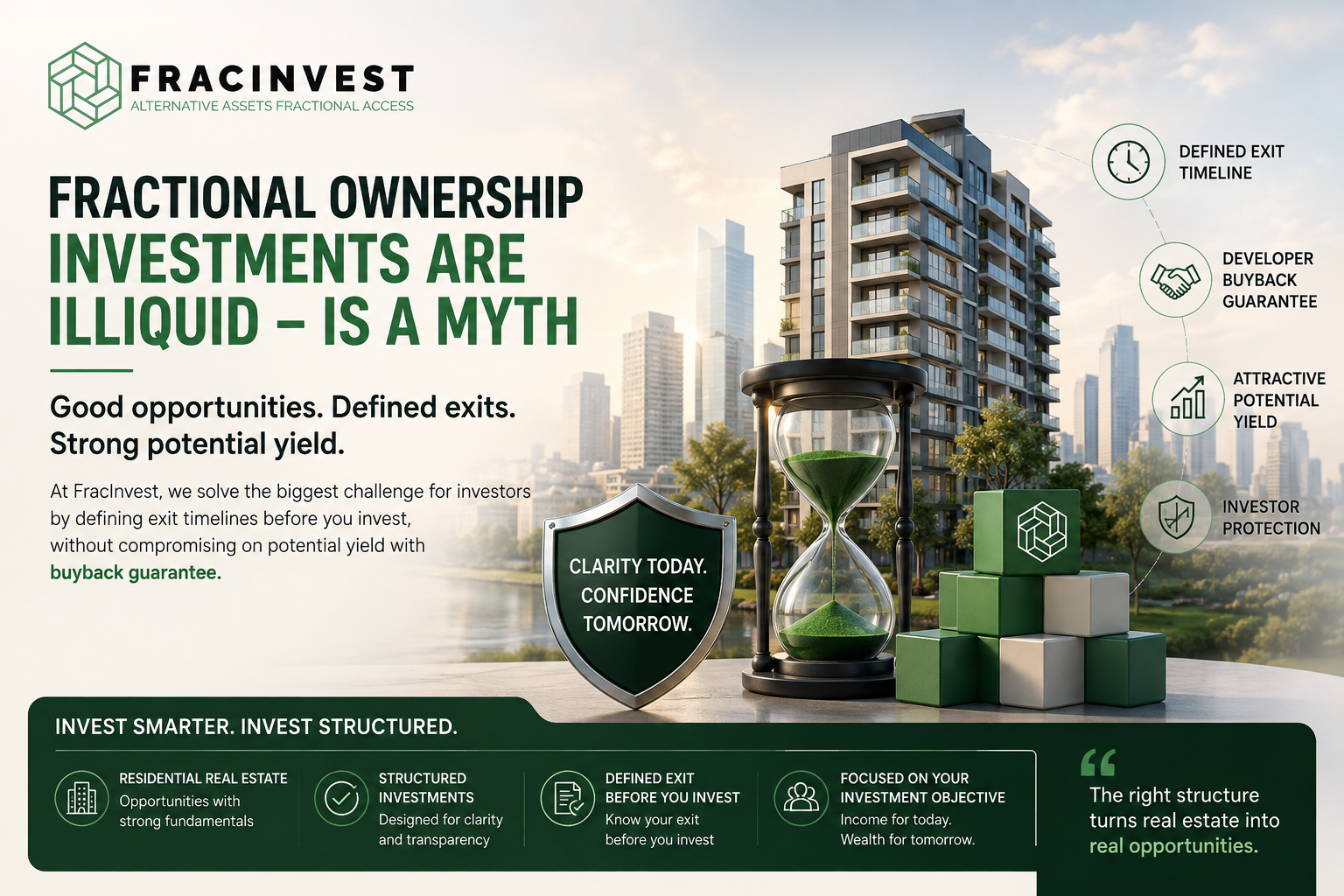
- Defined investment tenure and exit mechanisms, where applicable
However, fractional ownership does not eliminate real estate investment risk.
The quality of the underlying property and, more importantly, the legal and financial structure of the investment remain critical.
Due Diligence Starts With the Title
When investing in real estate, one of the most important questions is:
Does the person or entity selling the property actually have a clear and marketable title to it?
This is why legal due diligence should go much deeper than simply checking whether a project is RERA registered.
A comprehensive legal review of an investment opportunity may include:
- Verification of ownership and title
- Review of the chain of title and historical ownership
- Examination of title deeds and registered documents
- Search for existing mortgages, charges, liens or encumbrances
- Verification of applicable land records
- Review of development agreements and joint development arrangements, where applicable
- Verification of relevant approvals and permissions
- RERA registration and project-related documentation, where applicable
- Identification of pending litigation or potential legal disputes
- Verification of the legal authority of the parties entering into the transaction
Title verification is particularly important because the underlying real estate is ultimately the foundation of the investment.
An attractive location or projected return cannot compensate for an unresolved title issue.
From Property Due Diligence to Institutional-Grade Structuring
At FracInvest, the objective is to go beyond simply identifying a property.
The opportunity is evaluated from both a real estate perspective and an investment structuring perspective.
This includes looking at:
The Asset
Location, property fundamentals, developer, project stage, valuation and potential for value creation.
The Legal Foundation
Title verification, ownership, encumbrances, approvals, agreements and other relevant legal documentation.
The Investment Structure
How investors participate, how funds are deployed, ownership or economic rights, governance, documentation and the obligations of each party.
The Exit
Investment tenure, proposed exit mechanism and the commercial arrangements supporting the exit, where applicable.
This approach is intended to bring an institutional-grade framework to opportunities that would otherwise be difficult for individual investors to evaluate independently.
Why Institutional-Grade Structuring Matters
A good real estate opportunity is only one part of the equation.
Investors also need to understand how the investment itself is structured.
Questions such as:
- Who owns the underlying asset?
- Through which entity is the investment being made?
- What rights does the investor have?
- How are investor funds deployed?
- What happens if the project is delayed?
- What is the proposed exit mechanism?
- What protections are documented for investors?
- What happens in different default or exit scenarios?
should be addressed before an investment decision is made.
This is where structured investment models can add significant value.
The objective is to create a framework where the asset, legal documentation, investor rights, capital deployment and exit strategy are considered together, rather than treating the property itself as the entire investment thesis.
How FracInvest Approaches Opportunities
FracInvest focuses on Sourcing, Structuring and Monitoring selected real estate investment opportunities.
Before an opportunity is presented to investors, the platform evaluates the property and investment proposition through a structured due diligence framework.
The process broadly looks at:
Source -> Screen -> Legal Due Diligence -> Financial & Commercial Evaluation -> Structure -> Investor Evaluation -> Monitor
The purpose is not to eliminate investment risk. That is not possible.
The purpose is to give investors better information, better structure and greater clarity before they make an investment decision.
You Don't Have to Buy the Entire Property
Real estate investing is evolving.
Investors today can explore different ways of participating in real estate without necessarily purchasing an entire property themselves.
Fractional ownership and structured real estate investments can provide access to selected opportunities with a potentially lower capital commitment.
But the real value lies beyond simply reducing the ticket size.
The quality of the underlying asset, legal title, documentation, investment structure, investor rights and exit mechanism are what investors should examine carefully.
At FracInvest, the focus is to combine real estate due diligence, rigorous title verification and institutional-grade investment structuring to help investors evaluate opportunities more effectively.
Because investing in real estate should begin with understanding what you are investing in, how you own it, how it is structured and how you eventually exit.