For investors looking beyond fixed deposits, senior secured bonds often appear attractive. They offer a stated interest rate, a defined maturity date and security over identified assets.
But fixed interest also places a limit on the potential return.
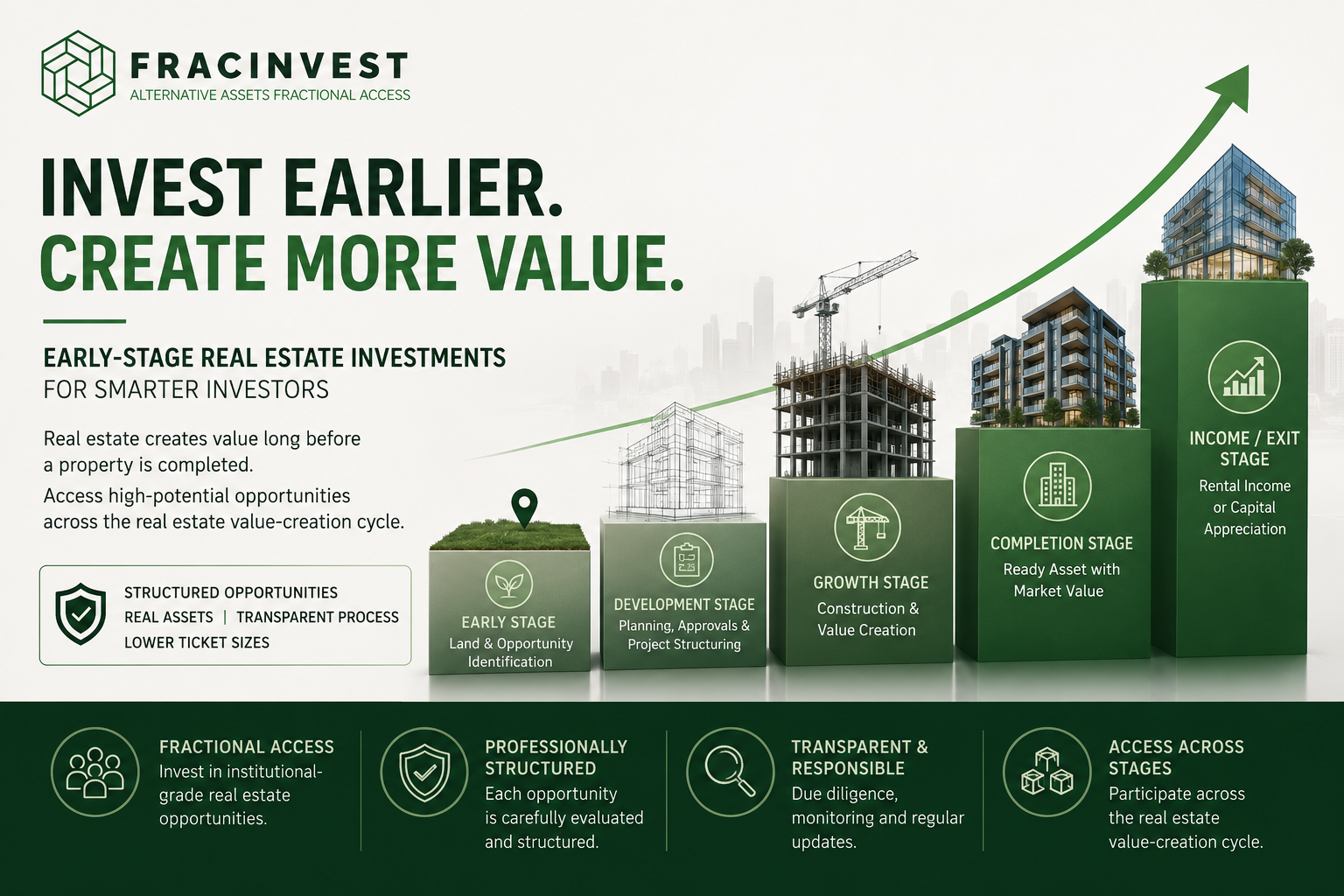
Structured fractional real estate takes a different approach. Instead of lending money to a company for a fixed coupon, investors participate in a specific property opportunity. When the transaction involves early-stage residential real estate, the potential return may come from negotiated entry pricing, project appreciation and a developer buyback documented at the beginning.
Both options can be asset-linked and have a defined tenure. However, they work very differently and carry different types of risk.
What are senior secured bonds?
When you invest in a corporate bond, you are effectively lending money to the issuing company. The company agrees to pay interest, called a coupon, and return the principal on maturity.
A bond is called "senior secured" because of two features:
- Senior: Bondholders rank ahead of subordinated and unsecured creditors in the repayment hierarchy, subject to the bond documents and applicable insolvency laws.
- Secured: Specific assets such as property, receivables, equipment or a loan portfolio are charged or pledged as collateral.
This security provides an additional layer of protection if the issuer defaults. However, it does not make the bond risk-free. Recovering money from the pledged assets can take time, and the realised value of those assets may be lower than expected.
The SEBI investor guide on bonds highlights default risk, interest-rate risk and liquidity risk as important factors investors should consider.
What returns do senior secured bonds generally offer?
There is no single average coupon rate for all senior secured bonds. The rate depends on factors such as:
- Credit rating of the issuer
- Financial strength and repayment history
- Nature and value of the collateral
- Bond tenure
- Market interest rates
- Liquidity in the secondary market
As a broad market reference, secured corporate bonds in India are commonly available within the following indicative ranges:
| Credit profile | Indicative coupon range | General interpretation |
|---|---|---|
| AAA | Approximately 7% to 8% p.a. | Relatively lower credit risk |
| AA | Approximately 8% to 9% p.a. | Moderate credit risk |
| A or below | Approximately 9% to 11% p.a. or higher | Higher credit risk |
These ranges are only indicative. The actual coupon and yield will differ across issuers and market conditions.
A higher coupon should not automatically be treated as a better opportunity. It usually means that the market expects the investor to accept greater credit or liquidity risk.
Investors should also understand the difference between coupon and yield. Coupon is calculated on the bond's face value, whereas yield depends on the price paid, remaining interest payments and time left until maturity.
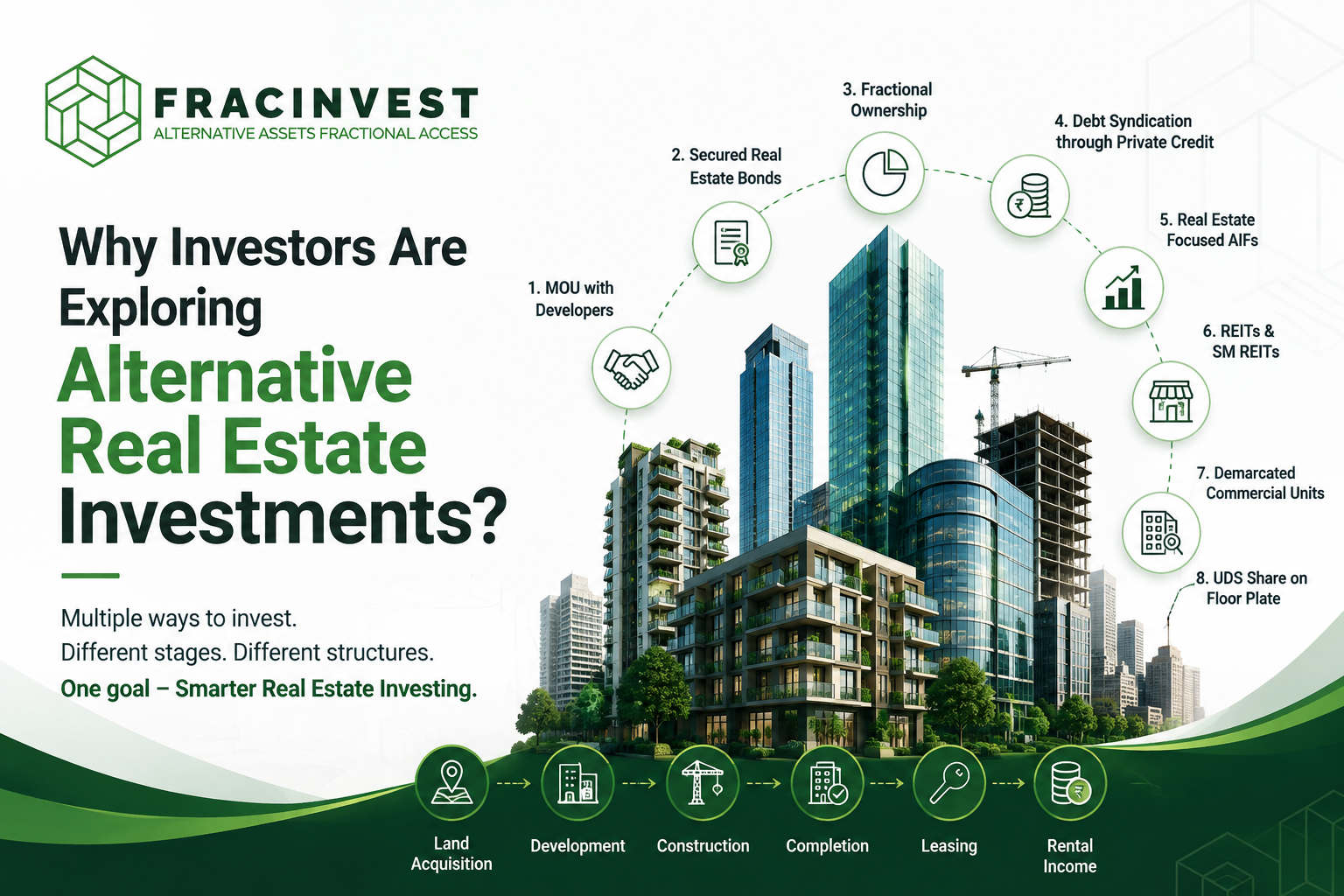
What is a structured fractional real estate investment?
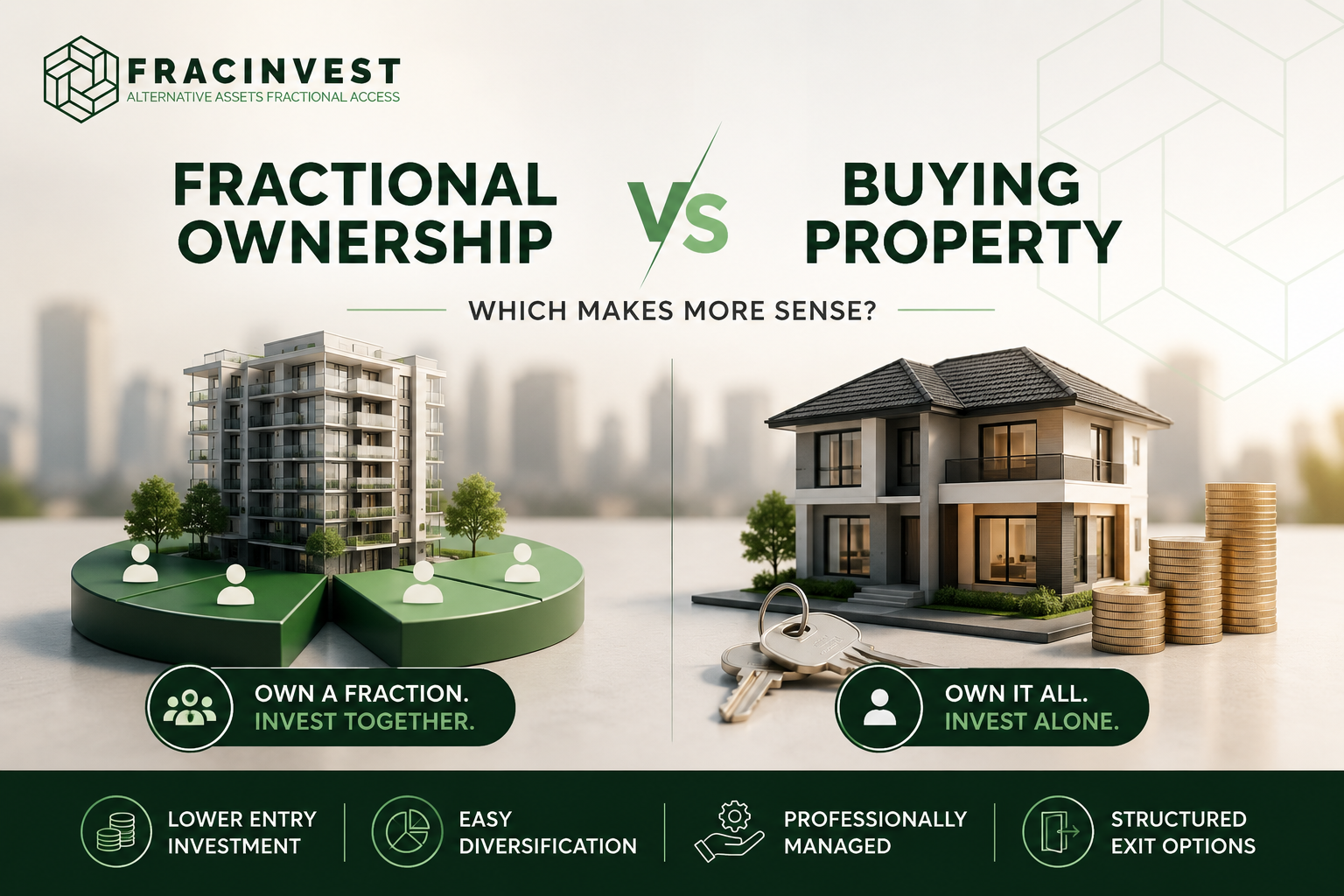
In a structured fractional real estate opportunity, several investors participate in a specific property transaction through a dedicated special purpose vehicle, or SPV.
The pooled capital allows the SPV to participate in a transaction that may otherwise require several crores of investment. Each investor receives rights in the SPV based on the applicable legal and commercial structure.
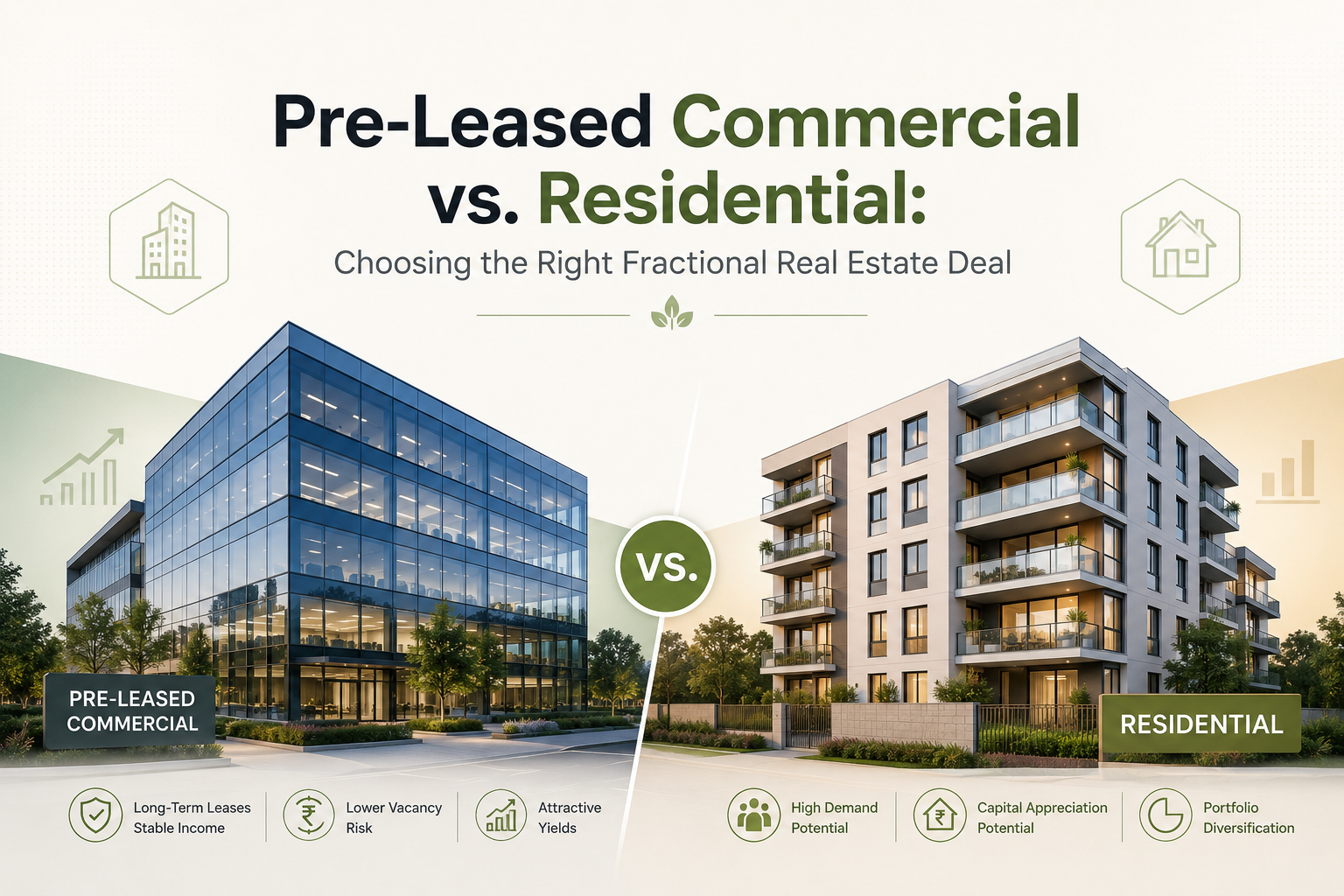
In an early-stage residential opportunity, the SPV may acquire identified units or contractual rights in a RERA-registered project at negotiated prices.
The investment is usually held during part of the project's development period. The proposed exit may take place through:
- A documented developer buyback
- Sale of the identified residential units
- Transfer of contractual rights
- Sale to another buyer
- Another exit route stated in the opportunity documents
The investment return does not come from a fixed coupon. It is linked to the difference between the negotiated entry price and the proposed exit value.
Why can early-stage real estate offer higher return potential?
The higher return potential does not arise simply because the underlying asset is real estate. It comes from the stage at which the investor enters and how the transaction is structured.
1. Entry at launch-stage pricing
Developers may offer better commercial terms during the early stages of a project to build sales momentum and improve cash flow.
An aggregated transaction involving multiple units may also receive pricing or payment terms that are not available to an individual buying a single apartment.
2. Participation in the project's value-creation cycle
The value of a residential project may increase as it moves through different stages:
- RERA registration and project launch
- Foundation and structural construction
- Achievement of development milestones
- Improvement in surrounding infrastructure
- Increase in sales and occupancy
- Project nearing completion
An investor entering at an early stage may benefit from this potential appreciation without waiting for possession or becoming a long-term landlord.
3. Exit terms documented at the beginning
One of the biggest challenges in traditional real estate is finding a buyer when the investor wants to exit.
A structured opportunity can address this by documenting the proposed exit before investors participate. Where a developer buyback forms part of the transaction, the documents may state:
- Proposed buyback date
- Buyback value or calculation method
- Responsible developer or counterparty
- Payment conditions
- Applicable guarantees or escrow arrangements
- Remedies in case of delay or default
This creates greater clarity around the intended holding period and exit value.
However, a defined exit should not be confused with guaranteed liquidity. The exit still depends on the enforceability of the documents and the financial capacity of the developer, guarantor or other responsible party.
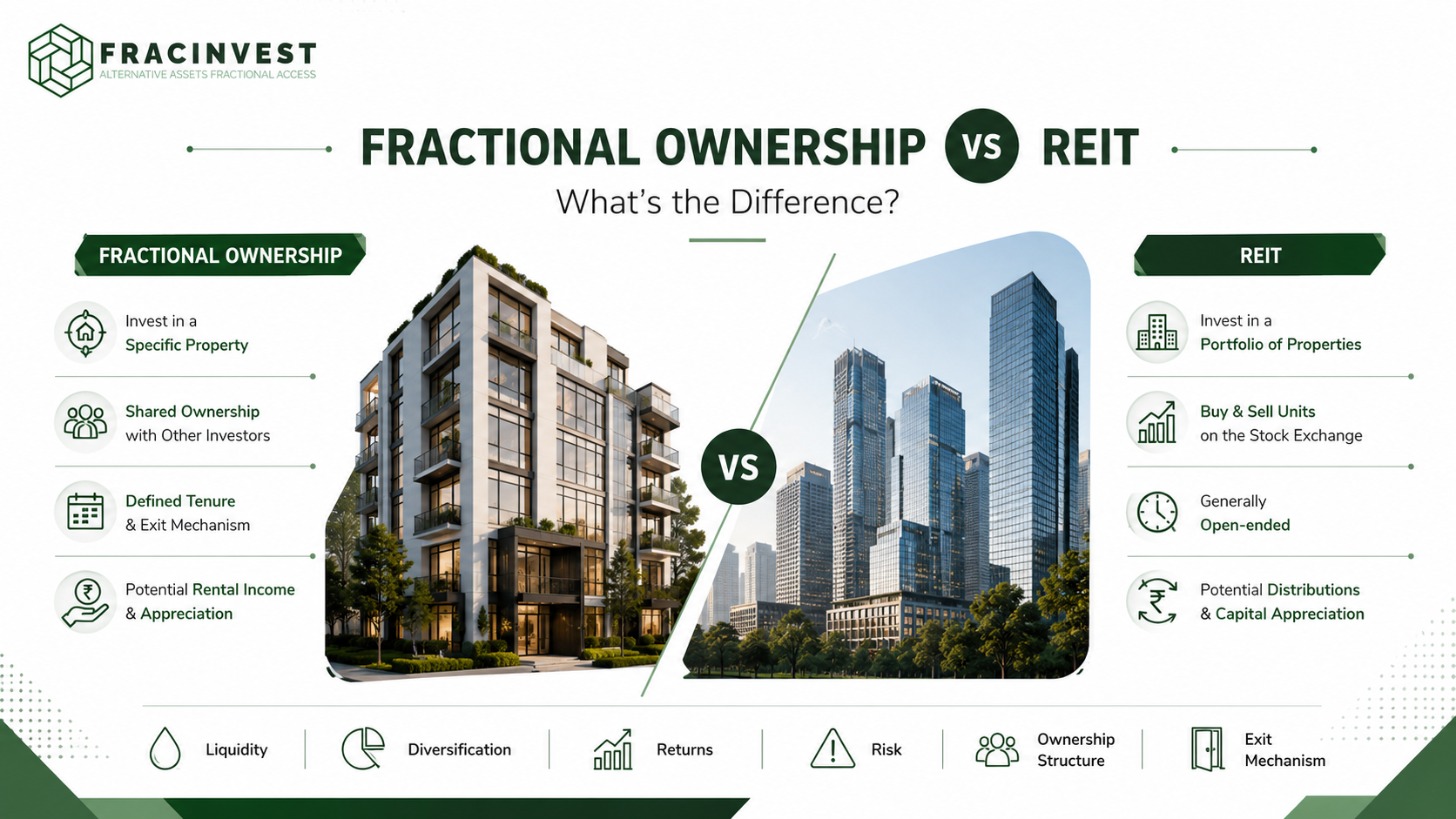
Senior secured bonds vs structured fractional real estate
| Factor | Senior secured bonds | Structured fractional real estate |
|---|---|---|
| Nature of investment | Debt issued by a company | Participation through a property-linked SPV |
| Source of return | Fixed or floating coupon | Project appreciation and negotiated exit value |
| Typical return presentation | Coupon rate and yield to maturity | Projected total return, simple annual return or IRR |
| Asset support | Charge or pledge over specified collateral | Identified residential units or property rights held through the transaction structure |
| Investor's position | Creditor of the bond issuer | Investor or partner in the SPV, depending on the structure |
| Cash flow | Usually periodic interest | Commonly distributed at exit |
| Exit route | Redemption on maturity or secondary-market sale | Developer buyback, property sale or another documented route |
| Liquidity | May be exchange-listed, although trading can be limited | Generally illiquid until the proposed exit is completed |
| Main risks | Issuer default, collateral shortfall, interest-rate and liquidity risk | Construction, property-market, counterparty, legal and exit-execution risk |
| Return potential | Generally moderate and predictable | Potentially higher, with additional execution and liquidity risk |
Comparing the potential return on ₹20 lakh
Consider an investor allocating ₹20 lakh for 24 months.
Senior secured bond illustration
If the bond pays an annual coupon of 8% to 10%, the investor may earn approximately ₹3.20 lakh to ₹4 lakh in gross interest over two years.
The ₹20 lakh principal would be repayable on maturity, subject to the issuer fulfilling its obligations.
Structured fractional real estate illustration
Suppose a specific fractional real estate opportunity projects a total return of 36% over 24 months.
On ₹20 lakh, the projected gain would be:
₹20 lakh × 36% = ₹7.20 lakh
The projected maturity value would therefore be:
₹20 lakh + ₹7.20 lakh = ₹27.20 lakh
A 36% total return over two years is equal to an 18% simple annual return. If the entire amount is paid only at the end of 24 months, the annualised IRR is approximately 16.6%.
This is significantly higher than the illustrative interest generated by an 8% to 10% bond. But the two returns are not directly interchangeable.
A bond coupon is a contractual debt payment. The return from fractional real estate depends on the successful execution of the property transaction and the counterparty completing the proposed exit.
The higher projected return is therefore compensation for additional project, counterparty and liquidity risk.
Are the residential units security for investors?
This depends entirely on the legal structure.
If the residential units or property rights are held through the SPV, they provide an identifiable underlying asset connected to the investment. This can be more transparent than participating in an opportunity where the use of funds is unclear.
However, owning an underlying asset through an SPV is not automatically the same as holding collateral under a senior secured bond.
Investors should understand:
- Who legally owns the residential units
- What rights are registered in favour of the SPV
- Whether the units are free from undisclosed encumbrances
- Whether another lender has a prior charge
- What rights investors have in the SPV
- How the asset can be sold or enforced
- How sale proceeds will be distributed
The phrase "asset-backed" should describe a properly documented legal structure, not merely the presence of a property somewhere in the transaction.
What does a developer buyback actually mean?
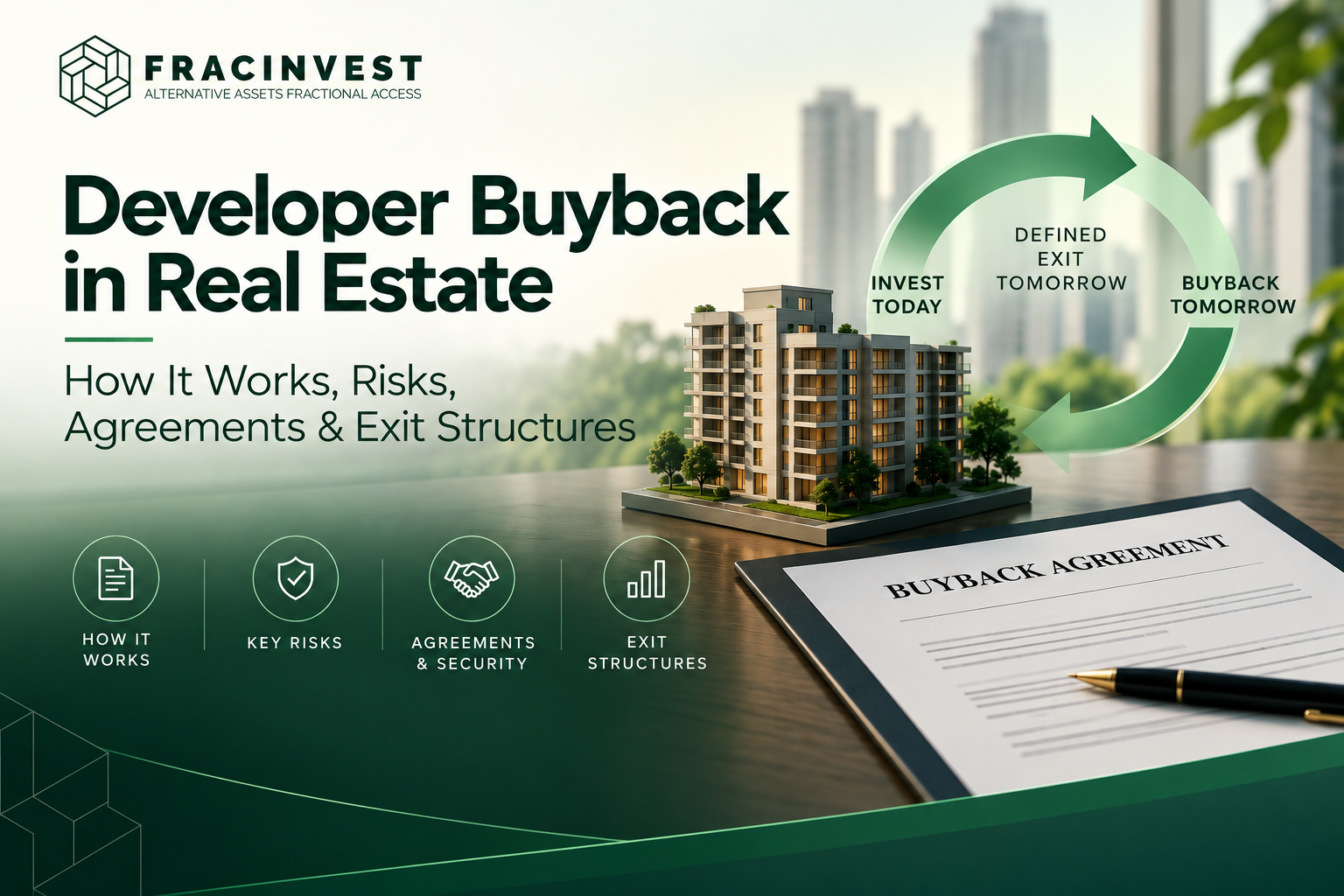
A developer buyback is an agreement under which the developer or another identified counterparty agrees to repurchase the property, units or contractual rights on stated terms.
A properly documented buyback can define the intended exit date and value from the beginning. This is considerably more organised than depending entirely on an unknown future buyer.
But the word "guarantee" should be used carefully.
A buyback becomes meaningful only when investors understand:
- Who is legally obligated to complete it
- Whether a separate corporate or personal guarantee exists
- The financial strength of the developer or guarantor
- Conditions that must be fulfilled before the buyback
- Consequences of construction delays
- Remedies available in case of non-payment
- Whether escrow or other credit support is provided
Even a legally documented commitment remains subject to counterparty and enforcement risk.
How FracInvest makes these opportunities accessible
Early-stage real estate opportunities involving multiple residential units have traditionally been accessible mainly to institutions, family offices and high-net-worth investors.
The reasons are straightforward. These transactions require significant capital, developer relationships, negotiation capability and specialised legal review.
FracInvest addresses this access gap through structured fractional ownership.
Opportunity selection
FracInvest evaluates selected residential projects and identifies opportunities where the entry price, location, project stage, developer background and proposed exit may create an attractive risk-return proposition.
Commercial structuring
Instead of each investor negotiating independently, capital is aggregated through a dedicated SPV. This can make it possible to negotiate at a larger transaction level.
Transaction-level due diligence
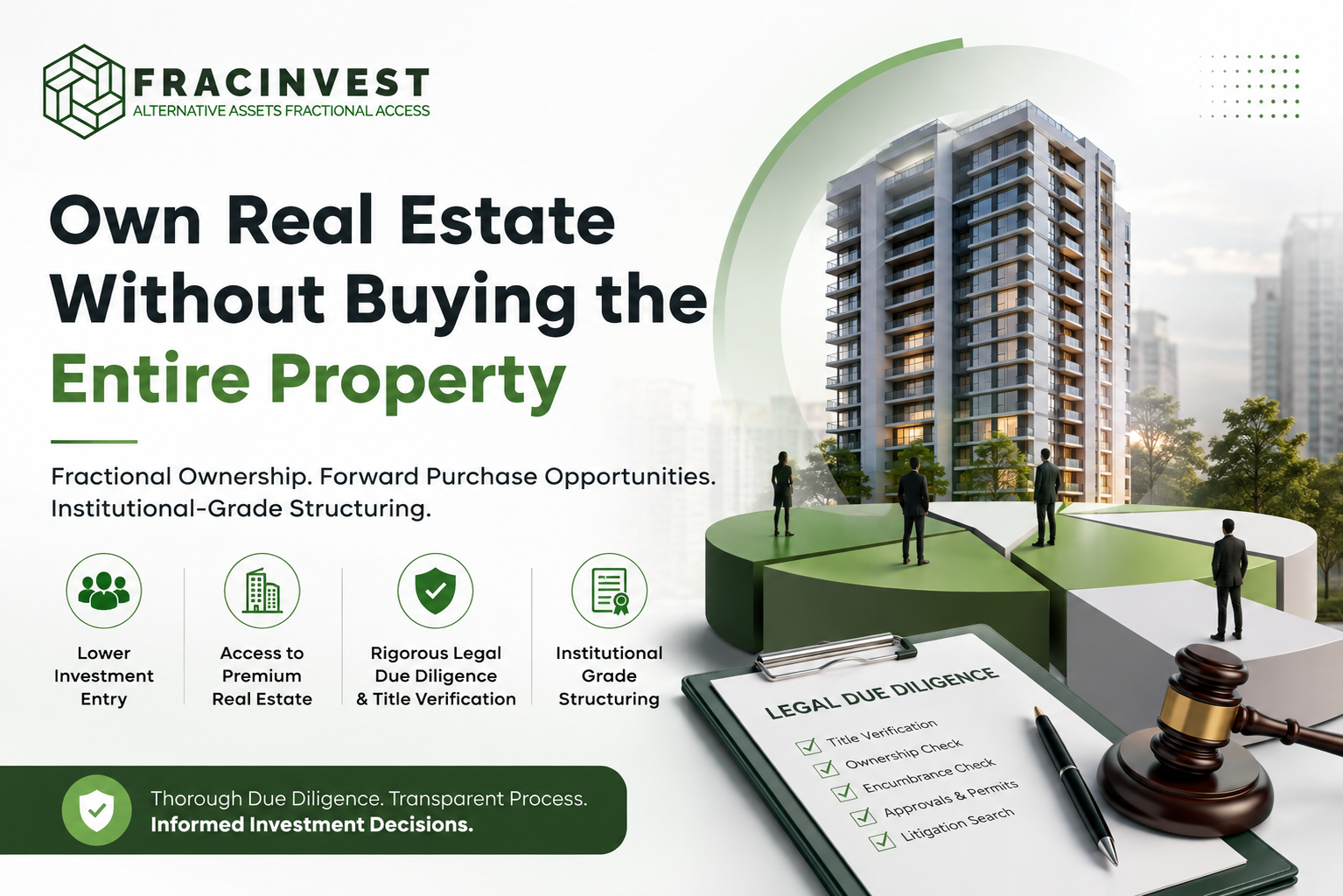
Depending on the opportunity, the review may cover:
- RERA registration details
- Title and encumbrance documents
- Project approvals
- Developer background and execution history
- Entry price compared with similar projects
- SPV and ownership structure
- Transaction and buyback agreements
- Exit counterparty and guarantor
- Escrow or payment arrangements
- Risks associated with delays or non-performance
Lower entry ticket
By dividing a larger transaction among multiple participants, selected FracInvest opportunities can become accessible from a ₹20 lakh ticket size.
This allows individual investors to participate in opportunities that may otherwise require the purchase of an entire residential unit or a much larger block of inventory.
Exit clarity from the beginning
The intended holding period and proposed exit route are disclosed before participation. Where the opportunity includes a contractual developer buyback, investors can review the responsible party, timeline, value and applicable conditions at the outset.
You can read more about this model in What Is Forward Purchase in Real Estate?.
Which option may be suitable for you?
Senior secured bonds may be more suitable for investors who prefer:
- Predictable interest payments
- Clearly defined creditor rights
- A familiar fixed-income structure
- Lower project execution risk
- The possibility of secondary-market liquidity
Structured fractional real estate may be considered by investors who:
- Are comfortable with a defined holding period
- Understand real estate and counterparty risk
- Do not require regular monthly or quarterly income
- Want exposure to early-stage property appreciation
- Seek higher return potential than conventional fixed-income products
- Can evaluate the legal structure and proposed exit carefully
The decision should not be reduced to "8% versus 18%."
The more useful questions are: What supports the return? When will the investor receive the money? Who is responsible for the exit? What happens if that party does not perform?
Conclusion
Senior secured bonds offer a stated coupon, a maturity date and security over specified collateral. They can provide predictable returns and stronger repayment priority than unsecured debt, but they still carry credit, liquidity and recovery risks.
Structured fractional real estate follows a different model. It allows investors to enter selected residential projects at an early stage, participate in potential project appreciation and follow an exit route documented from the beginning.
The potential return may be considerably higher than the coupon offered by many senior secured bonds. That higher return, however, comes with additional project, counterparty, legal and liquidity risks.
FracInvest combines opportunity sourcing, transaction structuring and due diligence to make selected early-stage real estate opportunities accessible to individual investors from ₹20 lakh.
Before participating, investors should review the underlying property, ownership structure, projected returns, buyback terms, counterparty strength and risk disclosures.
Ready to evaluate a structured real estate opportunity? Visit Opportunities page to compare the asset, tenure, projected returns, documents and planned exit terms.
Disclaimer: This article is for educational purposes only and does not constitute investment, legal or tax advice, an offer, solicitation or recommendation. Coupon ranges and numerical illustrations are indicative and may change with market conditions. Projected returns are not guaranteed. A documented buyback or exit route remains subject to its contractual conditions, counterparty performance and enforcement risk. Investors should independently review all opportunity documents and consult qualified advisers before making an investment decision.