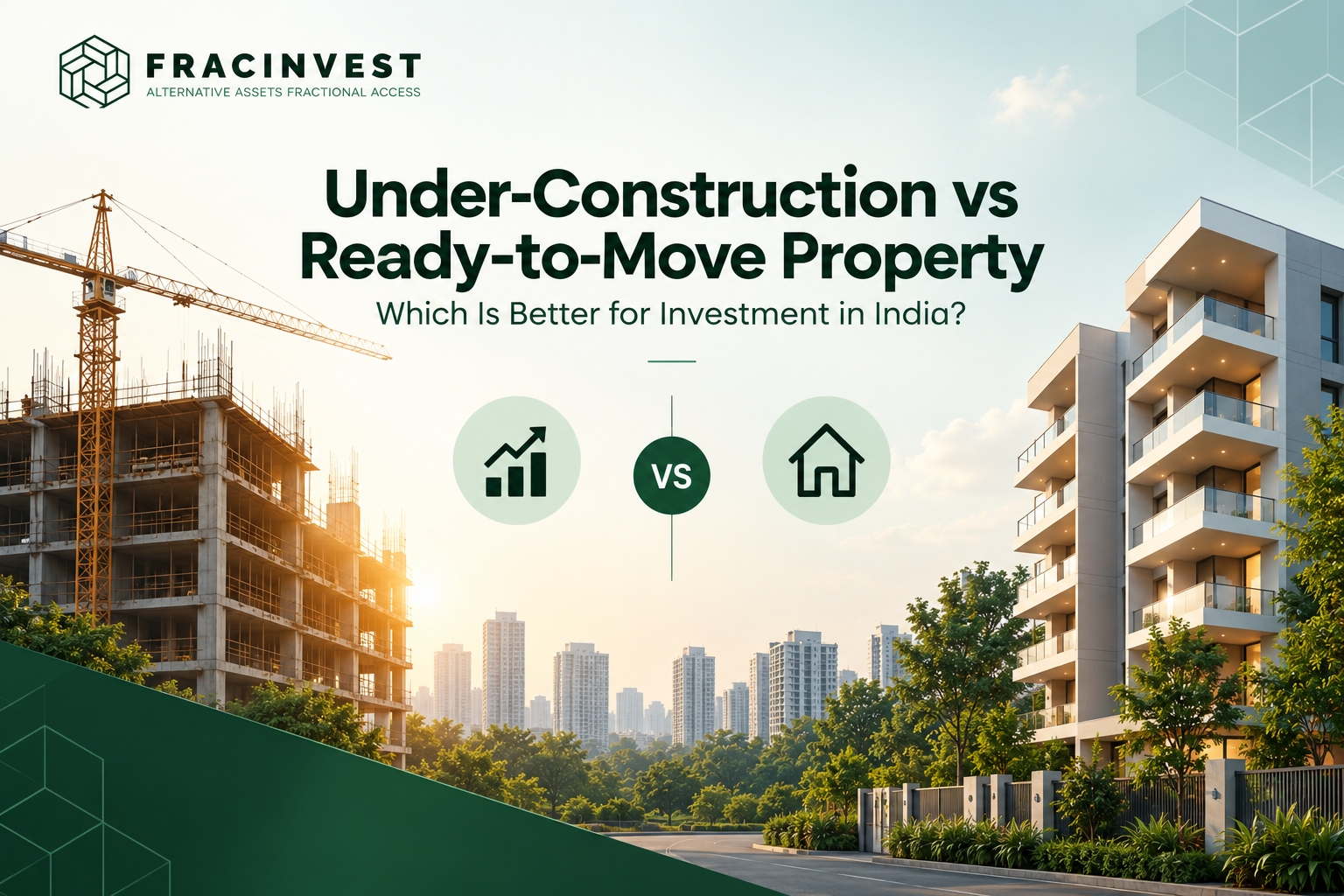
When investing in residential real estate, one of the first decisions is surprisingly simple:
Should you buy a property that is already completed, or enter while the project is still under construction?
Both can be good real estate strategies. But they are designed to achieve different things.
A ready-to-move property can start generating rental income almost immediately. An under-construction property, particularly when entered at an early stage, gives investors an opportunity to participate in the potential value creation that happens as a project moves from launch towards completion.
So the better question isn't simply which property is better?
It is:
Are you investing for rental income today, or for potential capital appreciation over the next few years?
Let's understand the difference.
What Is a Ready-to-Move Property?
A ready-to-move property is a completed residential property that can be occupied or rented out soon after purchase and completion of the required formalities.
You can physically inspect the apartment, understand the surrounding infrastructure, assess the neighbourhood and compare prevailing rental rates before making the purchase.
From an investment perspective, its biggest advantage is straightforward:
The asset can potentially start generating rental income from Day 1.
For someone looking to build a long-term property portfolio and earn recurring rental income, this can make ready properties attractive.
There is, however, a trade-off.
By the time a project is completed, much of the price discovery associated with construction progress may already have taken place. You are purchasing an established asset at the prevailing market price rather than entering during the earlier stages of its development.
Ready Property = Rental-Income Strategy
A typical ready-property strategy looks like this:
Buy completed property -> Find tenant -> Earn rental income -> Hold for long-term appreciation
This can work well for investors whose priority is regular income and long-term ownership.
What Is an Under-Construction Property?
An under-construction property is purchased while the project is still being developed.
This could mean entering during excavation, foundation, structural construction or later stages of development.
But from an investment perspective, there is an important distinction:
Not all under-construction opportunities are the same.
Entering a project shortly before completion is very different from participating at the launch or early-development stage.
Why?
Because early-stage buyers may enter before several milestones have been achieved, including construction progress, infrastructure development around the project and broader market price discovery.
If the project progresses as planned and demand develops, these milestones can potentially contribute to appreciation in the property's value.
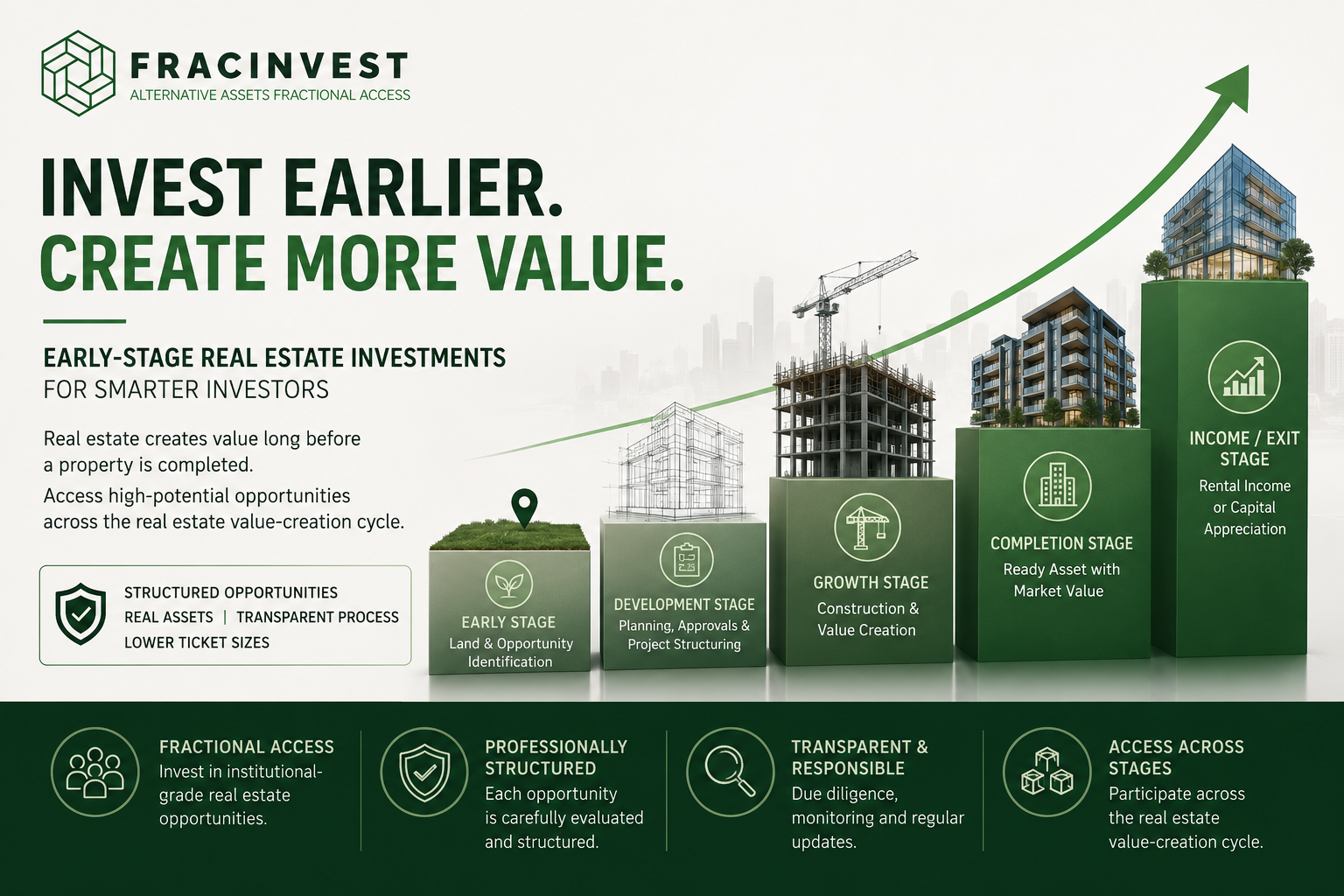
Early-Stage Property = Potential Value-Creation Strategy
The strategy therefore looks different:
Enter early -> Project progresses -> Value potentially appreciates -> Exit at a later stage
Instead of primarily depending on rental income, the investment thesis is based on capturing potential appreciation between entry and exit.
Under-Construction vs Ready-to-Move Property: Quick Comparison
| Factor | Ready-to-Move Property | Early-Stage / Under-Construction Property |
|---|---|---|
| Primary objective | Rental income + long-term appreciation | Potential capital appreciation |
| Entry stage | Project completed | Project under development |
| Rental income | Potentially available immediately | Generally unavailable during construction |
| Entry pricing | Reflects completed-project market value | May offer earlier-stage pricing |
| Construction risk | Low | Higher |
| Physical inspection | Completed unit can be inspected | Final product is still being developed |
| Investment horizon | Usually longer term | Can potentially target specific project milestones |
| Exit strategy | Open-market resale | Open-market sale or a predefined contractual exit, where applicable |
| Key risk | Rental vacancy / resale liquidity | Construction, developer and execution risk |
Neither option is inherently superior.
They solve different investment objectives.
Why Do Property Prices Sometimes Rise During Construction?
Consider how the risk profile of a project changes over time.
At launch, the project is at an early stage. As development progresses, several uncertainties may reduce.
- Construction advances.
- Infrastructure becomes visible.
- More units may be sold.
- The surrounding location may develop.
- Buyers can increasingly see what the finished project will look like.
- As uncertainty reduces and the project moves closer to completion, the market may be willing to assign a different value to the property.
This is one reason developers often revise prices across different phases of a project.
For an early-stage investor, the opportunity is therefore not simply about buying property cheaply.
It is about identifying projects where there is a credible possibility of value creation between the entry stage and a later exit stage.
A Simple Example
Imagine two investors each have ₹50 lakh available for real estate.
Investor A: Ready-to-Move Strategy
Investor A purchases a completed apartment.
The objective is straightforward: rent the apartment, generate annual rental income and hold the property over the long term.
The return comes from two sources:
Rental yield + long-term property appreciation
Investor B: Early-Stage Strategy
Investor B enters a residential project during an early stage of development.
Instead of waiting for rental income, the investor's objective is to participate in the project's potential price appreciation as construction progresses.
The return primarily depends on:
Entry price -> Project progress -> Exit price
These are fundamentally different investment strategies. One focuses on income generation. The other focuses on potential value creation.
The Challenge With Early-Stage Real Estate
If early-stage investing offers appreciation potential, why doesn't everyone do it?
Because accessing good opportunities isn't always easy.
An investor needs to evaluate several factors:
- Developer track record: Has the developer completed comparable projects successfully?
- Project approvals: Is the project appropriately registered and compliant with applicable regulations?
- Entry valuation: Is the early-stage price genuinely attractive compared with the expected market value?
- Location: What could drive future demand in the micro-market?
- Construction timeline: How realistic are the stated development milestones?
- Exit liquidity: Who could potentially buy the property when the investor wants to exit?
- Developer financial strength: Does the developer have the ability to execute the project and meet contractual obligations?
- This is where due diligence becomes critical.
- A lower entry price by itself does not make something a good investment.
The Often-Ignored Question: How Will You Exit?
Investors naturally focus on the purchase price.
But an equally important question should be asked before entering the investment:
How do I get my money out?
With a traditional property purchase, the investor typically needs to find a buyer in the secondary market.
That means listing the property, negotiating with prospective buyers and completing the transaction at the prevailing market price.
For early-stage opportunities, investors should evaluate the exit mechanism just as carefully as the entry opportunity.
Some structured transactions may include predefined contractual exit arrangements or developer buyback mechanisms.
However, a predefined exit should never be confused with a risk-free or guaranteed return.
The ability of the counterparty to honour the arrangement, the contractual terms and the security structure remain important considerations.
What Is Forward Purchase in Real Estate?
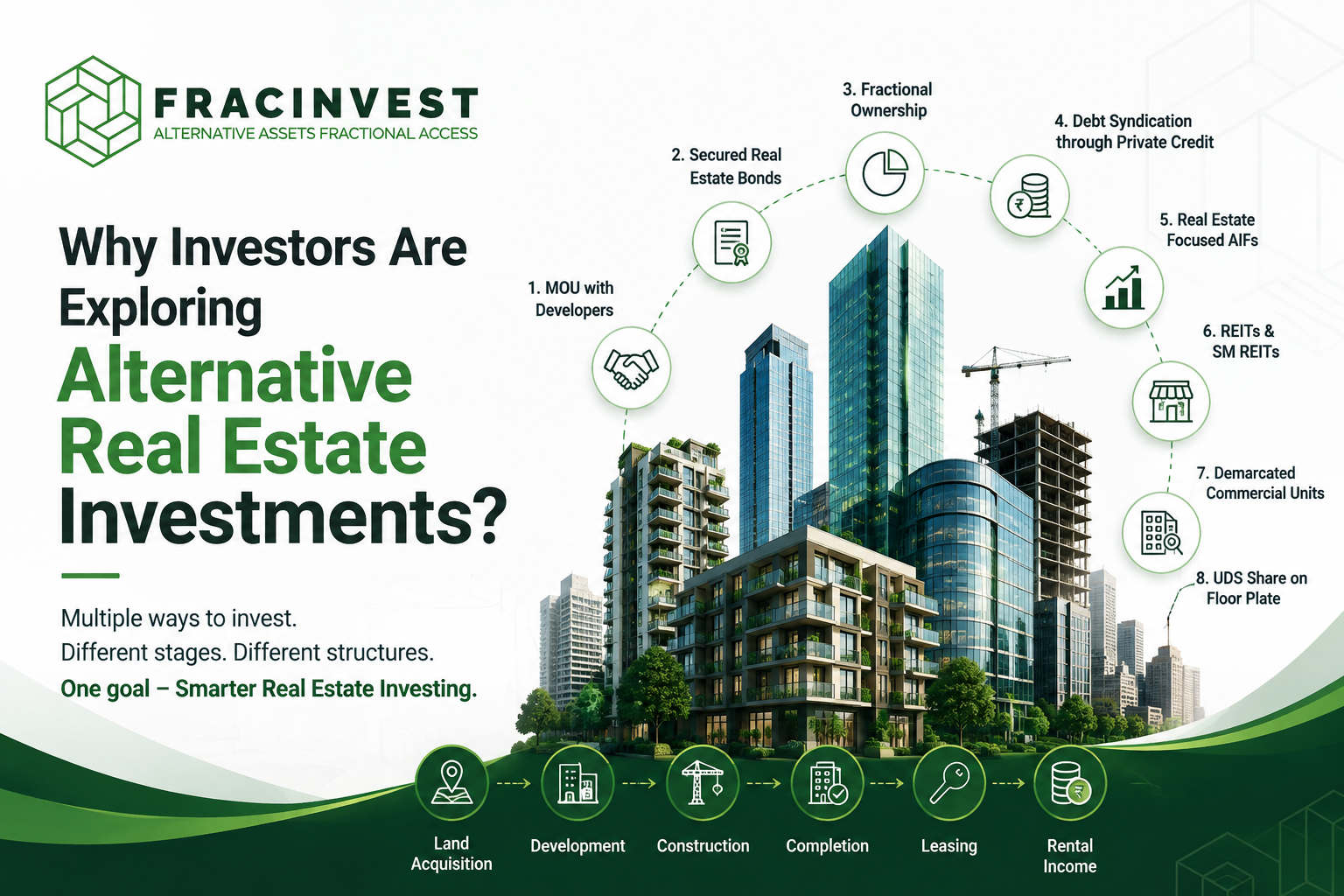
Another strategy closely related to early-stage real estate investing is Forward Purchase.
In a forward purchase structure, an investor participates in a property transaction before the asset reaches its completed stage, with the investment thesis centred around capturing potential value creation during the development period.
This approach has traditionally been more familiar to institutional investors and larger real estate participants.
We have covered the concept in detail in our guide:
What Is Forward Purchase in Real Estate? Benefits for Investors ->
Understanding forward purchase can be particularly useful if your objective is capital appreciation rather than owning a completed property primarily for rental income.
Where Fractional Participation Changes the Equation
There is another practical challenge with early-stage residential real estate.
Ticket size.
A good residential property in a major Indian city can require significant capital. Buying an entire unit may therefore create concentration risk, with a large portion of an investor's portfolio tied to a single property.
Fractional participation can change this equation.
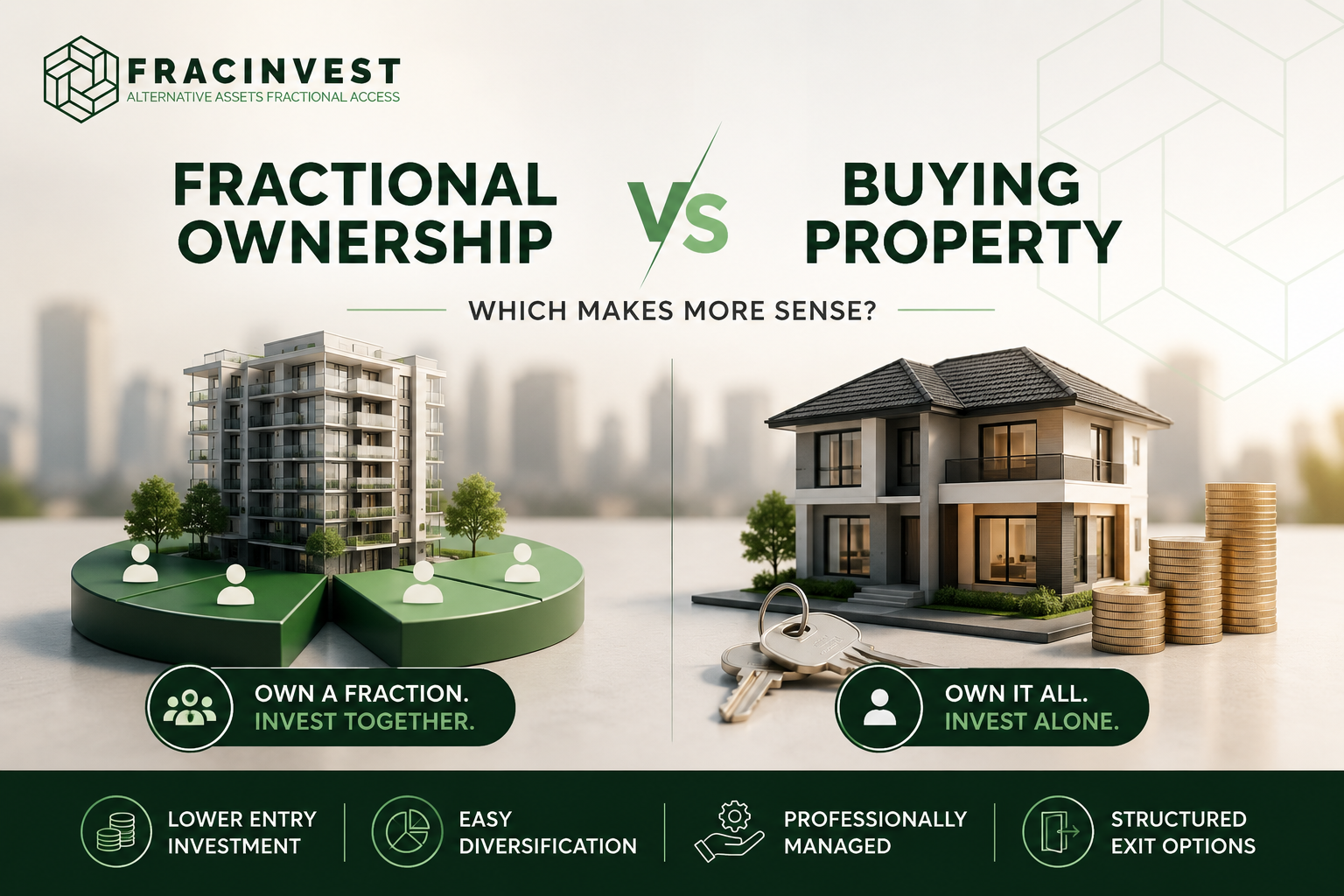
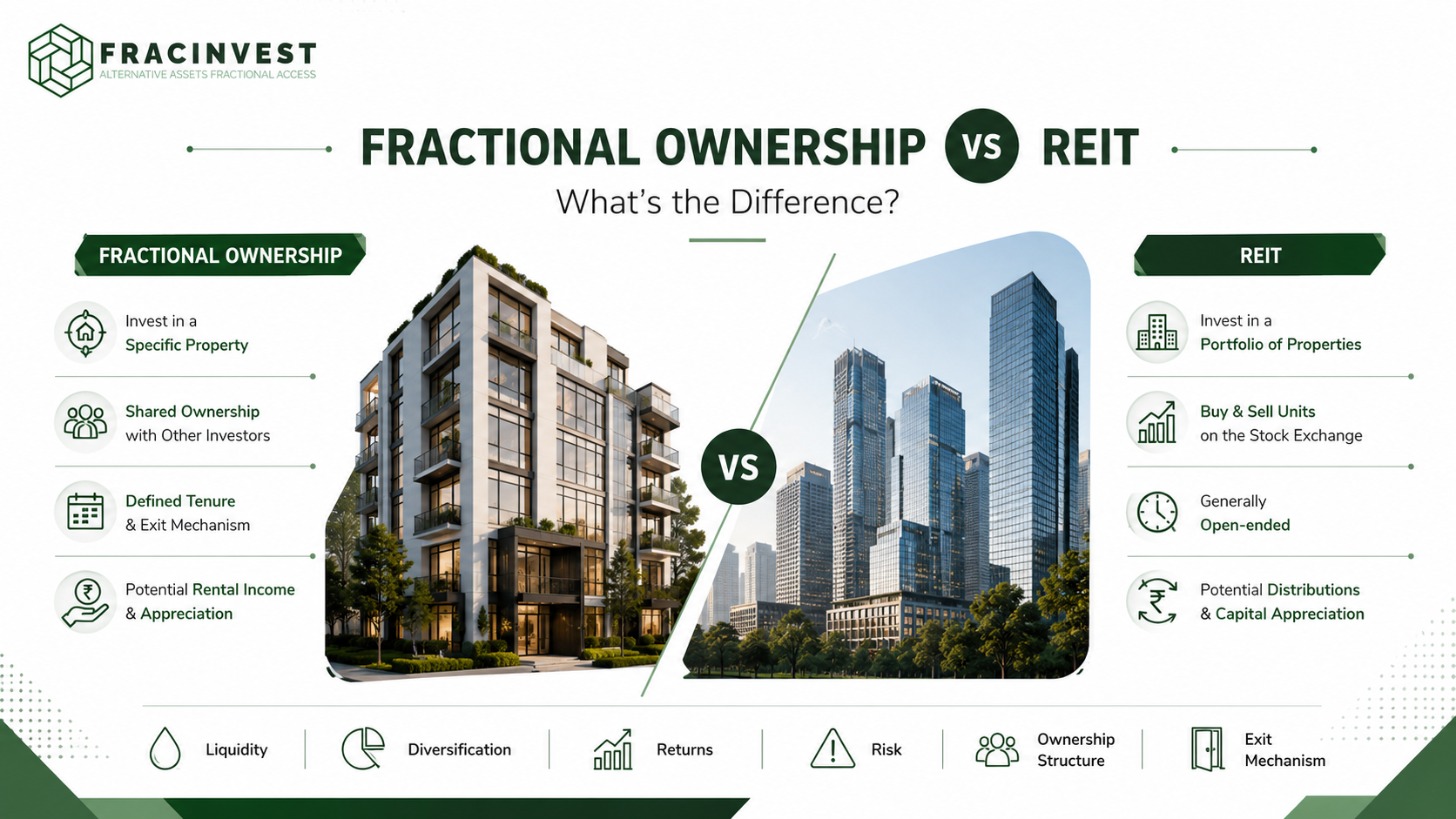
Instead of requiring one participant to purchase the entire asset, a structured fractional model can allow multiple participants to access a larger real estate transaction with a lower individual capital commitment.
This potentially opens opportunities that would otherwise require substantially higher capital.
But fractional participation does not eliminate investment risk.
The quality of the underlying property, transaction structure, legal documentation, developer, entry valuation and exit mechanism remain far more important than simply calling an opportunity "fractional."
How FracInvest Approaches Early-Stage Real Estate Opportunities
At FracInvest, the focus is on identifying and structuring selected early-stage real estate opportunities that can be accessed through fractional participation.
The objective is to evaluate the complete transaction rather than simply identify a property with an attractive headline price.
That includes evaluating areas such as:
- Project and developer due diligence
- Entry-stage valuation
- Underlying real estate security
- Transaction and ownership structure
- Potential value-creation period
- Defined exit terms, where applicable
- Developer buyback arrangements, where applicable
The idea is to make selected early-stage real estate opportunities accessible without requiring every participant to purchase an entire residential unit independently.
Ready Property or Early-Stage Property: Which Should You Choose?
The answer ultimately comes down to what you expect your real estate allocation to achieve.
If your objective is:
Regular rental income + long-term ownership
a ready-to-move property may be the more suitable strategy.
If your objective is:
Potential capital appreciation + participation during the project's value-creation stage
an early-stage property may be worth evaluating.
A diversified real estate portfolio could potentially use both strategies.
The important part is understanding where the return is expected to come from before committing capital.
Final Thoughts
Real estate investing isn't only about choosing the right location or property.
The stage at which you enter can matter just as much.
Ready-to-move properties provide access to an existing asset with the potential for rental income from the beginning.
Early-stage properties involve greater execution risk, but they can also provide an opportunity to participate in potential value creation as the project progresses towards completion.
Neither approach is automatically better.
The right strategy depends on your investment objective, risk appetite, time horizon and desired exit mechanism.
And if your objective is to explore early-stage real estate opportunities without purchasing an entire property yourself, fractional participation provides another route worth understanding.
Explore FracInvest's current opportunities to understand how selected early-stage residential real estate transactions are structured, evaluated and made accessible through fractional participation.
Real estate investments are subject to market, developer, execution, liquidity and other risks. Any targeted or projected returns should not be interpreted as assured or guaranteed returns.