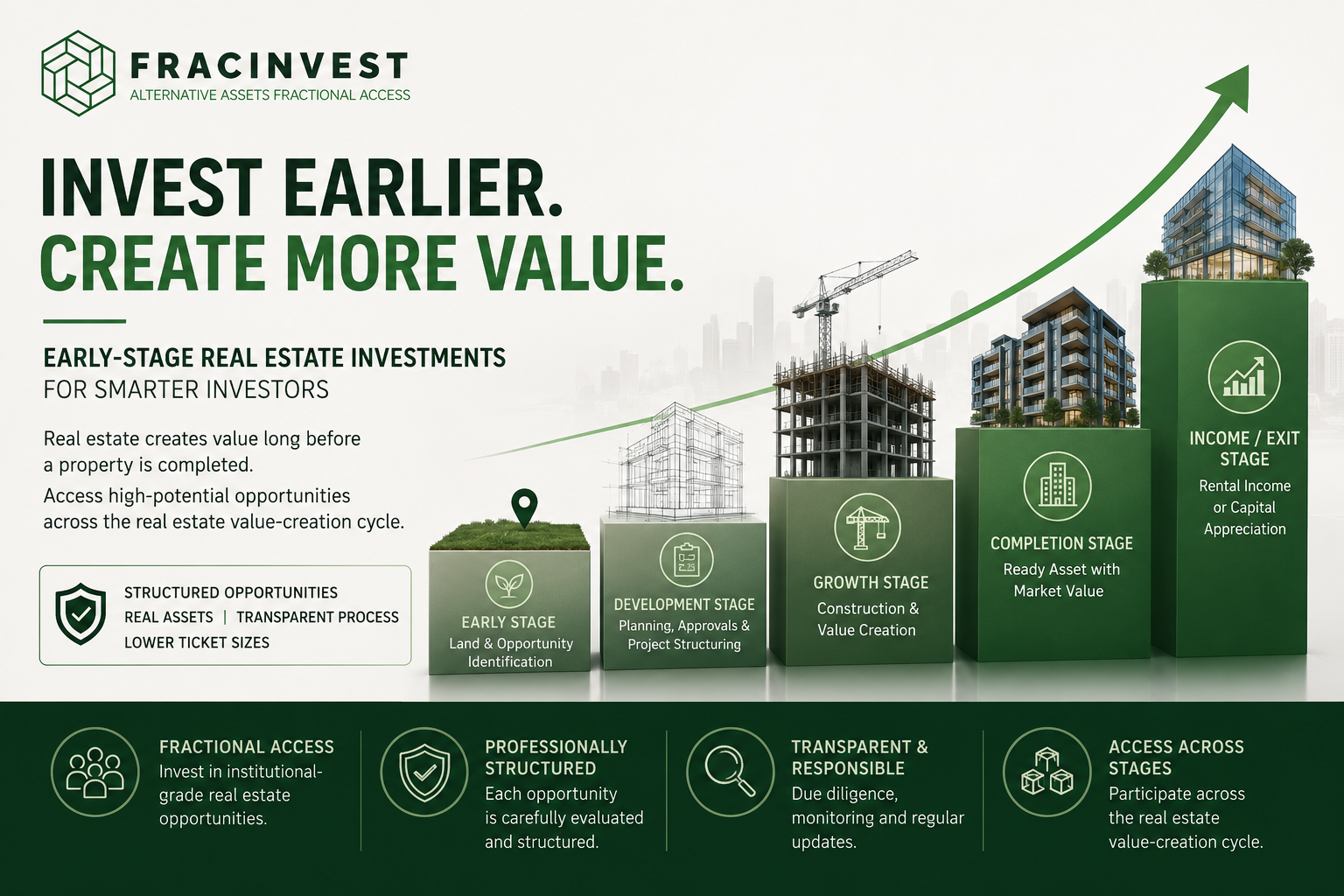

Real estate investing has evolved significantly over the past decade. While most investors are familiar with ready-to-move properties, under-construction apartments, and commercial assets, one of the most lucrative yet least understood segments remains pre-RERA land investments.
These opportunities typically involve investing at the earliest stages of a real estate development lifecycle, often before a project receives regulatory approvals or is formally launched. Because capital is deployed at such an early stage, investors may benefit from substantial upside. However, these investments also carry significantly higher risks than conventional real estate investments.
The key question is not whether pre-RERA land investments are good or bad. The real question is whether they align with your investment objectives and risk appetite.
Understanding the Risk-Reward Equation
Pre-RERA land investments belong to the high-risk, high-reward category of alternative investments.
Since the project is still in its early stages, investors are exposed to several uncertainties, including:
- Approval delays
- Project execution risks
- Developer performance
- Liquidity challenges
- Market fluctuations
For this reason, these investments may not be suitable as a core portfolio holding.
Many experienced investors instead allocate a limited portion of their portfolio, often around 20%, depending on their personal financial goals and risk tolerance. Such diversification can potentially enhance the overall Internal Rate of Return (IRR) of a well-balanced investment portfolio while limiting concentration risk.
Three Ways to Explore Pre-RERA Land Investments
Not all investment structures provide the same level of investor protection. Understanding the underlying structure is critical before committing capital.
1. Standard MOU-Based Investments
One of the most common approaches involves investing through a Memorandum of Understanding (MOU).
In this structure, developers may raise capital immediately after identifying or acquiring a land parcel. Investor funds are generally used for:
- Land acquisition
- Inventory underwriting
- Initial project funding
While these opportunities may offer attractive returns, they primarily operate on commercial understanding and trust between the investor and the developer.
There is typically limited legal security available to investors beyond the contractual arrangement. This makes thorough due diligence on the developer's credibility extremely important.
Suitable for: Investors with a high risk appetite who have strong confidence in the developer.
2. Special Purpose Vehicle (SPV) Structure
A more structured approach is to create a Special Purpose Vehicle (SPV) involving multiple investors.
In this model:
- Investors pool capital through an SPV.
- The SPV acquires and registers ownership of the identified land.
- The SPV subsequently enters into a Joint Development Agreement (JDA) with the developer.
This structure provides a stronger legal position because the SPV owns the underlying land.
If the project faces delays or defaults, investors retain rights over the land through the SPV, offering an additional layer of security compared to a simple MOU arrangement.
However, investors should also recognize one practical limitation, which is liquidity. While the underlying asset provides security, exiting or liquidating the investment can take time if the project does not progress as planned.
Suitable for: Investors seeking stronger asset ownership while understanding that exits may not always be immediate.
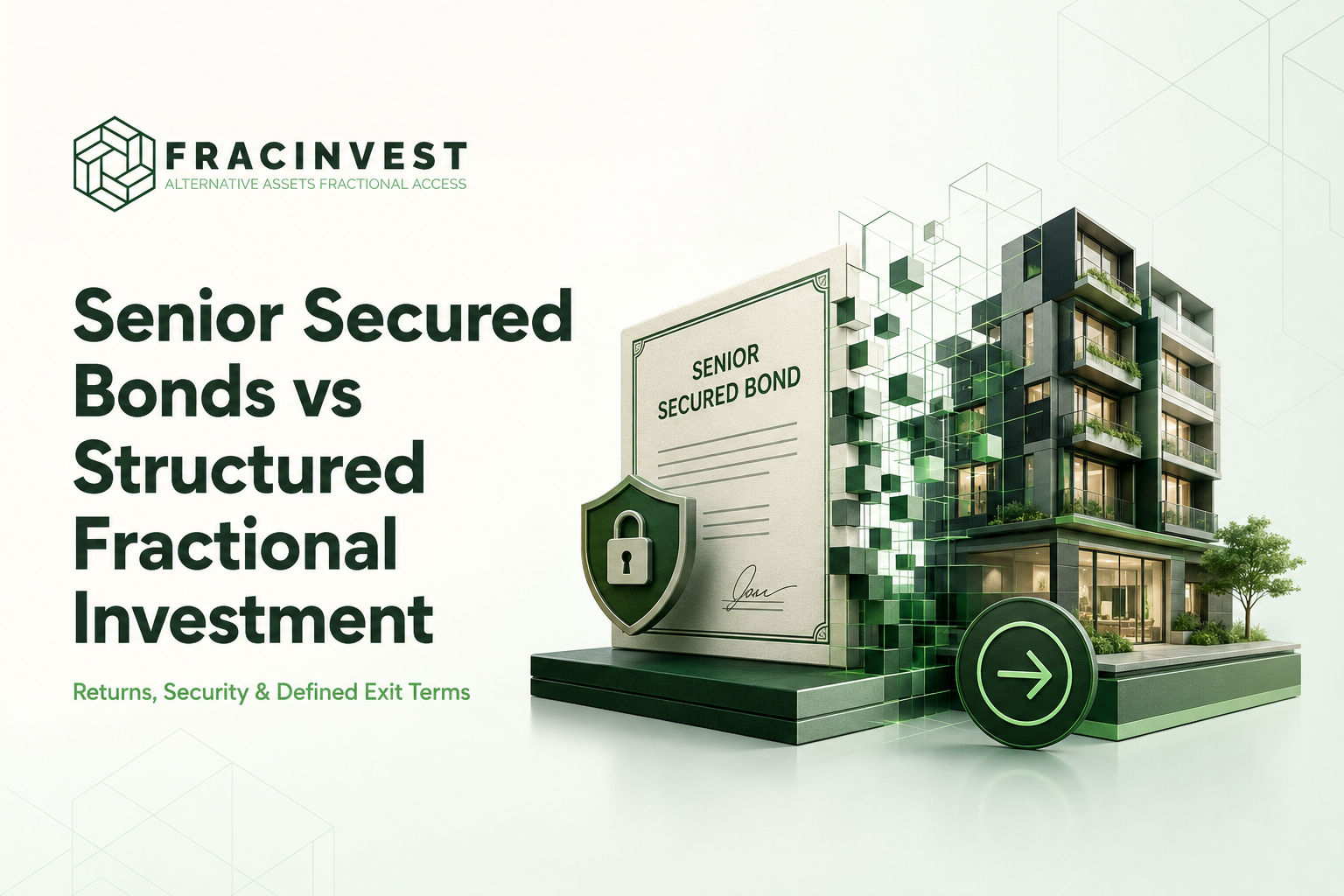
3. Secured Non-Convertible Debentures (NCDs)
For investors looking for greater structural protection, Secured Non-Convertible Debentures (NCDs) can provide a more formal investment framework.
Under this model:
- The developer issues secured NCDs.
- Investors receive clearly defined investment terms.
- Coupon rates and repayment timelines are specified upfront.
- A SEBI Registered Debenture Trustee is appointed to safeguard investors' interests.
The trustee plays an important oversight role by monitoring compliance with the security arrangements.
Typically, the NCDs are secured against:
The project land itself. Other hard assets owned by the developer.
The trustee creates a legal charge over these assets to help ensure that adequate security is maintained throughout the investment tenure.
This structure offers investors:
- Defined investment tenure
- Fixed coupon structure
- Improved legal documentation
- Independent trustee oversight
- Asset-backed security
While no investment is completely risk free, secured NCDs generally provide a more structured framework than informal land investment arrangements.
Suitable for: Investors seeking exposure to early-stage real estate opportunities through a more formal, security-backed structure.
Choosing the Right Structure
Every investor has different objectives.
Some prioritize maximum returns, while others value capital preservation and structured risk management.
Before investing, consider:
- Your investment horizon
- Liquidity requirements
- Risk tolerance
- Developer credibility
- Security available for the investment
- Legal documentation
- Exit mechanism
Higher potential returns should always be evaluated alongside the corresponding risks.
How FracInvest Approaches High-Yield Real Estate Opportunities
At FracInvest, we believe early-stage real estate investments should be backed by robust structures, transparent documentation, and strong investor protection.
Through FracInvest Alpha, we curate high-yield, secured real estate investment opportunities designed for investors looking to diversify beyond conventional real estate assets.
Our focus is on professionally structured opportunities where investors can explore asset-backed investments with clearly defined terms, helping them participate in early-stage real estate while emphasizing transparency, governance, and risk management.
Final Thoughts
Pre-RERA land investments can offer compelling return potential, but they require careful evaluation and a clear understanding of the investment structure.
Rather than viewing these opportunities solely through the lens of returns, investors should assess how their capital is protected, what legal rights they hold, and how the exit mechanism is structured.
For those seeking exposure to higher-yield real estate opportunities, a diversified approach combined with disciplined due diligence can be an effective way to balance risk and long-term portfolio growth.
Explore FracInvest Alpha
At FracInvest Alpha, we identify professionally structured, high-yield real estate opportunities that focus on capital protection alongside attractive return potential.
If you are looking to diversify your investment portfolio with carefully structured early-stage real estate opportunities, FracInvest Alpha offers access to curated investment opportunities backed by transparent documentation and security-focused investment structures.
Disclaimer: Investments in pre-RERA land projects, structured real estate opportunities, and secured debt instruments involve varying degrees of risk. Past performance or projected returns are not indicative of future results. Investors should carefully review all legal documents, understand the security structure, and consult their financial and legal advisors before making any investment decisions.