
Ask any Ultra High Net Worth Individual what's sitting in their portfolio, and real estate comes up almost every time, not REITs, not listed property stocks, but direct ownership. A Grade-A commercial tower. A stake in a pre-leased office park. A slice of a developer's premium launch before it's even public. It's one of the more reliable wealth patterns among India's wealthiest people. Everyone else has largely been locked out of it, not because the asset performs any differently for them, but because of who gets to buy in.
How UHNIs have traditionally invested in real estate
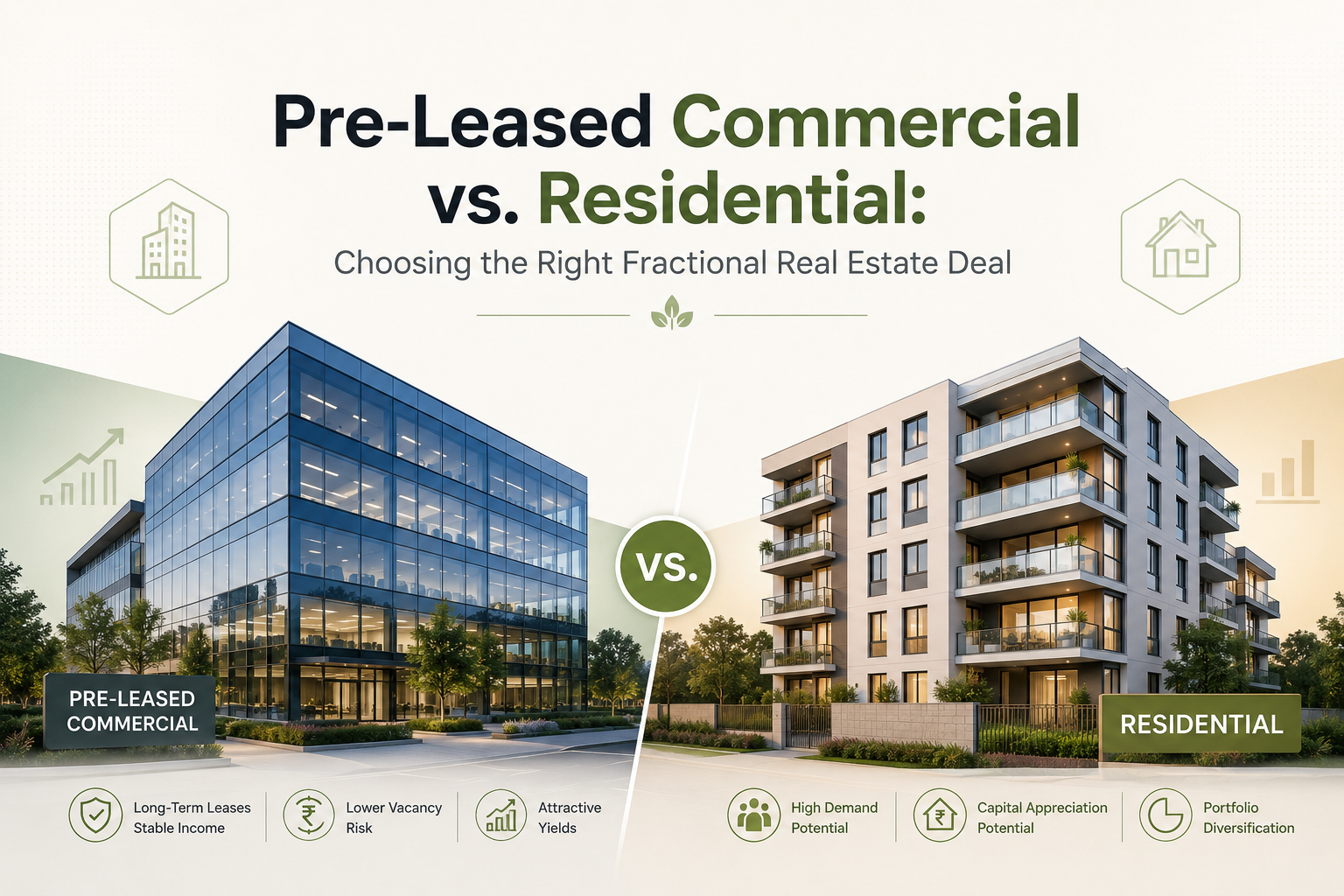
UHNI real estate investing rarely looks like buying a flat to live in. It's built around large, income-producing assets: a pre-leased IT park with a corporate anchor tenant, a share of a commercial tower in a business district, an allocation in a developer's flagship residential project, often sourced through relationships that never touch the open market. Tickets typically run into tens of crores per deal, and there's usually a retained team behind it, doing the legal, financial, and property-management work most individual investors would otherwise have to handle themselves.
The barriers that kept retail investors out
It was never that retail investors didn't want this kind of exposure. A few specific things stood in the way, and they reinforced each other.
- Capital - A single commercial floor or premium tower costs more than most people can put into one asset, let alone spread across several.
- Access - The strongest deals move through private networks and rarely get advertised at all.
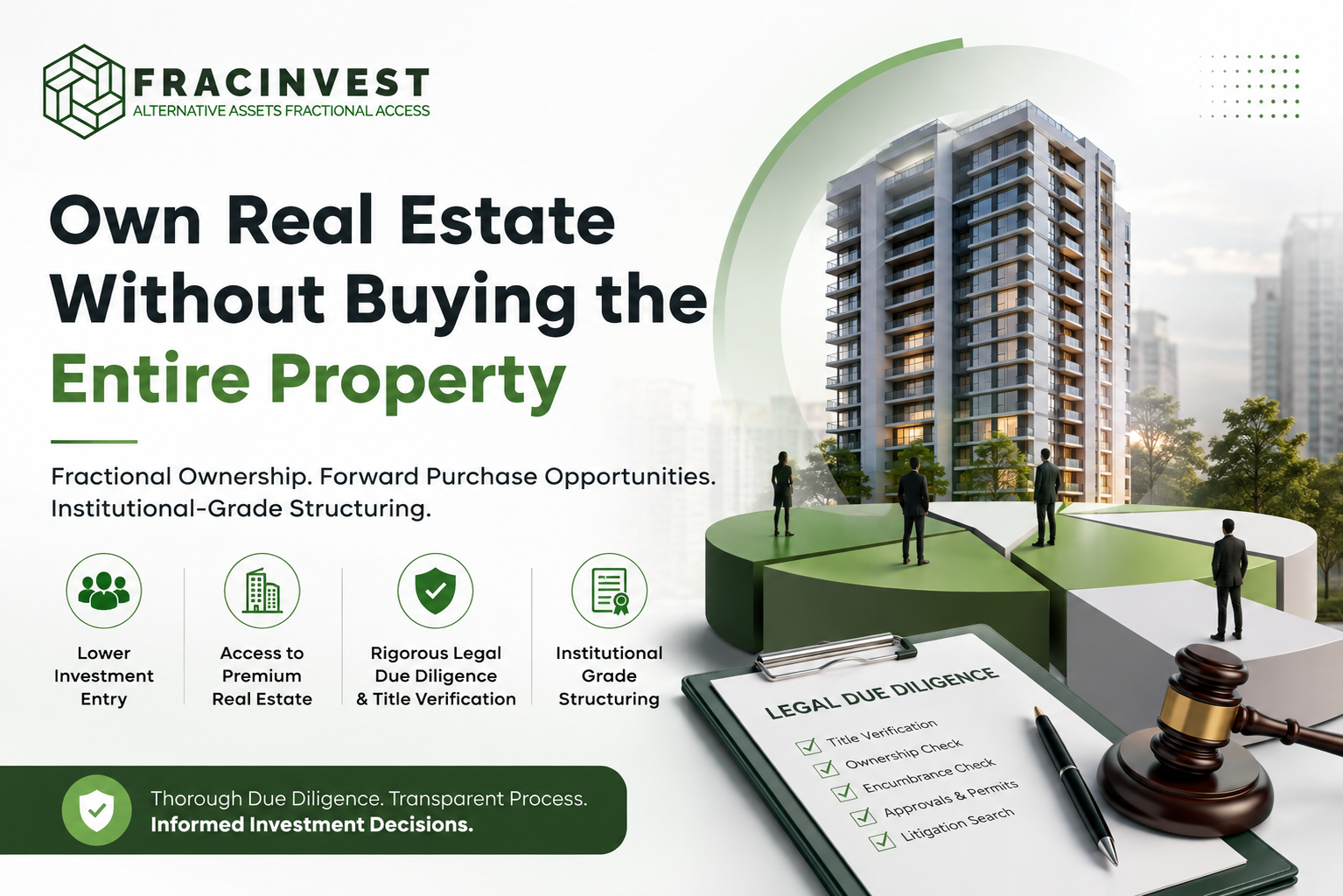
- Due diligence - Verifying title, RERA compliance, litigation history, and construction quality takes legal and technical expertise most investors don't have the time to build on their own.
- Management - Owning property outright means dealing with tenants and maintenance on top of an illiquid exit, essentially a second job attached to the investment.
What fractional ownership actually changes
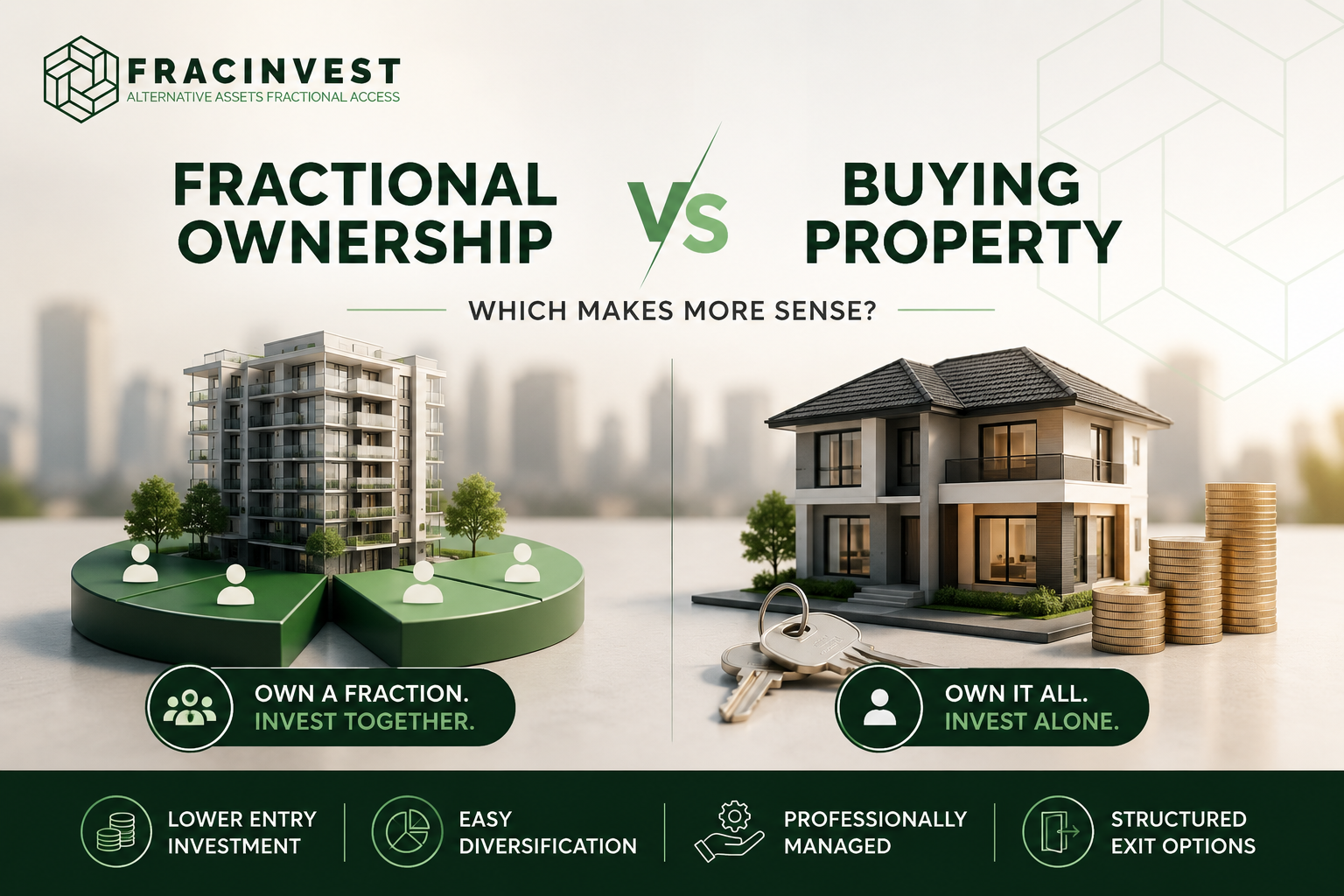
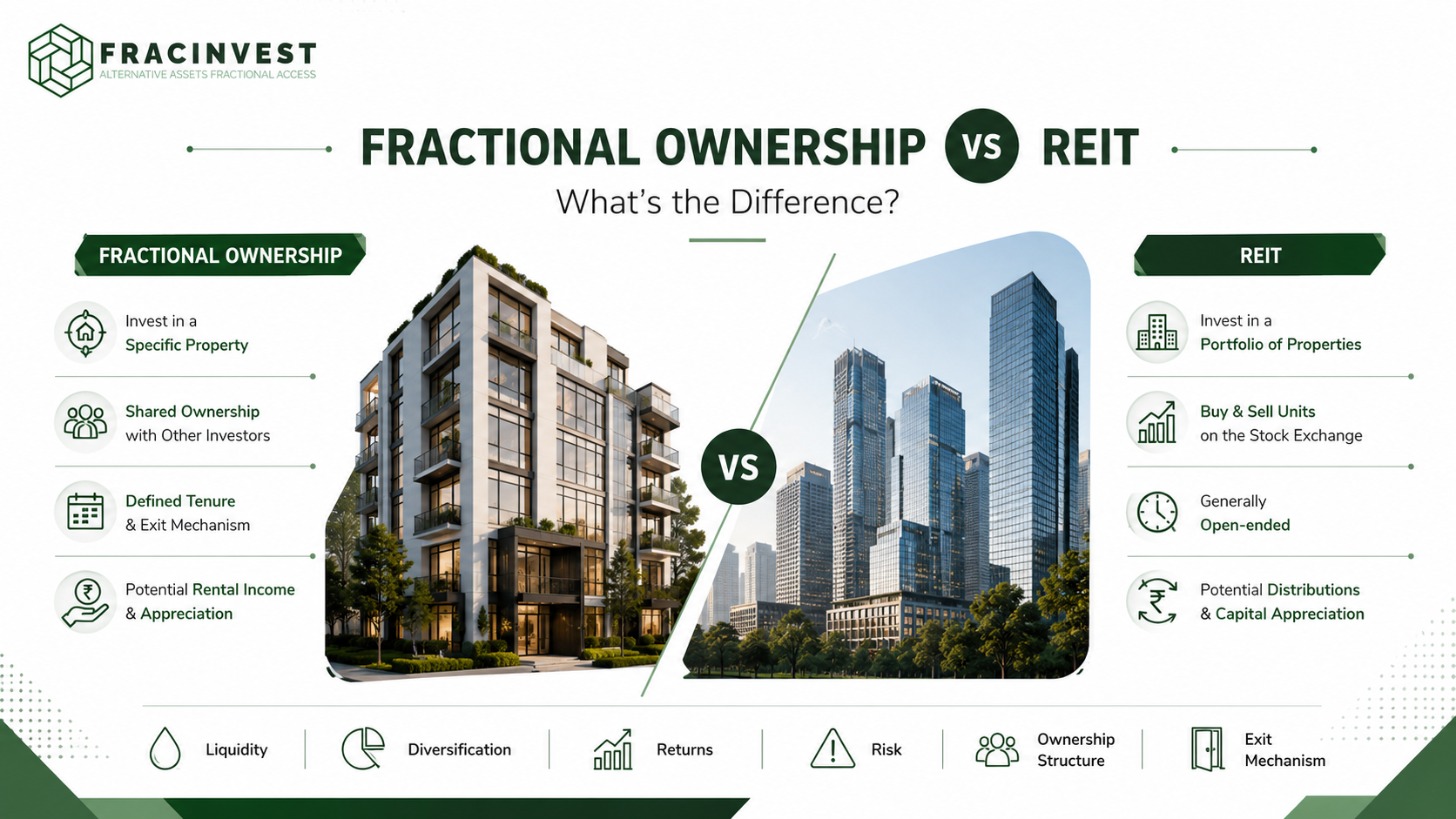
Fractional platforms take the same underlying asset, the pre-leased tower, the premium development, and split it into units a much wider pool of investors can afford. The property itself doesn't change. What changes is the size of the check needed to own a piece of it, and who's doing the work of finding and vetting the deal in the first place.
- The minimum ticket drops from crores to roughly ten lakhs, which opens the same asset class to a far larger group of investors.
- Capital from many investors is pooled into a legal structure that actually holds title to the asset, with each investor's share documented and enforceable, not a handshake.
- The sourcing and legal vetting a UHNI's private office would normally do gets done before the deal is ever listed, not left to each individual investor.
- Capital that used to go entirely into one illiquid property can instead spread across several deals, cities, and developers.
Retail access, then and now
| Before fractional ownership | With fractional ownership | |
|---|---|---|
| Typical minimum ticket | ₹1 to 5 Cr+ for a direct commercial/premium asset | From ₹10 Lakhs |
| Deal sourcing | Private networks, rarely advertised | Curated and listed on-platform |
| Legal & title due diligence | Investor's own lawyers, at their cost | Done in-house before listing |
| Diversification across deals | Impractical below crore-scale tickets | Realistic across multiple opportunities |
| Ongoing property management | Investor's responsibility | Handled by the platform/developer |
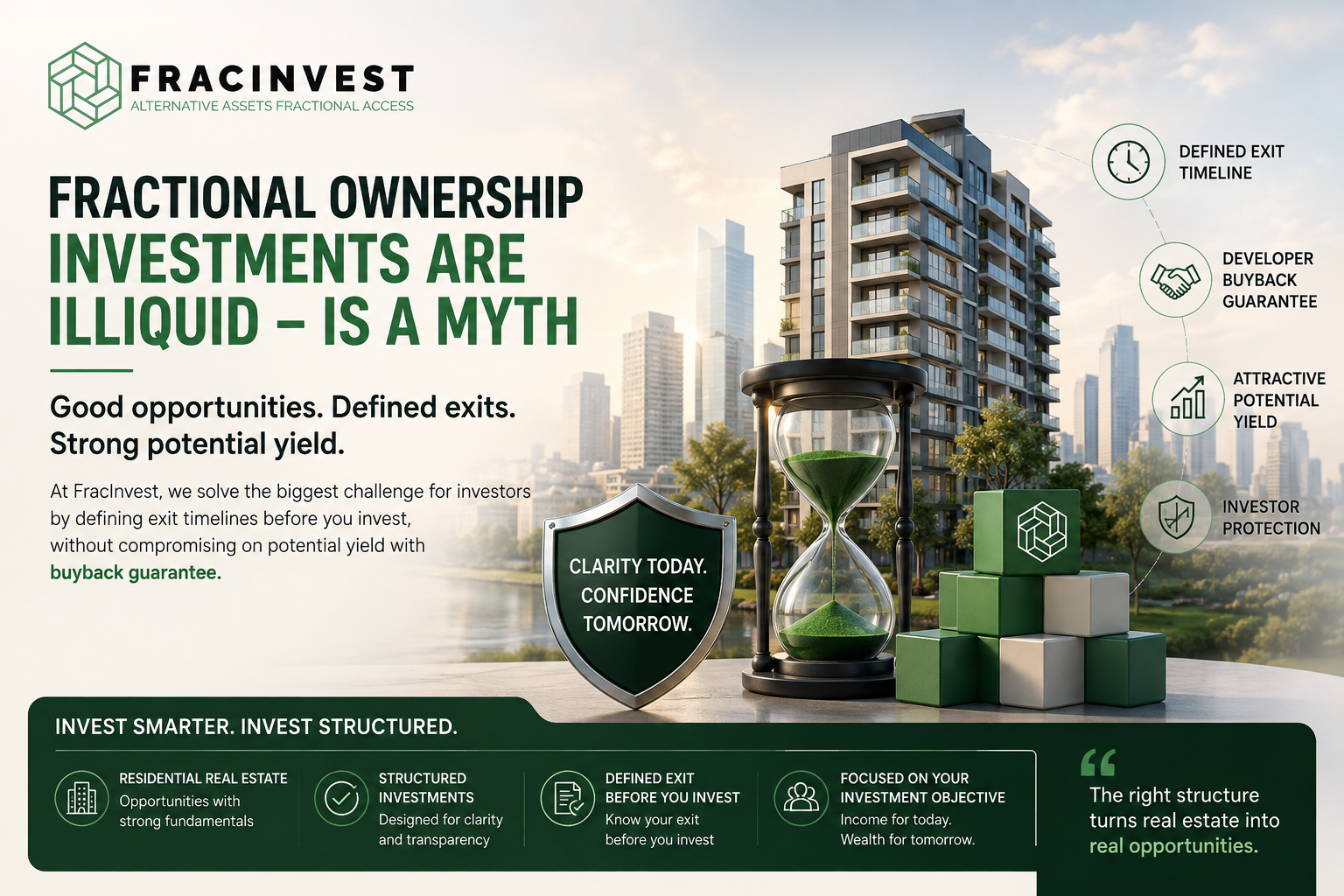
What to look for in a fractional platform
Wider access only helps if the protections travel with it. Before putting money into any fractional opportunity, check that it lists only RERA-registered projects, confirms escrow-controlled fund disbursement, and is upfront about how you actually exit, developer buyback, secondary transfer, whatever the mechanism is. On FracInvest, every deal is also classified into one of four tiers, Prime, Select, Secure, and Alpha, so you can match risk and expected return to the specific opportunity, roughly the way a private wealth manager would lay out options for a UHNI client.
The asset class that built a meaningful share of UHNI wealth in India was never off-limits because it worked differently for smaller investors. It was off-limits because of ticket size and access. Fractional ownership doesn't change what makes real estate a good investment. It changes who gets a seat at the table.